
Essays · Olfactory Art
Lucy Chinen, Sean Raspet. Chloroform Scopolamine.
A scent about the moment we stop being in control.
A flower and a film scene
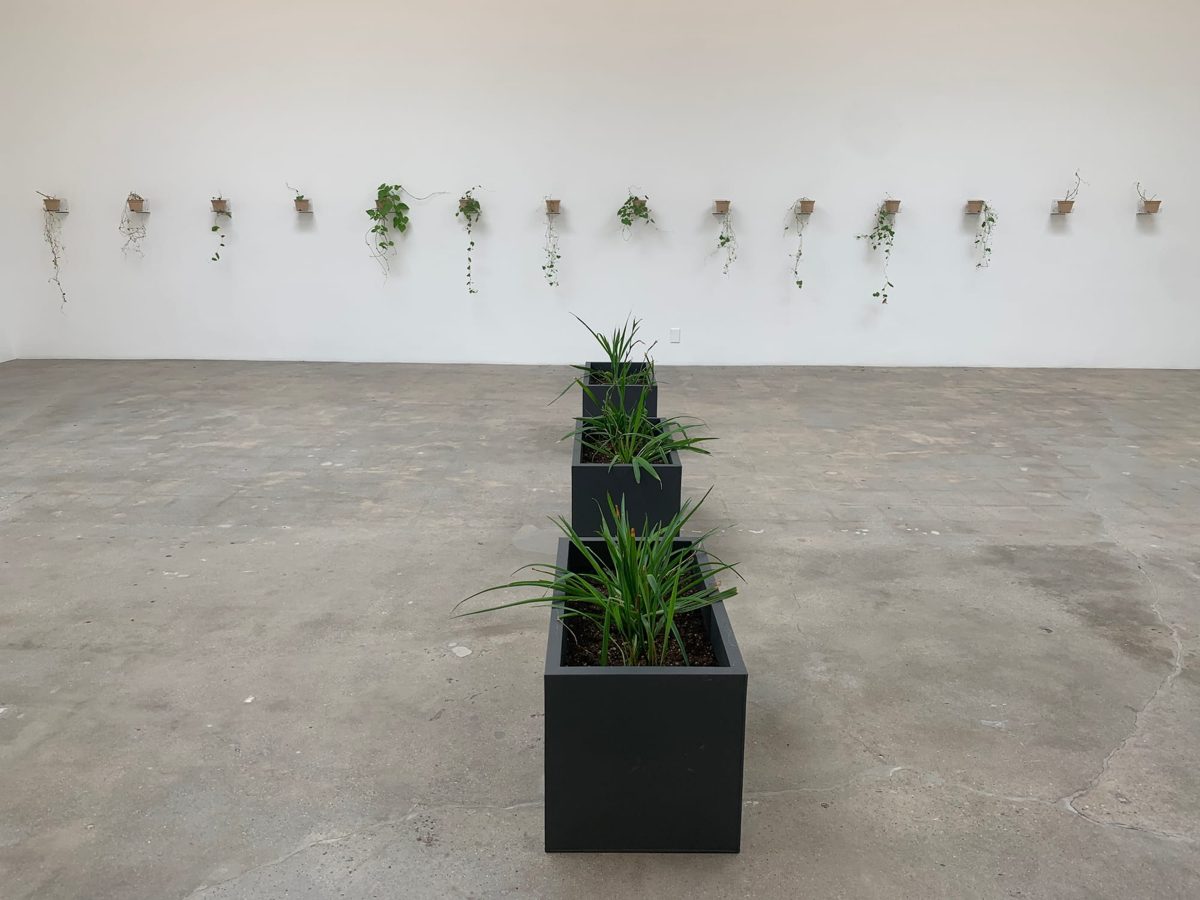
Chloroform Scopolamine was an exhibition by Lucy Chinen and Sean Raspet at IAO Gallery, Los Angeles, from 22 March to 20 April 2025. At its centre is a perfume, made as an artwork.
Its two sources come from different worlds. One is angel's trumpet, Brugmansia, a plant with large hanging flowers and the natural origin of scopolamine. The other is a familiar trope in cinema: a criminal presses a chloroform soaked rag over a victim's face, and the victim collapses within seconds.
Anyone who watches enough films knows the scene. It is quick, tidy, convenient for a script. It is also an image about smell: one breath, then unconsciousness. Chinen and Raspet place the two sources side by side, one grown from soil, one grown from the screen.
The smell of the day after
The artists describe their perfume as lightly nefarious and nuanced. It opens with fresh notes that suggest an imaginary gathering. Then come phantom cigarettes. Then it settles into what they call the base of a nervous criminal who has spilled chemicals, with sharp green synthetic notes.
They also compare it to a precise feeling: the day after being scammed into willingly withdrawing money from an ATM. Not the smell of losing awareness, but of coming round and understanding what happened.
The phantom cigarette comes from an effect recorded after scopolamine use. People vividly see themselves smoking imaginary cigarettes. One account quoted by the exhibition tells of users crawling on the floor looking for a dropped cigarette before realising it was never there. The perfume keeps exactly that trace: the smoke of something that does not exist.
Repeated actions
On opening night, performers Liesel Hanson and Lee Tyler Thompson carried out a choreographed sequence. Their movements mixed two things: the way film criminals apply a chloroform rag, and the trance of someone under scopolamine. They dispersed the perfume around the room in loops.
The artists point to Locus Solus, the novel by French writer Raymond Roussel. In it, corpses are made to move again, repeating the most important gestures of their past lives. The performers in the gallery repeat themselves too, as if driven by something outside them.
That image sharpens the question of the work. When a substance enters the body through the breath, who is acting? The performer, or the smell?
Two artists, one molecule as subject
Lucy Chinen is an artist and writer, co-founder of nonfood, an algae based food company. She has shown at Sean's Room in Los Angeles in 2023 and contributed to the Synthetic Ecologies Lab at Serpentine Galleries.
Sean Raspet has worked with scent and molecular structure for more than a decade, exhibiting widely, including at the 9th Berlin Biennale and the de Young museum. In another work, New Olfactory Molecules, he designed scent molecules that had never existed. Here he does the opposite: he takes a molecule already present in nature, already wrapped in myth, and asks what that myth smells like.
The exhibition teaches nothing about chemicals and promotes nothing. It stands where smell meets fear, and lets visitors ask themselves: why can a pleasant smell make us suspicious?
Olfactory Art