
Essays · Olfactory Art
Marguerite Humeau. Birth Canal (Venus body odour), The scent of the birth of humankind.
Everyone has passed through this smell. No one remembers it.
An exhibition entered backwards
In autumn 2018 the New Museum in New York opened Birth Canal, an exhibition by the French artist Marguerite Humeau. It ran from 4 September 2018 to 6 January 2019 and was curated by Natalie Bell.
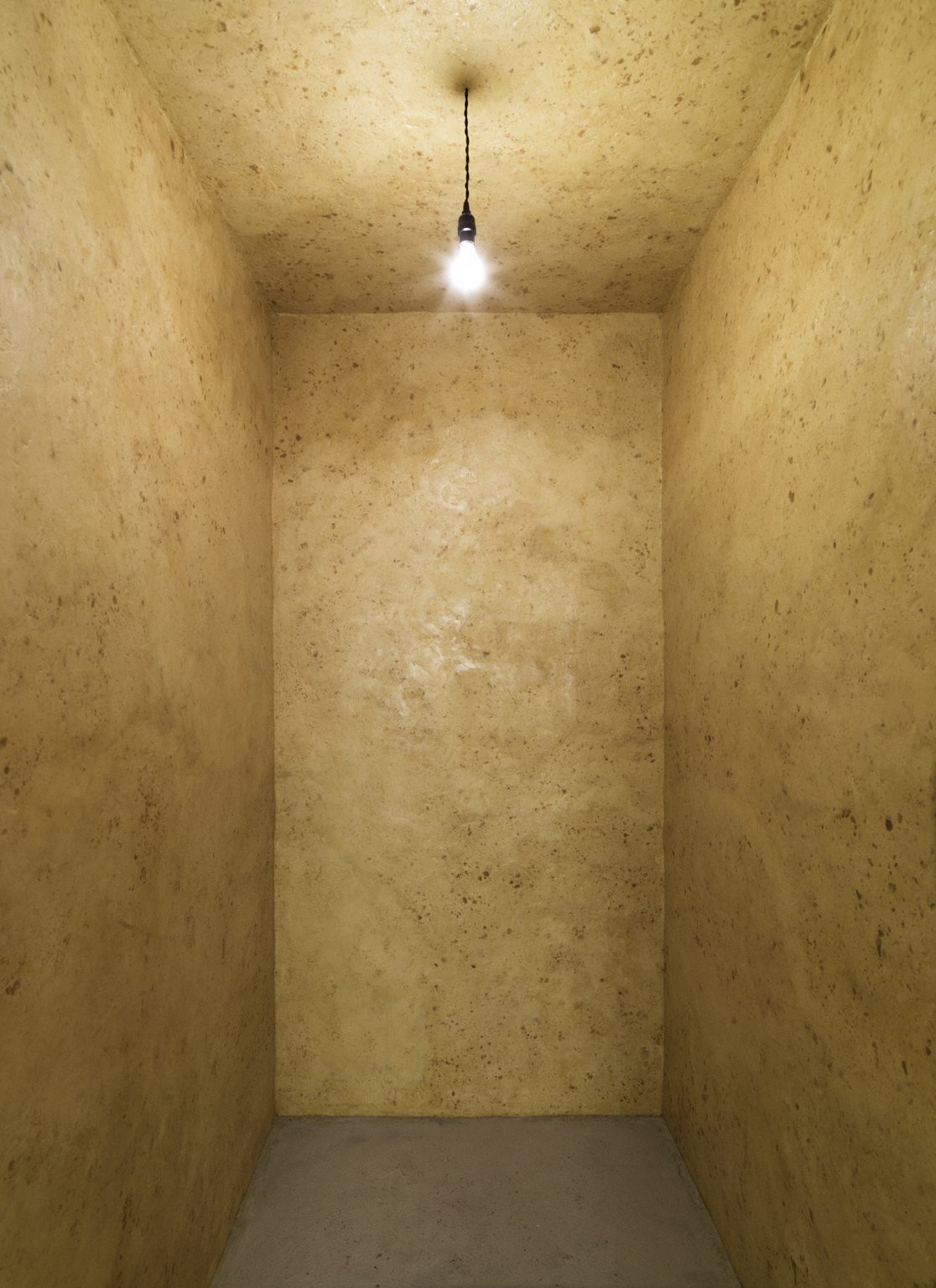
The layout was part of the idea. Visitors entered through the exit. The room was imagined as a birth canal, and whoever walked in was travelling backwards along the passage every person makes once, at birth.
Inside stood twelve sculptures, each under its own spotlight. There was a sound piece. And there was a smell.
The smell carried a title as long as a museum label: Birth Canal (Venus body odour), The scent of the birth of humankind. A synthetic scent, made to evoke the smell of a birth.
Twelve Venuses
The sculptures draw on prehistoric Venus figurines, small female figures in stone, bone or ivory found at sites across the world. One of them is the Venus of Hohle Fels, carved from mammoth ivory and counted among the oldest human figures ever found.
Humeau did not copy them. She designed the sculptures by computer, then made them in marble, bronze and alabaster. The forms still read as bodies, but smooth and taut, at once ancient and never seen before.
The titles read like strange case notes. A 70 year old female human has ingested a sloth's brain. A female human of unknown age has ingested a Tasmanian devil's brain. A 70 year old female has ingested an alligator's brain. A 25 year old pregnant female and herself at 90 have ingested a tortoise's brain.
These titles come from a theory by the anthropologist Bethe Hagens: that early humans may have eaten animal brains to reach altered states. In the reading the show draws on, the Venus figures are more than images of women. They may have been spiritual tools for shamans, or a kind of anatomical guide to the female body.
Cries and light
The sound piece has its own title: the Venuses envision the extinction of their offspring, humankind. What fills the room are whines, shrieks, gibbering and laughter. The spotlights flash in time with the audio.
So the exhibition joins the two ends of a story. At one end, humankind is born. At the other, it may disappear. The mother figures stand in between, facing both ways.
Visitors move through a dark room, among bodies that light up and go dark, hearing voices that are neither quite human nor quite animal. And all the while there is a smell in the air they cannot name.
Why a smell
Images of birth are everywhere. Paintings, photographs, statues, anatomy books. Its smell is recorded almost nowhere. No museum keeps such a thing.
Humeau chose that gap. Smell is the sense closest to the old parts of the brain, the parts the show itself invokes through its talk of the reptilian brain and the midbrain. A smell reaches the visitor before they read a label or form a thought. The same year in London, Pierre Huyghe in UUmwelt also turned to smell when working with the brain and what lies beyond language.
The scent in Birth Canal does not need to be accurate. No one could check. What it does is place the visitor somewhere strange: before a beginning of their own, and of their species, that they have forgotten.
Perhaps that is why the work lingers. The statues can be photographed; the sound can be recorded. The smell existed only in the room, during the months the show was open. Those who smelled it carry it with them. Everyone else can only read about it, the way we read about our own birth.
Olfactory Art