
Essays · Fashion as Design
Mary Quant.
The hem was taken up, and the needle marks stayed.
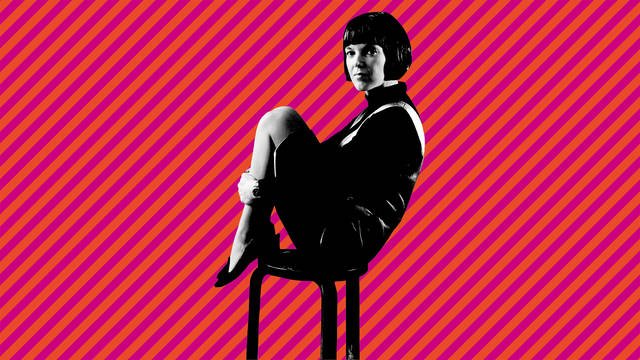
© Getty Images · Victoria and Albert Museum (V&A)
A shop on the King's Road
In 1955 Mary Quant opened Bazaar at Markham House on the King's Road, Chelsea, London, with Alexander Plunket Greene and Archie McNair. A second Bazaar opened on the King's Road in 1957. A third shop followed on New Bond Street in 1967.
The King's Road later became one of the most famous fashion streets in the world, and Bazaar was part of the reason. Shift dresses and minidresses became Quant's signature.
The V&A introduced its exhibition with a line of hers, roughly: the whole point of fashion is to make fashionable clothes available to everyone. Her career turned on that idea.
From a shop to a system
To reach many people, Quant needed more than a shop. In 1962 she signed with JC Penney in the United States. In 1963 she launched the Ginger Group, a cheaper wholesale line, and received the Sunday Times International Award.
Her name was licensed across tights, underwear, then daisy-badged cosmetics. The skinny rib sweater came in the 1960s. Hot pants in 1966. The same year she was made an OBE. In 1967 came the Quant Afoot footwear. In 1971 a Mary Quant beauty bus was on the road.
The V&A estimates that by the end of the decade around 7 million women owned at least one Mary Quant product. A number like that shows fashion leaving the couture salon for ordinary wardrobes.
She liked the new materials of her time. The Wet Collection used shiny PVC, with weatherproof boots.
Who made the miniskirt
It is often said Mary Quant invented the miniskirt. The V&A tells a slower story. The short skirt took shape gradually, through many designers, many years, and the street itself.
Signs appeared in late 1950s Paris, with Balenciaga's sack dress of 1957 to 1958 and Yves Saint Laurent's Trapeze line of 1959. In 1960 Quant wore knee-skimming skirts in New York. In April 1964 André Courrèges showed short skirts on the catwalk, while Quant's hemlines that year were still at the knee. In 1965 the word miniskirt began to appear in newspapers. Only in 1966 did hems become really short.
The word mini was older, from miniature, used for a three-wheeled car in the 1930s and then the Mini-Minor in 1959.
Quant called the miniskirt the beginning of women's lib. Whoever made it first, she put it on the street.
Over 200 garments
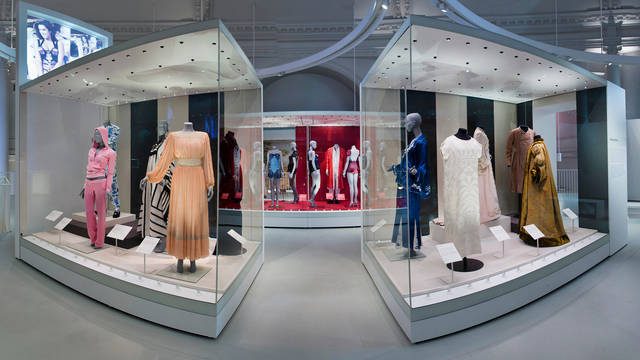
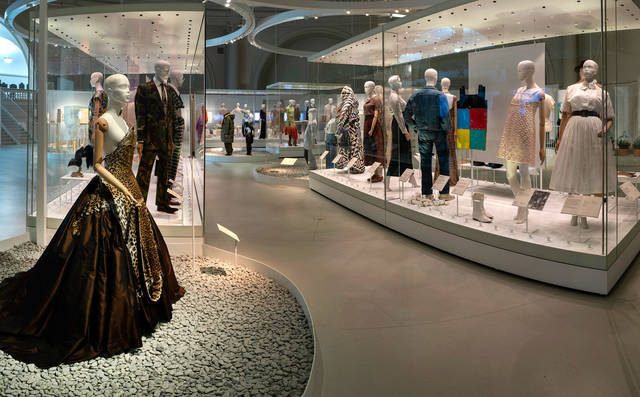
From 6 April 2019 to 16 February 2020, the V&A showed Mary Quant with over 200 garments, including unseen pieces from the designer's own archive. Minidresses, hot pants, coloured tights, underwear, PVC boots, make-up. Twiggy photographed in 1966. Quant in her flat on Draycott Place.
Looking at these dresses now, you see two layers of time. The first is the year they were made. The second is the years they were worn, taken up, kept in a wardrobe. The second layer is in no drawing.
Another woman also wanted clothes to free the body of the wearer, in her own way: Gabrielle Chanel. Fashion Manifesto.
Fashion as Design