
Essays · Fashion as Design
Fashioning Masculinities: The Art of Menswear.
Masculinity is also cut, sewn and put on.
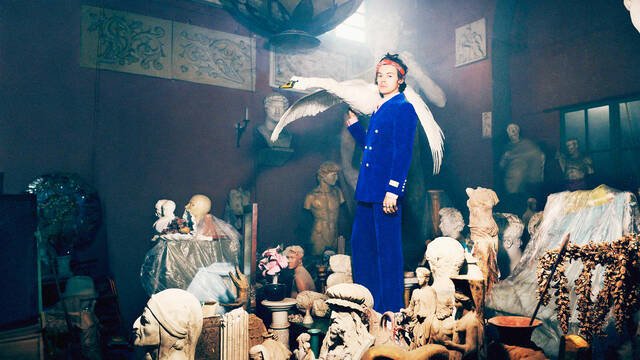
© Victoria and Albert Museum, London · Victoria and Albert Museum (V&A)
Three verbs
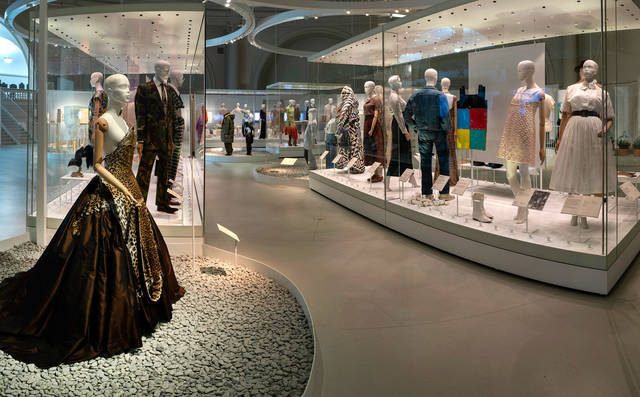
From 19 March to 6 November 2022, the Victoria and Albert Museum in London showed Fashioning Masculinities: The Art of Menswear, sponsored by Gucci. It was an exhibition of menswear, but its real question was wider: how designers, tailors and artists have built the image of a man, and how they have taken it apart.
About 100 looks stood beside about 100 artworks, across three rooms. Undressed, on the male body and underwear. Overdressed, on the wardrobes of the elite. Redressed, on tailoring, the suit and its reinventions today.
The division is as simple as three verbs. Take off. Put on too much. Put on again. Each part looks at the male body through what covers it.
An ideal body in plaster
The exhibition included plaster casts of the Apollo Belvedere and the Farnese Hermes, classical statues long treated as the measure of male beauty. They are naked. They are the standard that men's clothing later tried to follow.
Next to them stood the work of designers working now. The encounter makes one thing clear: the ideal male body is not given. It is chosen, carved, copied, then sewn into shoulders, waistlines, trouser lengths.
The show also included photographs by Omar Victor Diop and Chris Steele-Perkins, and work by the Renaissance painter Sofonisba Anguissola. Each looked at men from a different position.
When men wore lace
Then comes display. The exhibition showed a coat, waistcoat and breeches made in England around 1765 to 1770. Joshua Reynolds's portrait of Charles Coote, first Earl of Bellamont, in the robes of the Order of the Bath, 1773 to 1774. And a lace cravat by Grinling Gibbons, carved in wood, imitating Venetian needlepoint lace.
A lace cravat carved in wood is a strange object. It shows lace once mattered so much to men that someone wanted it kept in a material more lasting than cloth.
There was also an American wool coat and trousers with a silk top hat from around 1845 to 1853, and Alexander McQueen's Plato's Atlantis dress from Spring/Summer 2010. Two centuries, two ways a man might stand inside his clothes.
The suit, remade
The tailoring section looked at the suit, almost a synonym for modern menswear, and at the people unpicking it to sew it again. Harris Reed, Grace Wales Bonner, Craig Green, Samuel Ross's A-COLD-WALL*, Priya Ahluwalia, Rahemur Rahman, Adebayo Oke-Lawal's Orange Culture, with longer-standing names such as Jean Paul Gaultier, Raf Simons, Rick Owens, JW Anderson, Comme des Garçons.
The recurring themes were concrete. Colour in menswear, pink among them. Sustainable and ethical fashion. Design that does not hold to one fixed gender.
The exhibition offered no new definition of masculinity. It only showed that every earlier definition had been sewn by hand, and could therefore be sewn differently. For the layer closest to the body, the V&A once held a separate exhibition: Undressed: A Brief History of Underwear.
Fashion as Design