
Essays · Fashion as Design
Africa Fashion.
Greet the dress first, then its wearer.
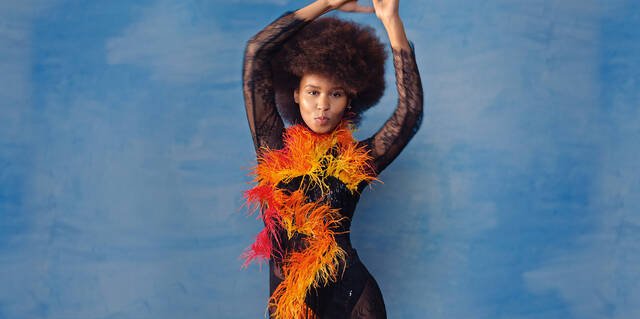
© Nabil Zorkot · Victoria and Albert Museum (V&A)
One continent, many voices
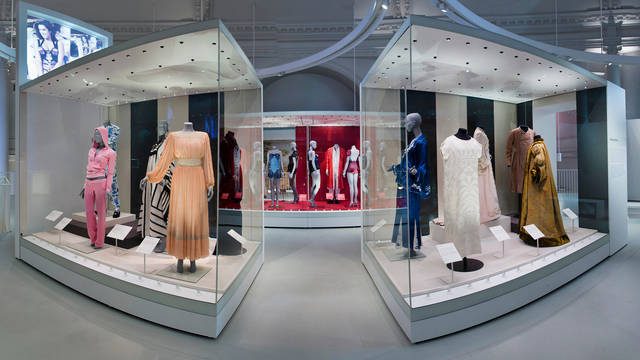
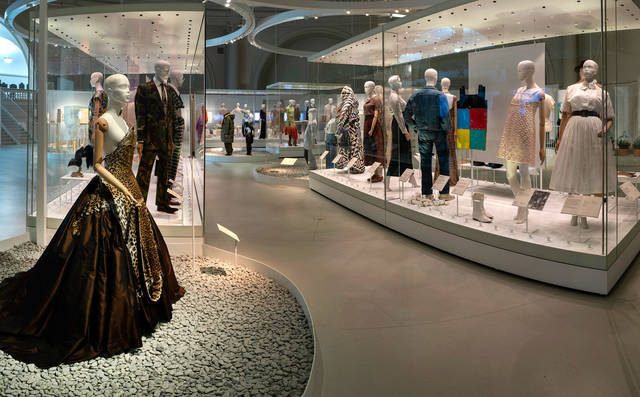
Africa Fashion opened at V&A South Kensington on 2 July 2022 and ran until 16 April 2023. The museum described it as a survey of the vitality and global reach of a fashion scene as varied as the continent itself.
Its span began in the mid twentieth century, the decades when many African nations won independence, and reached today's designers. It did not show clothes alone. Photographs, textiles, music and visual art rebuilt the setting around them.
Names of people and places ran through the rooms. Nigeria, Ghana, Kenya, Ethiopia, Morocco, Cameroon, South Africa. Lagos, Abuja, Johannesburg, Addis Ababa. And Paris, where many African designers show their collections.
The title sounds like a vast category. What visitors actually saw were specific objects, each with a maker, a city and a year.
Cloth first, then the garment
The ground of the exhibition was cloth. A piece of adire, the indigo dyed cloth of Nigeria, dark blue with paler marks, in the V&A collection since 1965. A multicoloured cotton cloth from Ghana made between 1900 and 1949. These cloths come before any designer's name.
Then cloth enters new design. Nkwo Onwuka in Abuja made her Who Knew collection for Spring/Summer 2019 from DAKALA CLOTH: headpiece, jacket and skirt dyed pale blue, deep blue and white. Lagos Space Programme made a buttoned dress in speckled blues with a beaded mask for the 2021 collection named after greeting the dress before its wearer.
Pioneers stood beside younger designers. Naima Bennis, whom the V&A calls a pioneering Moroccan designer, appears in a black and white photograph in a long dress and hooded cape. Chris Seydou is represented by a black skirt and short sleeved jacket with white patterned trim. Kofi Ansah made bright orange ensembles for the wedding of Ashley Shaw-Scott Adjaye and David Adjaye in Ghana in 2014.
Today's runways were everywhere. Imane Ayissi showed the Mbeuk Idourrou collection in Paris for Autumn/Winter 2019: metallic pink trousers, top and cape with tassels. IAMISIGO in Kenya made Chasing Evil for Autumn/Winter 2020. Thebe Magugu in Johannesburg made Alchemy for Autumn/Winter 2021, including a cream patchwork suit and a large straw hat tied under the chin. Maison ArtC in Morocco made The Trench in 2021, a translucent outfit covered in black handprints.
Choosing how to be seen
The most memorable part may have been the photographs. Studio Kameni in Cameroon photographed two men in white shirts, hats and sunglasses, leaning back in chairs, a vase of flowers behind them. In 1977 Sanlé Sory made Je Vais Décoller, I am about to take off: a figure stepping onto an aeroplane painted on the backdrop.
These studio portraits are not fashion photographs in the magazine sense. People commissioned them, wore their best clothes, chose how to sit, chose the backdrop. Fashion here is a decision about how to appear before others.
Contemporary images carry this on. Gouled Ahmed made a self-portrait in the Addis Foam series in Ethiopia, wearing a headpiece, facial jewellery and a nose piercing. The one behind the camera and the one in front are the same.
Africa Fashion did not try to squeeze a continent into one style. It let voices stand side by side, each with its city and its time. Walking through, visitors came to see that the question is not what African fashion looks like. It is who decides their own image, and with which objects.

Fashion as Design