
Essays · Olfactory Art
Peter de Cupere. Air Polluter.
Each button is a share of the common air.
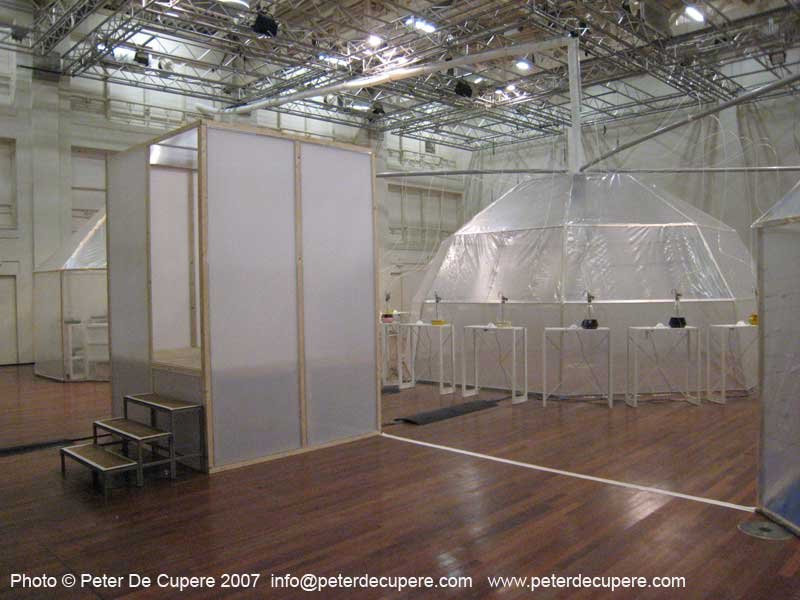
© Peter de Cupere · Peter de Cupere (official artist site)
A control panel at the entrance
Air Polluter is an interactive smell installation by the Belgian artist Peter de Cupere. It was the centrepiece of his solo exhibition of the same name at De Brakke Grond in Amsterdam. The show opened on the evening of 8 June 2007 and ran from 9 June to 15 July.
At the start of the installation stands a control panel. From it, visitors can release pleasant or unpleasant smells. In other words, each person decides how much they contribute to polluting the air in the room.
The smells are split between two zones, which the artist calls Smell Fields. One clean, one dirty. The split is not chemical. It rests on how society usually judges each kind of smell.
On entering, each visitor receives an empty container. At the end of the installation, they fill it with the air that has been made in the room.
Two fields, clean and dirty
The Clean Smell Field holds smells people tend to find pleasant. Natural ones: grass, wood, flowers, earth. Food: fruit, freshly cooked meat and fish, artificial flavourings and aromas. Perfumes, including the scents of laundry products.
One detail stands out among the clean: human body smell, such as fresh sweat with pheromones. The artist explains the choice. In public, sweat usually has a negative connotation. In private, when it belongs to a relative or a lover, it is often felt as pleasant, even arousing.
The Dirty Smell Field holds exhaust, tyre rubber, asphalt, polluted oil, fuels, fermentation and excrement.
Side by side, the two lists do not divide cleanly. Sweat is on the clean side. Fermentation is on the dirty side, though many of the best foods are fermented. Artificial flavourings count as clean, though they come from factories too. The split shows that we judge smells by habit and context more than by the smells themselves.
A container no one fills alone
The subtlest part of Air Polluter comes at the end. Visitors could press buttons, release one smell, shut off another. But others in the room are doing the same, switching on what they like, switching off what they dislike. So the air each person pours into their container is only partly their own choice.
It is a small model of air pollution outside. Each of us has some choice: what we drive, what we burn, what we use. But the air we breathe is the sum of every choice in the city. No one is wholly to blame. No one is wholly innocent.
The work does not lecture. It does not say which button is right. It hands visitors control, then shows them its limits. The result goes home in a container, a sample of that afternoon, in that room, with those people.
Air Polluter dates from 2007. Dirty air would return often in De Cupere's practice. But here the question is at its plainest: when everyone has a button, whose air is it?
Olfactory Art