
Essays · Olfactory Art
Racheal Crowther. HS Code 04022911.
A smell of care, put to use as control.
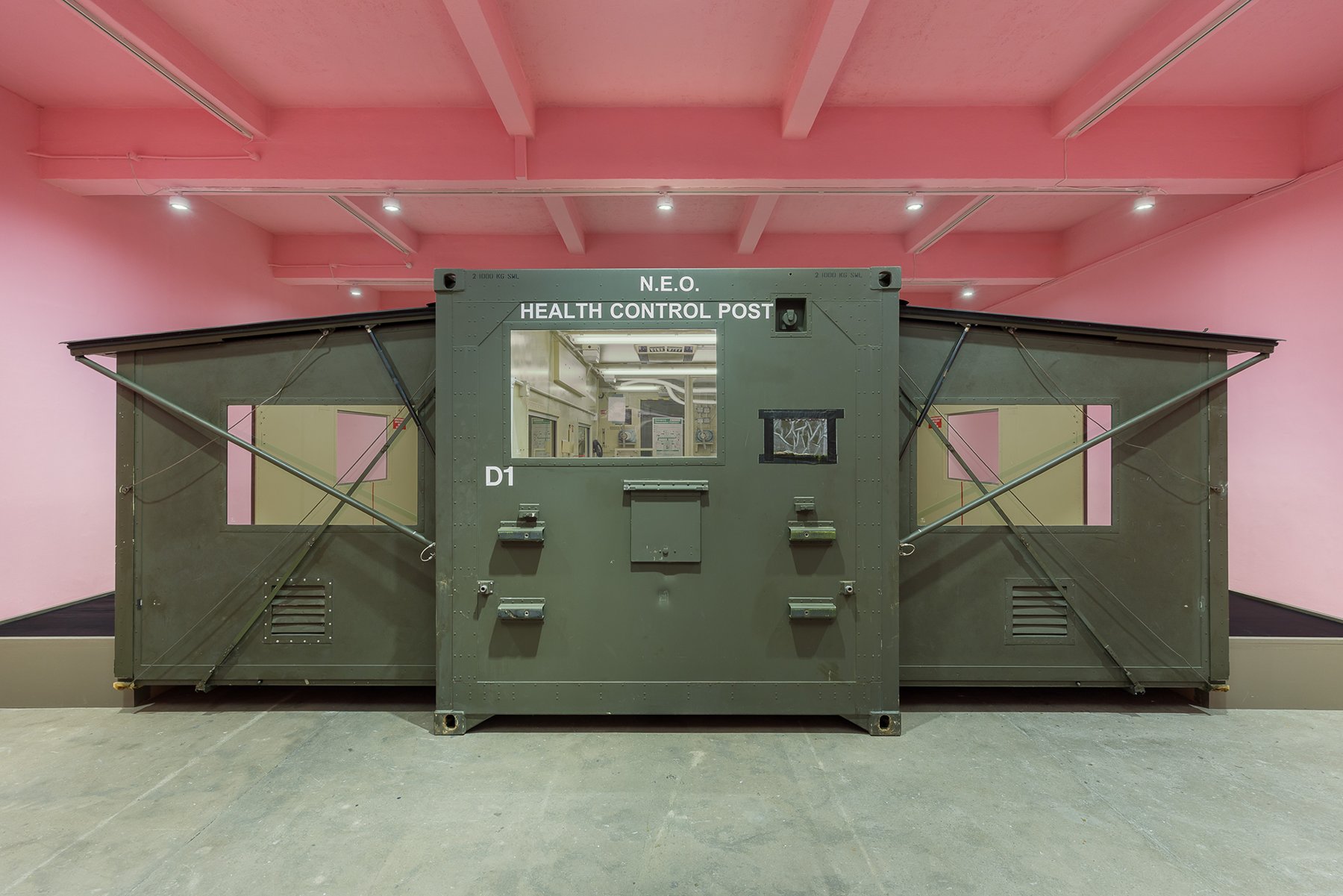
NSN 5411-99-219-4744, 2026 (installation view). Photo: Mark Blower. Courtesy the artist · ArtReview
A pink room
In 2026, Chisenhale Gallery in London presented Racheal Crowther's exhibition Liquid Trust, running until 14 June. Visitors walked into a strange room.
The walls were painted bubblegum pink, a shade called Baker Miller Pink, once used in correctional facilities in the United States. The windows were boarded. The overhead lights were white and clinical.
Almost half the gallery was taken up by one large object: NSN 5411-99-219-4744, made in 2026. It is a mobile medical unit formerly used by the British military, listed as a control post. It has two wings, with faded labels and procedural instructions still on the cabinets. At its centre is a sealed monitoring booth, visible only through glass.
Nothing in the room could be smelled with the eyes. But the air was not neutral.
The customs code of a smell
The second work cannot be seen. HS Code 04022911, also from 2026, is a scent Crowther made with a perfumer. It is released from dispensers hidden in the room.
The title is the customs code for sweetened infant milk powder. A dry number, the kind used to classify goods at a border.
According to Sonja Teszler's review in ArtReview, the scent contains hexadecanal, a compound found on newborns' scalps, along with compounds linked to oxytocin. It traces the life of milk powder: from a by-product of the dairy industry, to military ration, to industrial additive.
A single smell carries a whole history. Nourishment, war and the factory, all in one cloying breath.
Notably, Crowther does not let visitors see where the smell comes from. No bottle, no device on a plinth. In many scent works, viewers are invited to lean towards an object. Here it is the reverse: the smell finds the viewer, and there is nowhere to step back to.
Visitors were not asked whether they wanted to smell it. The smell was there before they arrived. That is part of the work.
When care becomes a tool
Much recent talk in art treats care as a good to be celebrated. Teszler argues that Crowther turns this around. The exhibition looks at how states, corporations and armies use nurture and protection as tools for controlling behaviour.
The pink walls, the military medical unit, the smell of a newborn's skin: each looks gentle, and each has been used to manage people. Intimacy becomes a means of surveillance and discipline.
Smell is the subtlest of these tools. A colour can be seen and doubted. A machine can have its label read. A familiar smell goes straight into the body, through breath, before we can ask where it came from.
The review points out one more uncomfortable fact. The unit was acquired through the British Ministry of Defence's surplus sales, and the proceeds return to military operations. The work admits that it sits inside the very system it criticises.
Crowther offers no way out. The exhibition only leaves visitors standing in that pink room, breathing a sweet smell, realising they trusted it from the first breath.
Olfactory Art