
Essays · Photography
Robert Mapplethorpe. Calla Lily.
A flower looked at like a sculpture.
Guggenheim · Guggenheim
One flower, one plain ground
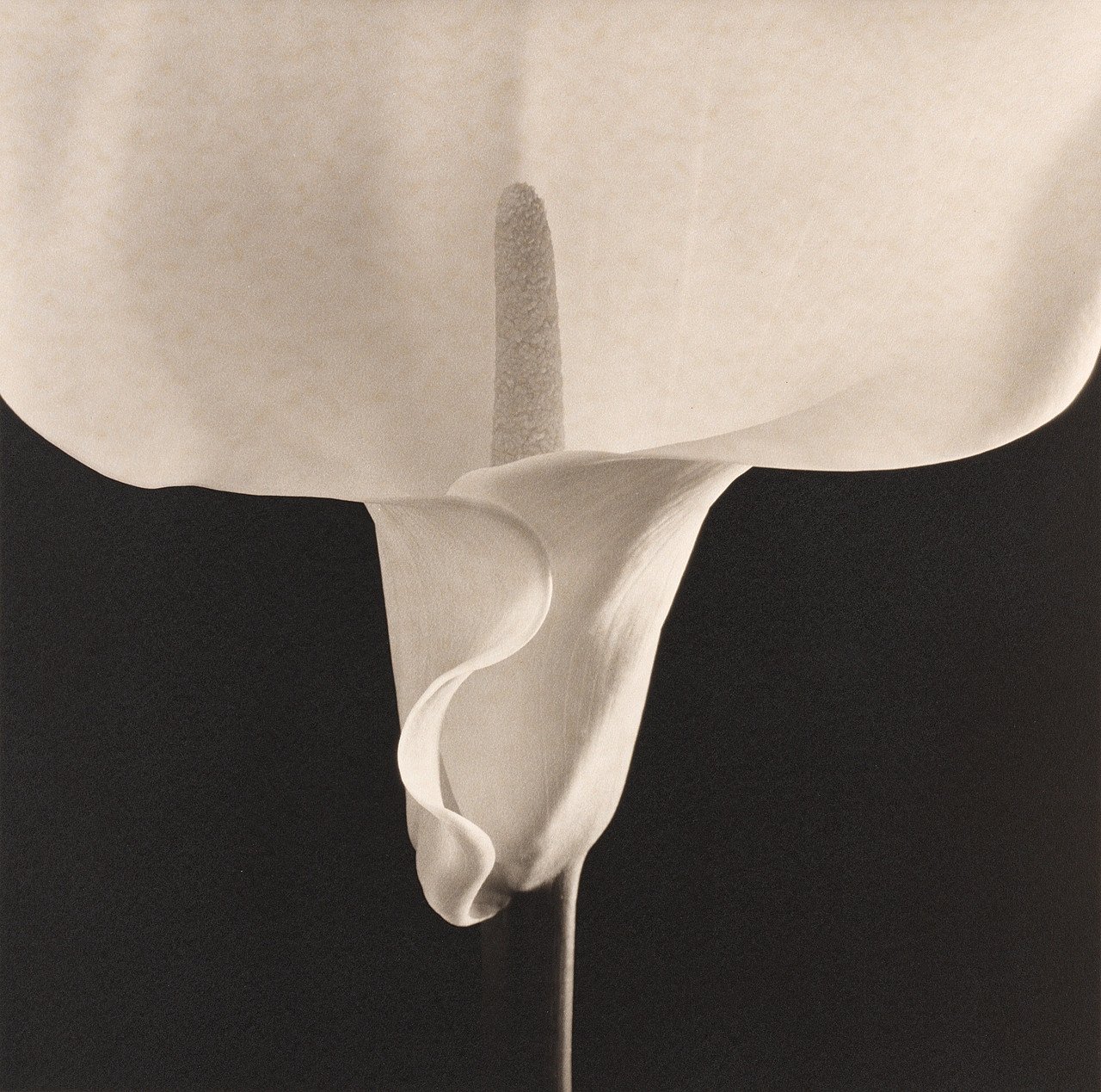
Calla Lily is a black and white gelatin silver photograph taken in 1986. Inside a square frame is a single calla lily. A long stem, a petal rolled into a funnel, a spadix emerging from the middle, though in black and white it is only a brighter shape. Behind it, a plain ground. Nothing else.
Robert Mapplethorpe photographed calla lilies many times in his last years. The Guggenheim holds several prints with the same title, and other museums such as the Getty do too. This is not a lucky single frame but a subject he kept returning to.
The light is carefully placed. It runs along the edge of the petal and lets the inside of the funnel fall into shadow. The flower has volume, almost touchable. The viewer is not looking at a living flower in a garden, but at an object set on a pedestal.
Flowers, portraits and statues
Mapplethorpe was born in New York in 1946 and died in 1989. He is widely known for portraits, nudes, and controversial pictures of the body. Flowers were another branch of the same practice. He photographed them in the studio, under lights, in front of a backdrop, the way he photographed models.
When the Guggenheim presented his work, it placed three subjects side by side: nudes, flowers and statuary. What they share is a classical spirit. Bodies are photographed like marble. Flowers like bodies. Statues like living people. Everything comes down to volume, contour and surface.
Auction houses and museums describing his flowers tend to note one thing: each bloom is caught at its peak, upright and taut. No drooping petals, no wilt. It is a very different way of seeing from Irving Penn, who waited for flowers to pass their best. Mapplethorpe looked for perfection and built it with light.
The square frame helps. The Getty print of Calla Lily has equal sides. In a square no direction wins. The flower stands in the middle, balanced, like an emblem.
Why a calla lily
The calla has a very simple shape. One rolled petal, a straight stem, no crowd of petals. For a photographer after clean lines, it is almost ready made geometry.
In Western culture it also carries many meanings: weddings, funerals, purity. Mapplethorpe tells none of them. Nothing in the picture points to a wedding or a funeral. It offers only form, and the viewer brings the meaning.
Some see sensuality in his flowers, because the same photographer lit bodies the same way. Others see only stillness. Both readings have room, because the photograph does not choose for anyone.
The photograph in the museum
In 1993 the Robert Mapplethorpe Foundation gave the Guggenheim more than 200 of his works, selected by the museum, together with funding. The gift launched the museum's photography program and named a gallery after him. Many flower pictures, including prints of Calla Lily, belong to that collection.
That matters for a picture like this one. It sits in a modern art museum beside painting and sculpture, not in a book of flower photographs. The museum treats it as a work about form, not just a pretty image.
Looking at it now, Calla Lily keeps its silence. The flower wilted long ago; its shape stands still on silver paper. What remains is not the flower, but the way one person chose to look at it.
Photography