
Essays · Olfactory Art
Sensoria: The Art and Science of our Senses.
The senses do not stand apart. They talk to each other.
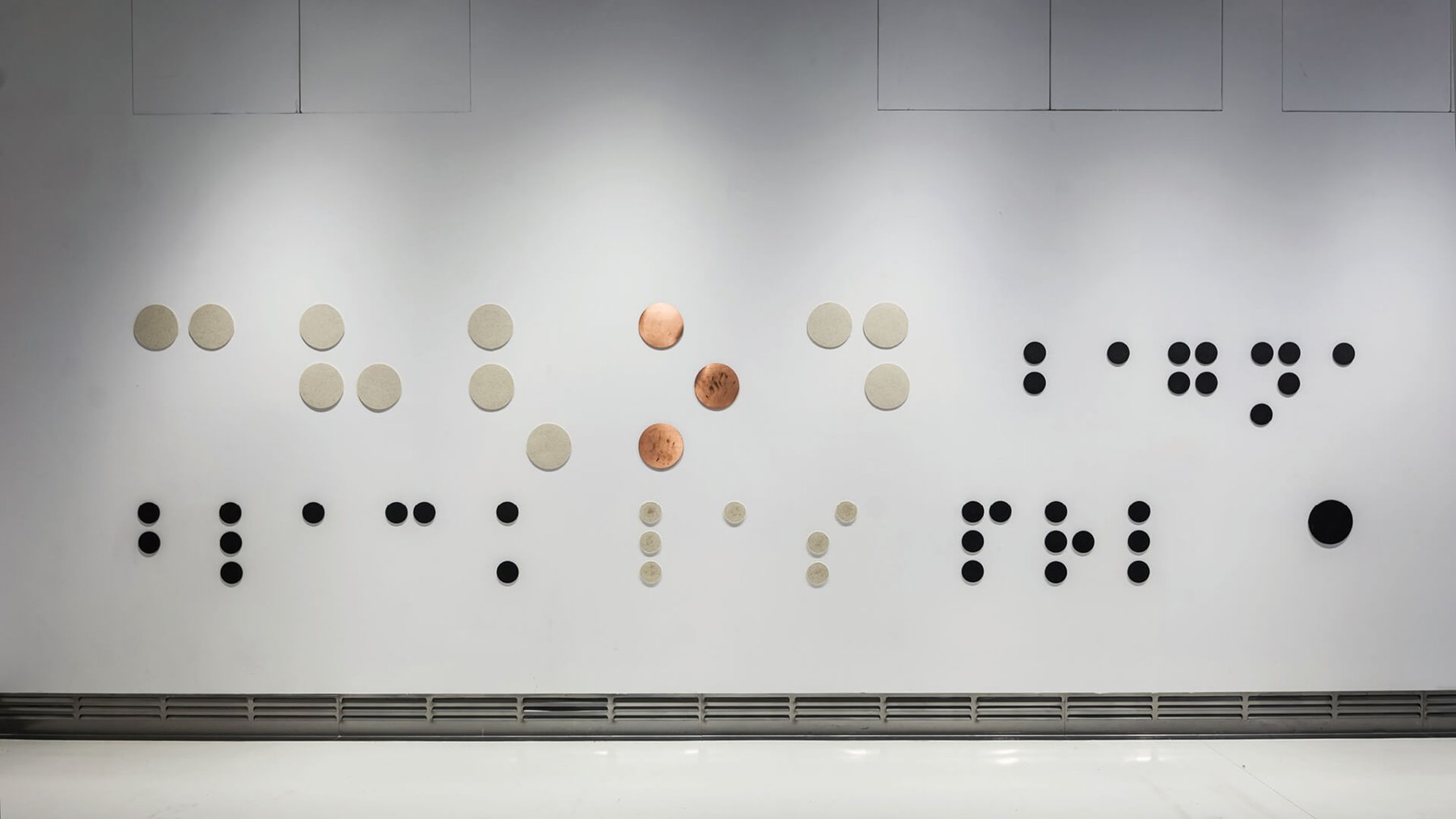
Shared Sense Wall by Hilda Kozári. Image: Adam Bogdan; courtesy of CCA Łaźnia · STIRworld
After the years of isolation
Nina Czegledy is a Canadian artist, curator and writer. During the pandemic years, when people lived behind screens and rarely touched the world, she began to think about a question: what has isolation done to our senses?
Her answer was Sensoria: The Art and Science of our Senses, an exhibition made with Sensorium, the centre for digital arts and technology at York University in Toronto, and the Łaźnia Centre for Contemporary Art in Gdańsk, Poland. In 2022 it ran in both places. The Toronto part closed on 14 October, the Gdańsk part on 30 October.
Two cities an ocean apart, one question. Czegledy wanted to present sensory perception in a way that was accessible yet unexpected. She built on something current research has confirmed: the human senses are bound together and act on one another. We do not see, hear and smell separately. We sense all at once.
A tree in a bottle
The olfactory part of Sensoria brought together several artists who have long worked with smell. The most striking was One Tree ID by the German artist Agnes Meyer-Brandis.
The idea comes from plant science. Every tree releases volatile organic compounds, and trees use them to exchange information: to warn of pests, to call insects, to recognise a neighbour. Each tree has its own cloud of molecules around it, a kind of identity. Meyer-Brandis measured that cloud at each part of one tree: roots, trunk, needles. More than a hundred compounds were identified, though not all can be caught, because they are so small and so short-lived.
Then, with the perfumer Marc vom Ende, she turned those molecules into a scent for people. Whoever wears it carries on their skin the identity of one particular tree. Perhaps, at a chemical level we cannot perceive, they join the conversation of trees. Meyer-Brandis also brought a smaller work with a gentle title: Have a tea with a Tree.
Alongside it were Shared Sense Wall by Hilda Kozári, an artist who has worked with smell for many years, and World Sensorium by Gayil Nalls, a scent made from the aromatic plants of almost every nation. Penta has written a separate essay on World Sensorium. Raewyn Turner and Brian Harris also showed work.
Five senses in one room
Smell was only one part. Karolina Hałatek built Ascent, an installation of light in fog that wraps visitors in a hazy space where the eye loses its usual anchors. Artur Żmijewski showed Blindly, his video from 2010. Csenge Kolozsvari and Guy Van Belle took part as well.
Placed together, the works show something simple: when one sense is dimmed, the others speak up. In Hałatek's fog people pay more attention to footsteps, to air on the skin. In front of a bottle of scent, people close their eyes.
Sensoria is not an exhibition about smell alone. That is exactly why it puts smell in the right place: not a minor sense or a decoration, but one of five equal doors. After years of living through screens, that reminder has its own value.
Meyer-Brandis's tree still stands where it stands, still giving off its cloud of molecules, whether or not anyone smells it. The exhibition does one small thing: it hands us a bottle, so we know the conversation is still going on.
Olfactory Art