
Essays · Contemporary Art
Susan Philipsz. War Damaged Musical Instruments.
The instrument is broken. The breath still passes through.
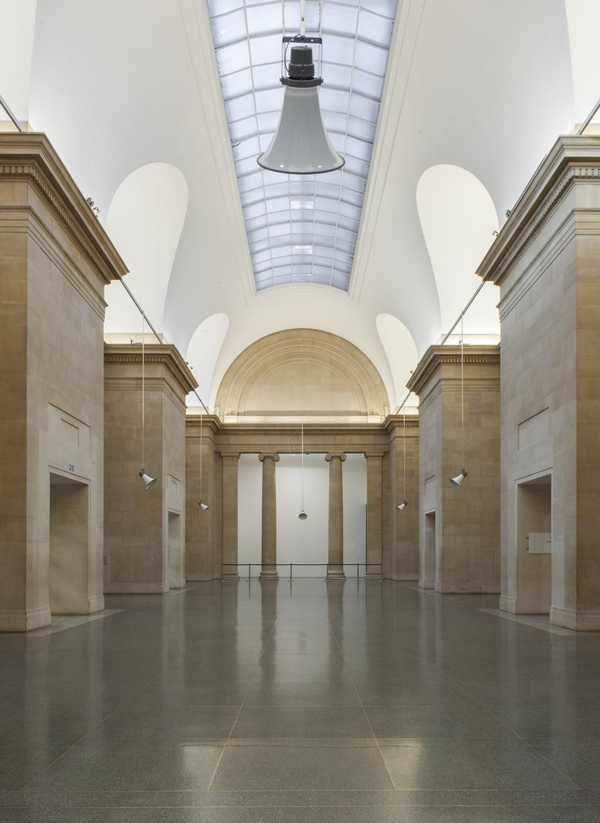
Tate · Tate
Fourteen instruments, one call
From 21 November 2015 to 3 April 2016, the Duveen Galleries at Tate Britain were given over to sound. What filled the space was not a sculpture but notes travelling the length of the hall.
Susan Philipsz recorded fourteen British and German brass and wind instruments, all damaged in conflicts over the past two hundred years. Some dented, some pierced, some bent almost out of recognition. Several date from the First World War.
The notes are based on the tones of the military bugle call The Last Post. But the call is broken apart so far that it is barely recognisable. Fourteen recordings, fourteen channels. Tate holds the work as fourteen channel mono audio.
Visitors did not see an orchestra. They heard one note arrive from one direction, then another from elsewhere, like soldiers calling to each other across open ground. Long silences lay between the notes. In them, people waited, and realised they were waiting for a melody that would never arrive whole.
What the instruments can still do
The Last Post has a specific history. It once told lost and wounded soldiers that it was safe to return to base. Today it is played as a final farewell at military funerals and remembrance ceremonies.
Philipsz said she was less interested in making music than in finding out what sounds these instruments were still capable of, even if that sound was only the player's breath passing through the battered body. All the recordings, in her view, carry a strong human presence.
So what the visitor hears is not a complete melody. It is broken notes, rasps, silences. Sometimes only air. The damage is what makes each sound particular. A new bugle plays in tune. A bugle that has been through war plays exactly what it has endured.
Listening closely, one realises the work is not about victory or heroes. It is about what remains at the very end: a misshapen object and a person still trying to breathe through it.
Sound moving through architecture
Philipsz won the Turner Prize in 2010 for sound works placed in space. At Tate Britain she worked with the architecture of the Duveen Galleries, arranging a sequence of sounds that travels from one end to the other. To walk the hall is to follow the call.
The site has its own memory. According to Tate, part of the museum's ground was once a military hospital that treated soldiers wounded in the First World War. The work was part of an arts programme marking the centenary of that war.
Without seeing the instruments, the listener still senses their shapes. A note cut off halfway suggests a hole. A hiss suggests a crushed tube. Sound becomes a description of the object's wounds.
Tate notes that the work is also a reminder that conflict and loss are present in the world today. It does not end on a high note. It ends on a breath, then silence. In another work of this kind, Janet Cardiff leads listeners through a city with a voice. Both know that sound can hold a place longer than an image.
Contemporary Art