
Essays · Olfactory Art
Theophrastus. Smell in Aristotle's garden.
Before theory, someone took the trouble to smell.
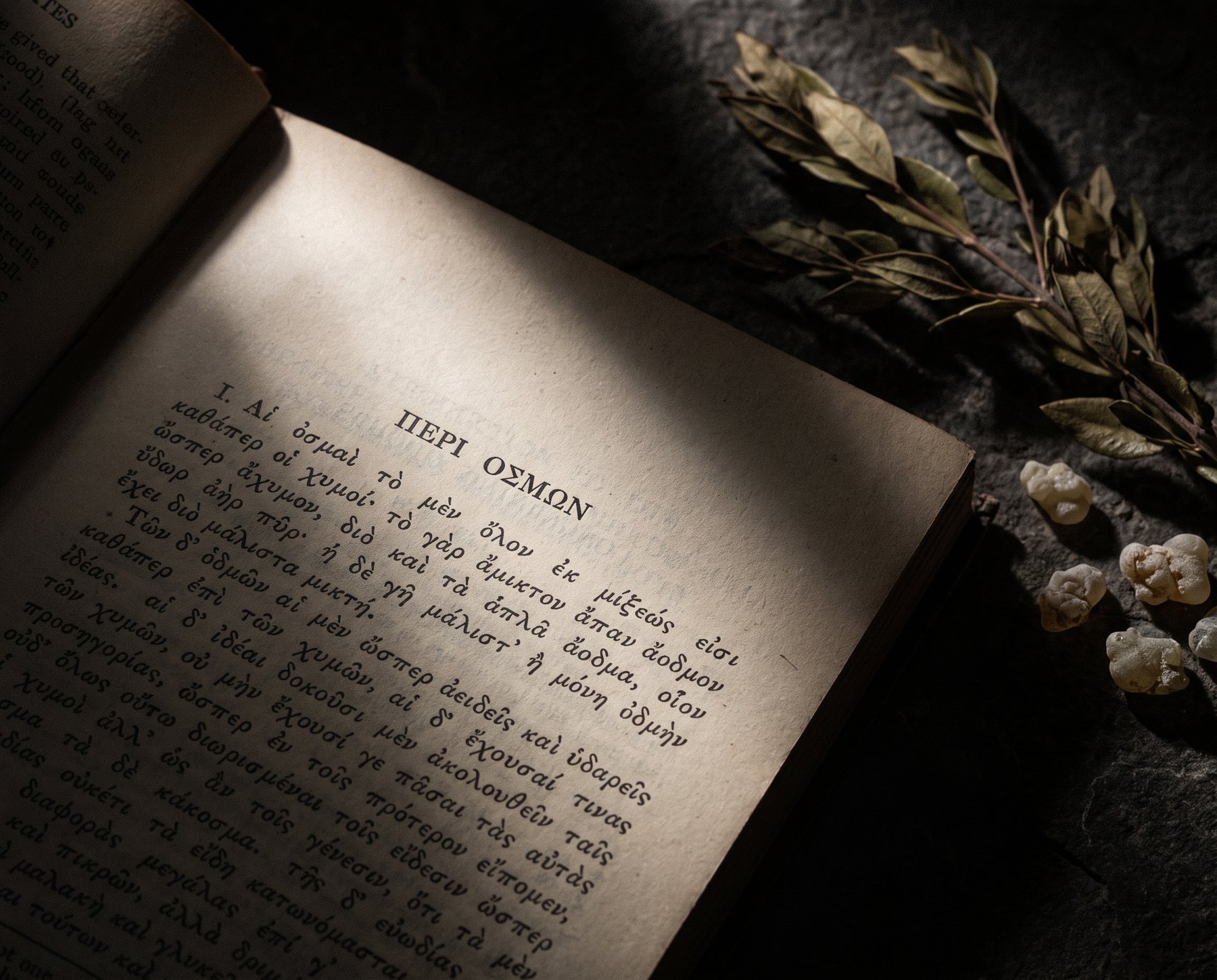
The Lyceum, fourth century BC
Theophrastus was born at Eresos, on the island of Lesbos. He studied with Aristotle, and when Aristotle left Athens he took charge of the Lyceum. Its followers came to be called Peripatetics, after the covered walk where teacher and students talked as they walked. He taught there for decades.
Aristotle left great treatises on animals. Theophrastus left great treatises on plants, the Enquiry into Plants and the Causes of Plants, which is why he is often called the founder of Western botany. Beside them stand a few short works, among them one on odours and one on weather signs.
Concerning Odours survived in manuscript and was printed in the Aldine edition at Venice in 1497. In 1916 Arthur Hort translated it into English, bound with the second volume of the Enquiry into Plants in the Loeb series. That edition is now in the public domain and open to anyone.
The text is short. It has no poetry and no myth. It reads like the notebook of someone who went to ask perfumers questions, stood watching them work, and came home to write down what he had seen.
Concerning Odours: oils, resins, flowers, roots
He opens with a general remark. Smell, like taste, comes from mixture; what is simple has none. Then he notes something perfumers still say: smells lack the specific names tastes have. We can say sweet, bitter, sour, salty. With smell we only divide good from bad, then reach for words like pungent, strong, faint, sweet and heavy, several of which serve both sides.
He admits the limits of the human nose. In his view our sense of smell is poorer than that of most animals, so there are things we call odourless that animals still smell and avoid.
Most of the treatise concerns perfumed oils. The perfumer mixes solids into a liquid: flowers, leaves, roots and resins steeped in oil. Flowers carry their smell on the surface, so it travels; roots such as iris and spikenard must be pounded to release theirs. Crush a flower and it smells worse. Frankincense and myrrh need gentle heat.
He records how perfumes are kept. Makers look for upper rooms that avoid the sun and are as shaded as possible. Oils go into lead vessels or alabaster flasks, because lead and stone are cool and close grained. Some perfumes are colourless, some are dyed red with a root. One perfumer claimed to have kept an iris perfume for twenty years.
Sorting smell by material, not by feeling
If Concerning Odours has a classification, it is by material and method. Flowers differ from roots, roots from resins, the base oil from what is steeped in it. Solid mixed with solid is the work of the powder maker; liquid with liquid, of the wine flavourer; solid into liquid, of the perfumer.
There is no table of moods, no sad or happy smells. Theophrastus asks only which part of the plant a smell comes from, how long it lasts, and what it needs in order to open. These are the questions of someone standing in a workshop, not of a philosopher at a desk.
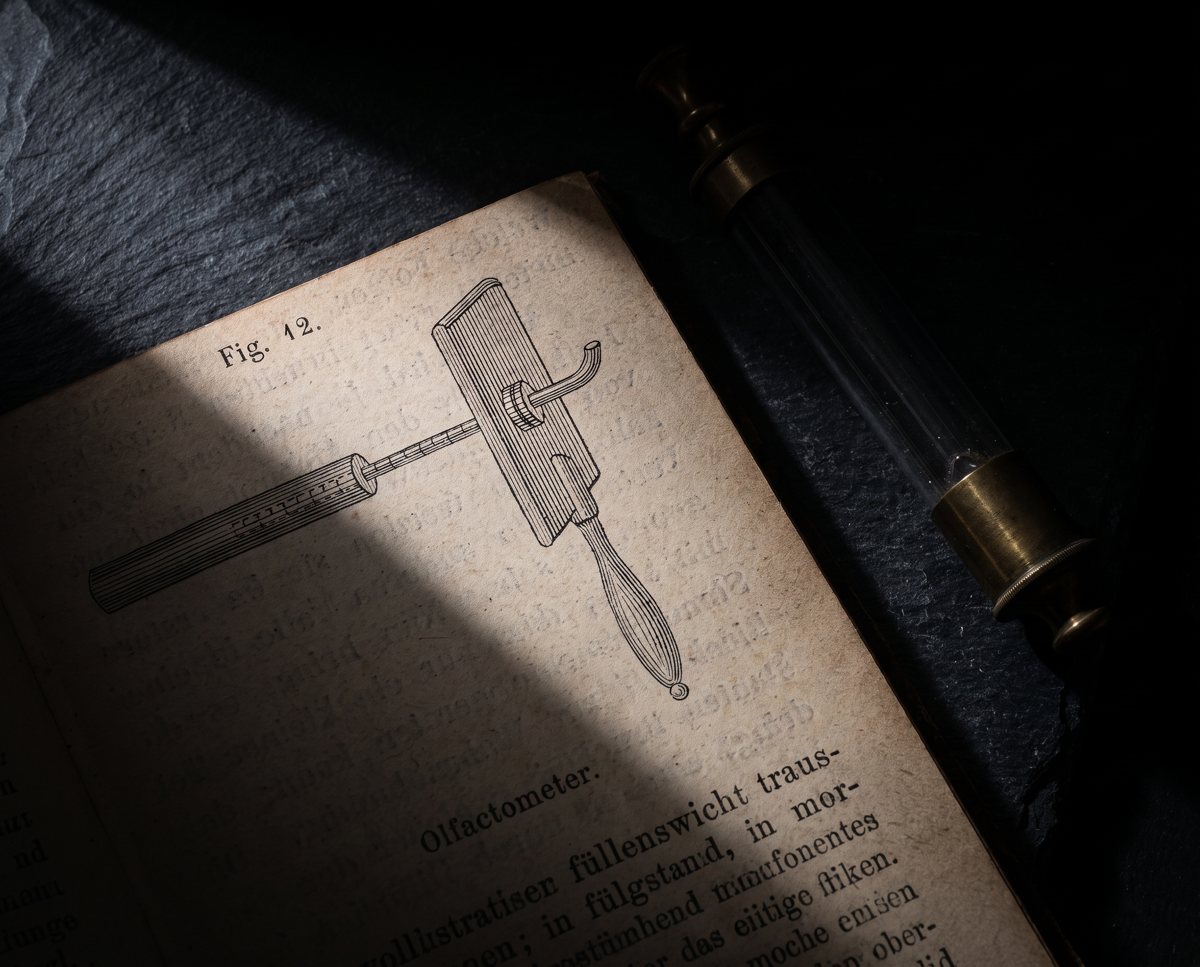
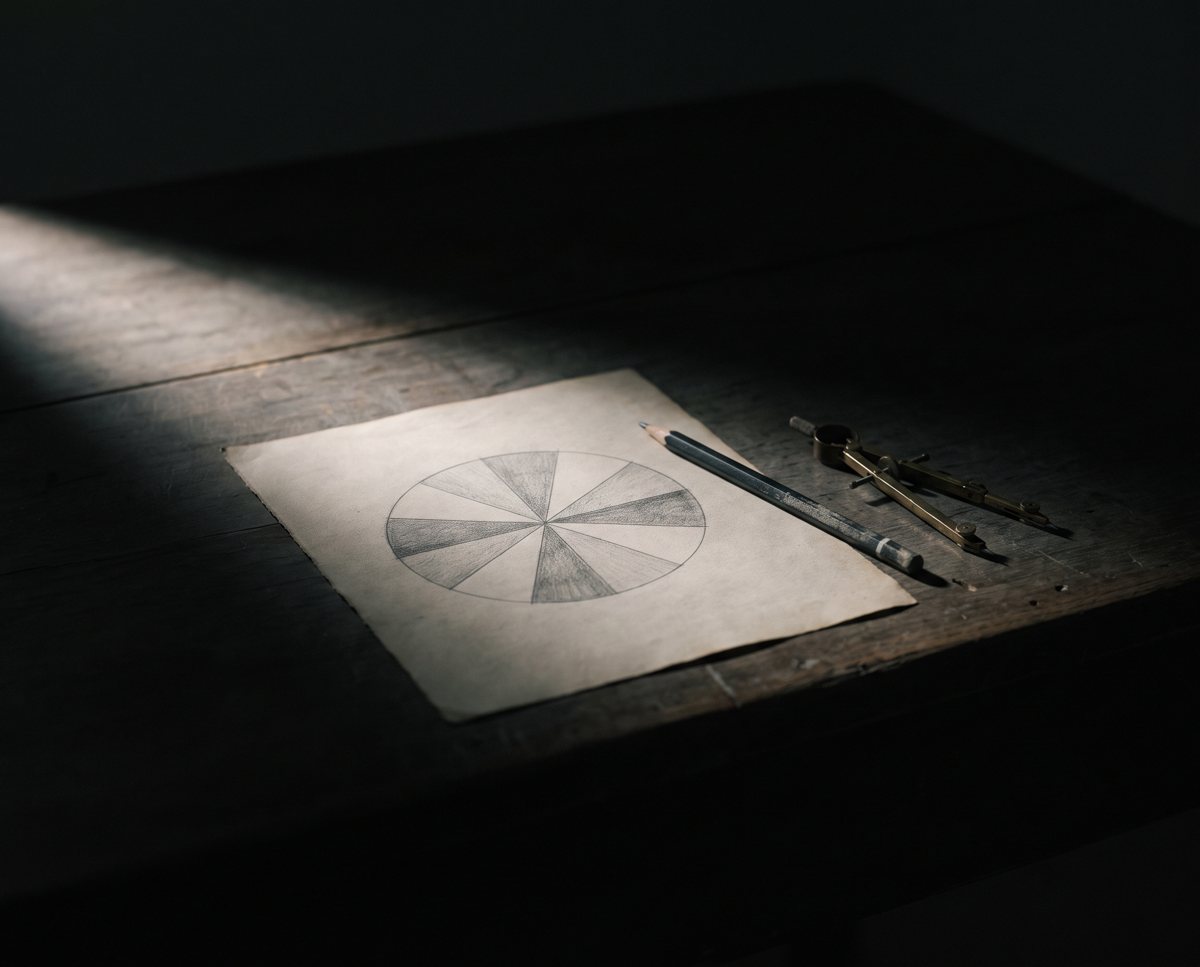
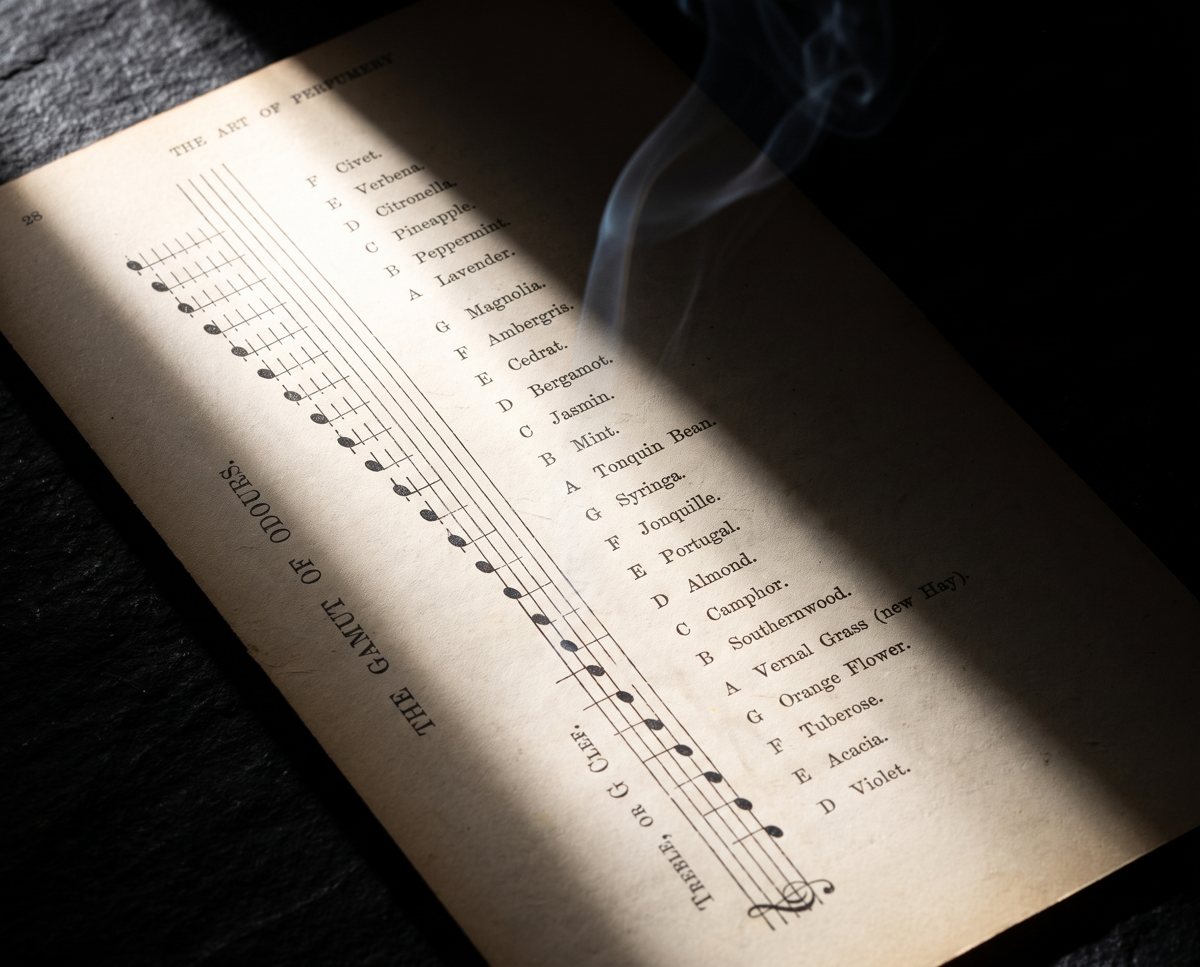
Centuries later Linnaeus, Zwaardemaker and Henning would look for universal classes of smell, working with language, numbers and geometry. Theophrastus stands before all of them, and so he shows where classification begins: with picking up a material and watching it change.
Observation before theory
Some of his explanations no longer hold; the four elements are gone. But the observations remain, and many can still be checked by nose. Flowers carry. Roots must be opened. Resins need heat. Sun spoils perfume. Sealed vessels and shaded rooms keep a smell longer.
Perhaps the most memorable thing is the modesty of the writing. He raises a question, reports what a perfumer told him, offers an explanation and leaves it open. He does not force every smell into one frame.
Read today, the treatise is closer to a notebook than a work of theory, and that may be why it is still alive. Theories change with each age. A person who stands watching a root being pounded and writes down its smell does not grow old.
Olfactory Art