
Essays · Modern Art
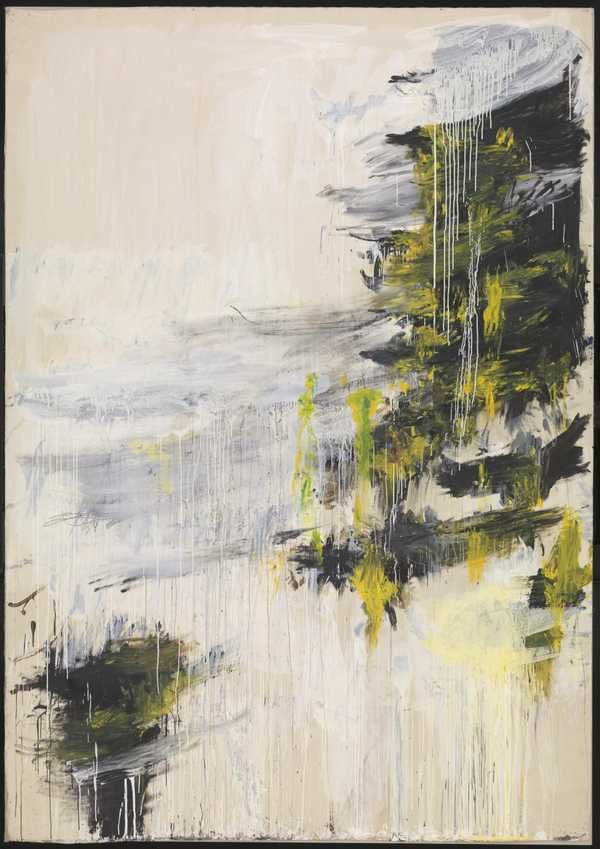
Cy Twombly. Quattro Stagioni (A Painting in Four Parts).
Một năm được vẽ bằng tay, và tay thì già đi.
A year painted by hand, and the hand grows older.
Tate · Tate
Bốn tấm toan, một năm
Quattro Stagioni nghĩa là bốn mùa trong tiếng Ý. Tựa đầy đủ thêm một dòng giải thích: A Painting in Four Parts, một bức tranh gồm bốn phần. Tate ghi năm thực hiện là 1993 đến 1995.
Bốn tấm toan dựng đứng, cao hơn người xem, treo cạnh nhau theo thứ tự của một năm: Primavera, Estate, Autunno, Inverno. Xuân, hạ, thu, đông.
Mỗi tấm có khí sắc riêng. Có tấm dày đặc màu, sơn chồng lên sơn rồi chảy thành dòng xuống mép dưới. Có tấm thưa hơn, nhiều khoảng trống, vài vệt màu như ai đó vừa quệt tay qua. Xen giữa là chữ viết tay, có chỗ đọc được, có chỗ nhoè đi, có chỗ bị sơn phủ một nửa.
Nhìn từ xa, bốn tấm thành một dãy như bốn khung cửa. Đến gần, mỗi tấm tan ra thành những cử chỉ nhỏ: một nét bút chì, một giọt sơn khô giữa đường, một chữ viết dở.
Vẽ bằng cử chỉ
Cy Twombly sinh năm 1928 ở Mỹ, bắt đầu vẽ khi Biểu hiện Trừu tượng đang ở đỉnh cao. Năm 1957 ông rời Mỹ sang Ý và sống ở đó phần lớn đời mình. Từ Ý, ông đọc văn chương châu Âu, đọc thần thoại Hy Lạp La Mã, và để những thứ ấy đi vào tranh bằng chữ.
Tranh của Twombly thường bị gọi là nét nguệch ngoạc. Đúng là trông như vậy. Nhưng đó là nguệch ngoạc có chủ ý: nét tay nhanh, không sửa, giữ lại tốc độ của lúc vẽ. Người xem không thấy một hình ảnh hoàn tất. Họ thấy dấu vết của một bàn tay đã chuyển động.
Trong Quattro Stagioni, cách vẽ ấy khớp với đề tài. Mùa không phải là thứ đứng yên để chép lại. Mùa là chuyển động: nắng dài ra rồi ngắn lại, cây xanh rồi rụng. Twombly không vẽ cảnh mùa. Ông vẽ cái cảm giác mùa đang đổi.
Chữ trong tranh làm việc tương tự. Twombly hay chép thơ, tên thần thoại, tên mùa vào tranh. Chữ viết tay có nhịp như nét cọ. Đọc được một nửa, đoán một nửa. Nó giống cách ta nhớ một mùa đã qua: vài chữ rõ, còn lại là cảm giác.
Vòng tròn và tuổi tác
Bốn mùa là đề tài cũ nhất của hội hoạ. Họa sĩ các thời đã vẽ nó như vòng quay của đất trời, của mùa gieo và mùa gặt, của tuổi trẻ và tuổi già. Twombly biết rõ truyền thống đó và bước vào nó khi đã ngoài sáu mươi.
Tuổi của người vẽ đổi nghĩa của đề tài. Với một người trẻ, bốn mùa là một năm. Với một người đã sống qua sáu mươi lần xuân hạ thu đông, bốn mùa là một phép đếm lùi. Mỗi mùa trở lại vẫn quen thuộc, nhưng số lần còn lại thì ít dần.
Tranh không nói điều đó thành lời. Nó để màu nói. Có những mảng rực và tràn, có những mảng xám và mỏng. Người xem có thể đọc thứ tự của chúng như một năm, hoặc như một đời, hoặc cả hai cùng lúc.
Năm 2008, Tate Modern mở triển lãm Cy Twombly: Cycles and Seasons. Ở trung tâm triển lãm là những tác phẩm về chu kỳ của mùa, thiên nhiên và thời gian. Bộ bốn mùa của Tate lần đầu được treo cùng bộ bốn mùa mà Bảo tàng Nghệ thuật Hiện đại New York đang giữ. Hai vòng năm đặt cạnh nhau, cùng một người vẽ, khác nhau ở từng cử chỉ.
Vì sao đáng nhớ
Quattro Stagioni không cho người xem một bức tranh phong cảnh. Nó cho một cách đứng trước thời gian: không đếm ngày, không ghi mốc, chỉ nhận ra rằng mọi thứ đang đổi.
Nếu Summertime của Jackson Pollock ghi lại một mùa hè bằng những đường sơn nhỏ dọc một tấm toan dài, thì Twombly trải cả năm ra thành bốn phần, và để khoảng trống giữa chúng làm việc của những tháng không được vẽ. Twombly mất năm 2011. Bốn tấm toan vẫn treo cạnh nhau, vẫn đi theo thứ tự xuân hạ thu đông, và vẫn bắt đầu lại mỗi lần có người đứng trước tấm đầu tiên.
Four canvases, one year
Quattro Stagioni means four seasons in Italian. The full title adds a line of explanation: A Painting in Four Parts. Tate dates the work 1993 to 1995.
Four upright canvases, taller than the viewer, hang side by side in the order of a year: Primavera, Estate, Autunno, Inverno. Spring, summer, autumn, winter.
Each has its own temper. One is crowded with colour, paint laid on paint until it runs down to the lower edge. Another is sparser, with open space and a few strokes that look wiped on by hand. Between them sits handwriting, sometimes legible, sometimes smeared, sometimes half covered in paint.
From a distance the four read as a row of doorways. Up close each dissolves into small gestures: a pencil line, a drip that dried halfway down, a word left unfinished.
Painting by gesture
Cy Twombly was born in the United States in 1928 and began painting at the height of Abstract Expressionism. In 1957 he left for Italy and spent most of his life there. From Italy he read European literature and Greek and Roman myth, and let them enter his paintings as words.
His work is often called scribble. It does look like that. But it is deliberate scribble: fast marks, uncorrected, keeping the speed of the moment they were made. The viewer does not see a finished image. They see the trace of a hand that moved.
In Quattro Stagioni this way of painting fits the subject. A season is not something that holds still to be copied. It is movement: days lengthen and shorten, leaves grow and fall. Twombly does not paint seasonal scenery. He paints the feeling of a season turning.
The writing works the same way. Twombly often copied lines of poetry, mythic names, the names of seasons into his canvases. Handwriting has a rhythm, like a brushstroke. Half is read, half is guessed. It resembles how we remember a past season: a few clear words, the rest a sensation.
Cycle and age
The four seasons is one of painting's oldest subjects. Painters of every period have treated it as the turning of heaven and earth, of sowing and harvest, of youth and old age. Twombly knew that tradition well and entered it in his sixties.
The painter's age changes the subject. For a young person, four seasons are a year. For someone who has lived through sixty springs and winters, four seasons are a countdown. Each returning season is familiar, but the number left grows smaller.
The paintings never say this in words. They let colour say it. Some areas are bright and overflowing, others grey and thin. The viewer can read their order as one year, or as one life, or both at once.
In 2008 Tate Modern opened Cy Twombly: Cycles and Seasons, built around his work on the cycles of seasons, nature and time. Tate's four seasons hung for the first time alongside the set held by the Museum of Modern Art in New York. Two years side by side, by the same painter, different in every gesture.
Why it stays
Quattro Stagioni does not give the viewer a landscape. It gives a way of standing before time: no counting of days, no dates, only the recognition that everything is changing.
Where Jackson Pollock's Summertime records one summer in small lines along a long canvas, Twombly spreads a whole year across four parts and lets the gaps between them stand for the months left unpainted. Twombly died in 2011. The four canvases still hang side by side, still in the order of spring to winter, and still begin again whenever someone stands before the first.
Modern Art