
Essays · Olfactory Art
Damascenone. Một phần triệu của hoa hồng.
Vật được nhận ra qua phần nhỏ nhất của nó.
A thing is known by its smallest part.
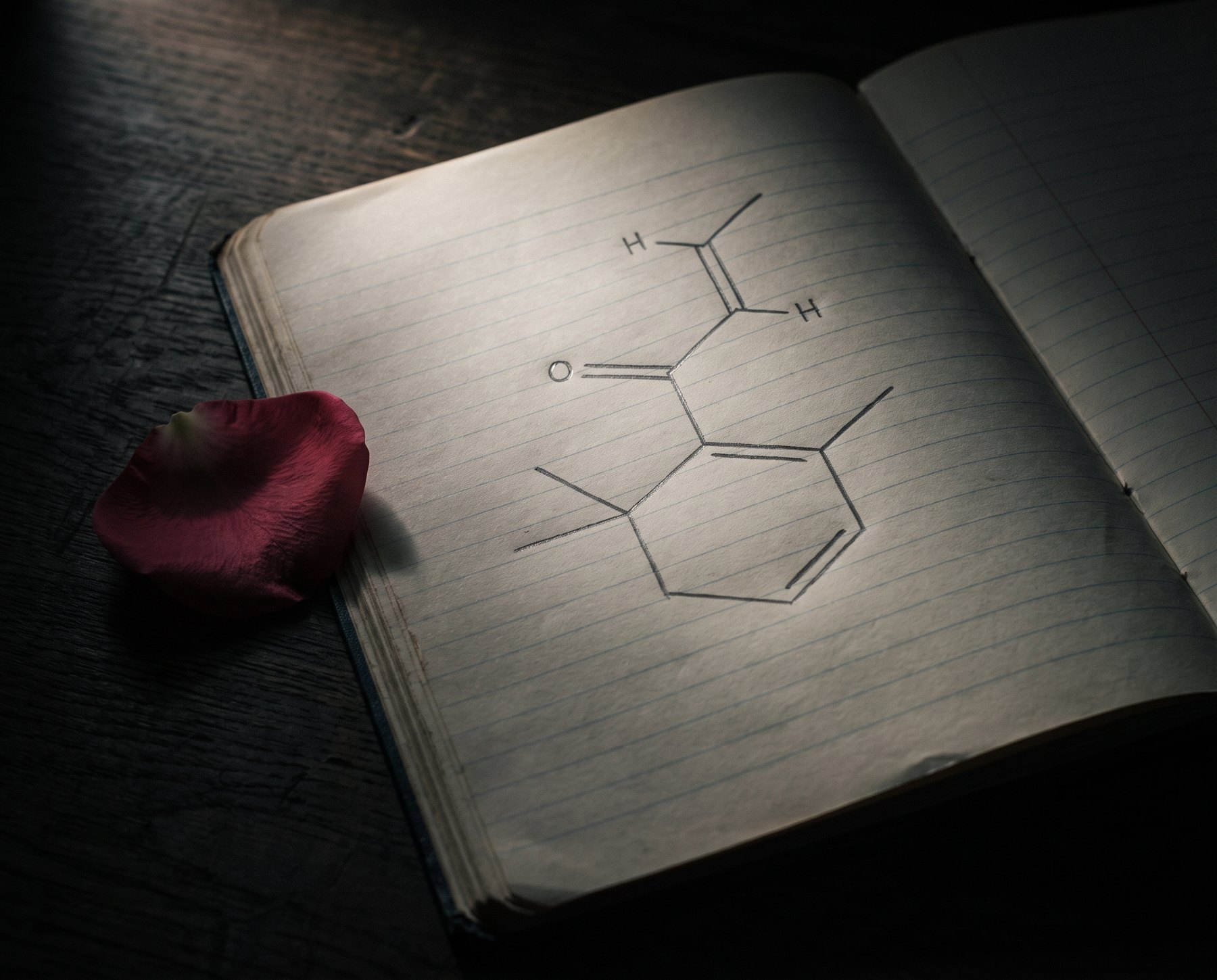
Hoa hồng Bulgaria và một phân tử gần như vô hình
Tinh dầu hoa hồng Bulgaria được cất từ loài hồng damask, Rosa damascena, trồng ở thung lũng Kazanlak. Nó là một trong những nguyên liệu tốn công nhất của nghề làm mùi: cần rất nhiều cánh hoa, hái vào sáng sớm, cất ngay trong ngày.
Về thành phần, tinh dầu hồng đã được phân tích từ lâu. Người ta biết những chất chiếm phần lớn khối lượng: citronellol, geraniol, phenylethyl alcohol, một số sáp không mùi. Nhưng khi ghép lại những chất chính theo đúng tỉ lệ, kết quả vẫn không giống hồng. Có gì đó bị thiếu.
Cái thiếu ấy không nằm ở chỗ nhiều. Nó nằm ở những chất có mặt rất ít, ít đến mức máy phân tích thời đó gần như không nhìn thấy. Nhưng mũi thì thấy. Mũi người nhạy với một số phân tử hơn bất kỳ dụng cụ nào.
Bài toán của các nhà hoá học trở thành bài toán của người đi tìm dấu vết: lọc từng phần nhỏ của tinh dầu, ngửi từng phần, và hỏi phần nào mang cái mùi mà ai cũng nhận ra là hồng.
Demole và cộng sự, 1970: tìm ra damascenone
Ở Firmenich, Geneva, nhóm của Edouard Demole làm đúng việc ấy. Năm 1970, họ công bố trên tạp chí Helvetica Chimica Acta cấu trúc của một phân tử tách ra từ tinh dầu hoa hồng Bulgaria, cùng cách tổng hợp nó. Họ đặt tên theo loài hồng: damascenone.
Damascenone thuộc nhóm mà ngành nguyên liệu gọi là rose ketones, họ hàng gần với ionone của hoa violet. Trong cùng nhóm có các damascone, mùi táo chín, mận, hoa hồng, ngửi rất mạnh. Damascenone là phân tử được nhắc đến nhiều nhất trong nhóm.
Điều khiến phát hiện này đáng nhớ là tỉ lệ. Trong tinh dầu, damascenone chỉ là một vệt rất nhỏ. Nhưng nó đóng góp mạnh vào mùi hồng mà người ta nhận ra, mạnh hơn nhiều so với những chất có mặt nhiều gấp bội. Lượng và tầm quan trọng không đi cùng nhau.
Demole không phải lần đầu làm việc này. Trước đó, ông đã nghiên cứu methyl jasmonate của hoa nhài, và công việc ấy dẫn tới Hedione. Cách làm giống nhau: tìm phần nhỏ trong vật, gọi tên nó, rồi làm lại nó.
Cùng một phân tử trong trà đen, whiskey, trái cây chín
Sau khi có tên, damascenone bắt đầu được tìm thấy ở nhiều nơi khác. Trong rượu vang. Trong rượu bourbon ủ thùng. Trong táo. Trong lá thuốc lá. Trong trà đen đã pha.
Lý do chung: damascenone sinh ra khi carotenoid, những sắc tố vàng cam trong thực vật, bị phân huỷ. Sắc tố ấy có trong lá, trong vỏ quả, trong cánh hoa. Khi lá trà được làm héo, lên men, sấy; khi nho lên men rồi nằm trong thùng; khi táo được nấu; khi lá thuốc lá được phơi, carotenoid bị bẻ gãy, và một phần trở thành damascenone.
Vì vậy mùi của phân tử này không chỉ là hoa hồng. Nó còn là táo nướng, mật ong, mận khô, thuốc lá. Đặt cạnh hồng, người ta nghe ra hồng. Đặt cạnh rượu, người ta nghe ra quả chín. Cùng một vật, được đọc khác nhau theo vật đứng bên cạnh.
Phần nhỏ nhất làm nên vật: về ngưỡng khứu giác
Mỗi phân tử có một ngưỡng: lượng nhỏ nhất mà mũi người còn nhận ra. Có chất phải rất đậm mới ngửi thấy. Có chất chỉ cần một vệt. Damascenone thuộc nhóm thứ hai, nhóm có ngưỡng cực thấp.
Điều này làm thay đổi cách ta hiểu một mùi. Một vật không có mùi theo tỉ lệ thành phần của nó. Nó có mùi theo những phần mà mũi bắt được. Một chất chiếm phần lớn khối lượng có thể gần như im lặng. Một chất chỉ là vệt có thể nói to nhất.
Penta nhìn đây như một bài học về quan sát. Muốn nhận ra một vật, không cần thấy hết nó. Chỉ cần thấy đúng một chỗ. Một bông hồng, một chén trà đen, một ly rượu cũ: cả ba đều có một phần rất nhỏ giống nhau, và phần ấy đủ để ta gọi tên.
Bulgarian rose and a nearly invisible molecule
Bulgarian rose oil is distilled from the damask rose, Rosa damascena, grown in the Kazanlak valley. It is one of the most labour intensive materials in the craft of smell: great quantities of petals, picked early in the morning, distilled the same day.
Its composition had long been analysed. The compounds making up most of its weight were known: citronellol, geraniol, phenylethyl alcohol, some odourless waxes. Yet when the main compounds were put back together in the right proportions, the result still did not smell like rose. Something was missing.
What was missing did not lie in quantity. It lay in compounds present in tiny amounts, so small the instruments of the time could barely see them. The nose could. The human nose is more sensitive to certain molecules than any instrument.
The chemists' problem became a tracker's problem: separate the oil into small fractions, smell each one, and ask which carries the smell everyone recognises as rose.
Demole and colleagues, 1970: finding damascenone
At Firmenich in Geneva, Edouard Demole's team did exactly that. In 1970 they published in Helvetica Chimica Acta the structure of a molecule isolated from Bulgarian rose oil, along with a synthesis. They named it after the rose: damascenone.
Damascenone belongs to what the materials trade calls rose ketones, close relatives of the ionones of violet. The same group includes the damascones, smelling of ripe apple, plum and rose, very powerful. Damascenone is the best known of them.
What makes the discovery memorable is proportion. In the oil, damascenone is a faint trace. Yet it contributes strongly to the rose smell people recognise, far more than compounds present many times over. Quantity and importance do not travel together.
It was not Demole's first time. Earlier he had studied the methyl jasmonate of jasmine, work that led to Hedione. The method was the same: find the small part inside the thing, name it, make it again.
The same molecule in black tea, whiskey, ripe fruit
Once it had a name, damascenone began to be found elsewhere. In wine. In cask aged bourbon. In apples. In tobacco leaf. In brewed black tea.
The shared reason: damascenone forms when carotenoids, the yellow and orange pigments of plants, break down. Those pigments sit in leaves, fruit skins, petals. When tea leaves are withered, oxidised and dried; when grapes ferment and rest in casks; when apples are cooked; when tobacco is dried in the sun, carotenoids split, and some become damascenone.
So the smell of this molecule is not only rose. It is baked apple, honey, prune, tobacco. Beside rose, one hears rose. Beside a spirit, one hears ripe fruit. The same thing, read differently according to what stands next to it.
The smallest part makes the thing: on thresholds
Every molecule has a threshold: the smallest amount the human nose can still detect. Some must be quite concentrated before we notice them. Some need only a trace. Damascenone belongs to the second kind, with an extremely low threshold.
This changes how we understand a smell. A thing does not smell according to the proportions of what it contains. It smells according to what the nose catches. A compound that makes up most of the weight can be nearly silent. A trace can speak loudest.
Penta takes this as a lesson in observation. To recognise a thing, one need not see all of it. Only the right spot. A rose, a cup of black tea, a glass of old spirit: all three share one very small part, and that part is enough for us to name them.
Olfactory Art