
Essays · Olfactory Art
Maki Ueda. Tangible Scents: Composition of Rose in the Air.
Một mùi quen thuộc cũng có thể tháo ra từng mảnh.
Even a familiar smell can be taken apart, piece by piece.
© Maki Ueda · Maki Ueda (official site)
Một ngày tháng 11 ở Reed College
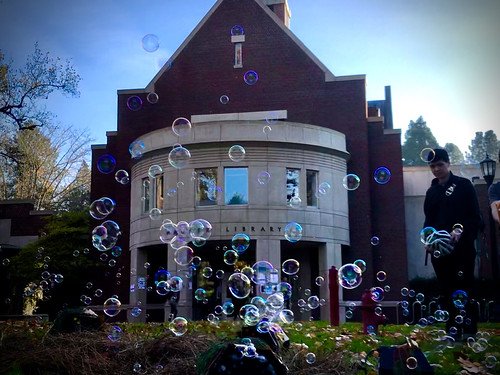
Ngày 15 tháng 11 năm 2018, trong khuôn khổ Reed Arts Week tại Reed College, thành phố Portland, Mỹ, năm chiếc máy thổi bong bóng được đặt ngoài trời. Mỗi máy chứa một dung dịch xà phòng riêng. Mỗi dung dịch mang một phân tử mùi riêng.
Năm phân tử ấy là những thành phần chính tạo nên mùi hoa hồng. Phenyl ethyl alcohol, ngọt, tươi, gợi mùi rượu sake. Geraniol, tươi và hơi có vị cam chanh. Phenyl acetic acid, chua và có nét hoa. Rose oxide, tươi và hơi mùi kim loại. Aldehyde C9, béo, xanh, gần với mùi dưa chuột.
Đứng riêng, không phân tử nào ngửi giống hoa hồng hẳn. Đứng chung, chúng gợi ra một bông hồng. Tác phẩm đặt người xem vào khoảng giữa hai trạng thái đó.
Thời điểm thổi của từng máy được điều khiển từ xa. Giám tuyển là Aersen Lease, giám đốc nghệ thuật của Reed Arts Week năm ấy. Năm 2019, tác phẩm vào nhóm chung kết giải Sadakichi của Art and Olfaction Awards.
Tháo ra, ráp lại giữa không trung
Ueda gọi phương pháp này là tháo rời rồi dựng lại trong không khí. Thay vì trình bày một mùi đã hoàn chỉnh trong lọ, bà tách nó thành các phần và để không gian làm việc ráp.
Người xem có hai cách đứng trước tác phẩm. Cách thứ nhất: đuổi theo một bong bóng, chọc cho nó vỡ ngay trước mũi, và ngửi một phân tử đơn lẻ. Cách thứ hai: đứng giữa đám bong bóng từ cả năm máy, nơi các mùi vỡ ra gần nhau và chồng lên nhau trong không khí. Ở vị trí ấy, bông hồng hiện ra.
Bà gọi phần này là một bản hoà âm trong không gian. Không có công thức cố định. Gió đổi, bong bóng bay lệch, một máy thổi dày hơn máy khác, và tỷ lệ các mùi trong không khí thay đổi từng giây. Mỗi người xem, ở mỗi chỗ đứng, ngửi thấy một bông hồng hơi khác.
Câu hỏi Ueda đặt ra cho dự án rất cụ thể: làm sao để mùi trở nên hữu hình và dễ hiểu hơn với người xem? Bong bóng là câu trả lời của bà. Nó cho mùi một hình dạng, một đường bay, và một khoảnh khắc biến mất có thể nhìn thấy.
Vì sao là hoa hồng
Ueda chọn hoa hồng vì đó là mùi gần như ai cũng nhận ra. Nhưng cũng vì một lý do ngược lại: không có một mùi hồng điển hình. Hồng Damask khác hồng trà, hồng dại khác hồng trồng trong nhà kính. Mỗi người mang một ý niệm riêng về mùi hồng.
Chính sự vừa quen vừa không thống nhất ấy làm hoa hồng thành chất liệu tốt cho một thí nghiệm. Khi người xem nói rằng bong bóng này có mùi hồng, bong bóng kia thì không, họ đang cho thấy ý niệm riêng của mình về hoa hồng nằm ở phân tử nào.
Trước Portland, Ueda đã thử ý tưởng này qua nhiều hình thức. Một buổi trình diễn nhỏ tại WOMB, Tokyo, tháng 11 năm 2017. Một sắp đặt bằng nến tại Art Hotel Ishigaki cùng tháng. Một buổi workshop trên đảo Ishigaki vào tháng 8 năm 2018. Tangible Scents là bước đưa thí nghiệm ra ngoài trời.
Mùi trong không khí, không trong lọ
Nhiều tác phẩm của Ueda xem không khí là chất liệu, không chỉ là nơi mùi đi qua. Ở Aerosculpture: Sea of Fragrant Cloud, bà dùng khói để cho thấy mùi chuyển động. Ở Tangible Scents, bà dùng bong bóng để cho thấy mùi được chia phần.
Hai tác phẩm cùng chung một ý: mùi không phải thứ đứng yên. Nó bay, loãng ra, gặp mùi khác, rồi tan. Một chai nước hoa đóng nắp giữ mùi ở trạng thái đứng yên. Một bong bóng vỡ giữa trời thì trả mùi lại cho sự chuyển động vốn có của nó.
Điều còn lại sau tác phẩm là một cách ngửi khác. Lần sau đứng trước một bông hồng thật, người xem có thể thử làm điều Ueda làm: không ngửi cả bông, mà tìm từng mảnh. Chỗ nào ngọt. Chỗ nào xanh. Chỗ nào có chút kim loại.
A November day at Reed College
On 15 November 2018, during Reed Arts Week at Reed College in Portland, Oregon, five bubble machines were set up outdoors. Each held its own soap solution. Each solution carried its own scent molecule.
The five molecules are major components of the smell of rose. Phenyl ethyl alcohol, fresh and sweet, with a hint of sake. Geraniol, fresh and faintly citrus. Phenyl acetic acid, sour and floral. Rose oxide, fresh and slightly metallic. Aldehyde C9, fatty and green, close to cucumber.
Alone, none of them quite smells like a rose. Together they suggest one. The work places the audience in the space between those two states.
The timing of each machine was controlled remotely. The curator was Aersen Lease, artistic director of Reed Arts Week that year. In 2019 the work was a finalist for the Sadakichi Award of the Art and Olfaction Awards.
Taken apart, put together in mid air
Ueda calls her method deconstruction and reconstruction in the air. Instead of presenting a finished smell in a bottle, she splits it into parts and lets the space do the assembling.
There are two ways to stand before the work. One: chase a single bubble, pop it right under your nose, and smell one molecule on its own. Two: stand among the bubbles from all five machines, where the scents burst close together and overlap in the air. There, the rose appears.
She describes this as a composition in space. There is no fixed formula. The wind shifts, bubbles drift, one machine blows more densely than another, and the ratio of scents in the air changes by the second. Each visitor, in each spot, smells a slightly different rose.
The question Ueda set for the project was practical: how can smell become more tangible and easier for an audience to grasp? Bubbles were her answer. They give smell a shape, a flight path, and a moment of disappearance you can watch.
Why a rose
Ueda chose the rose because almost everyone recognises it. But also for the opposite reason: there is no typical rose smell. Damask rose differs from tea rose; a wild rose differs from one grown under glass. Everyone carries their own idea of what rose smells like.
That mix of familiarity and disagreement makes the rose good material for an experiment. When a visitor says this bubble smells of rose and that one does not, they reveal which molecule holds their private idea of a rose.
Before Portland, Ueda had tested the idea in several forms: a short performance at WOMB in Tokyo in November 2017, a candle installation at Art Hotel Ishigaki the same month, and a workshop on Ishigaki Island in August 2018. Tangible Scents took the experiment outdoors.
Smell in the air, not in a bottle
Many of Ueda's works treat air as material rather than merely the medium smell passes through. In Aerosculpture: Sea of Fragrant Cloud she used smoke to show smell in motion. In Tangible Scents she used bubbles to show smell divided into parts.
Both share one idea: smell does not stand still. It drifts, thins, meets other smells, and dissolves. A capped bottle holds a scent in stillness. A bubble bursting outdoors returns it to the movement that is its nature.
What remains after the work is another way of smelling. Next time they stand before a real rose, visitors might try what Ueda did: not smelling the whole flower, but looking for its pieces. Where it is sweet. Where it is green. Where there is a touch of metal.

Olfactory Art