
Essays · Olfactory Art
Maki Ueda. Aerosculpture: Sea of Fragrant Cloud.
Mùi luôn chuyển động. Ở đây, lần đầu ta thấy nó đi.
Scent is always moving. Here, for once, we see it go.
© Maki Ueda · Maki Ueda (official site)
Mười ngày ở Arashiyama
Từ ngày 3 đến ngày 12 tháng 11 năm 2022, một lữ quán ven sông ở Arashiyama, Kyoto, trở thành nơi trưng bày. Lữ quán tên Riverside Ryokan Arashiyama Benkei. Arashiyama nằm ở phía tây cố đô, là một vùng có nhiều chùa chiền, từ lâu đã là nơi hành hương và nghỉ chân.
Tác phẩm là Aerosculpture: Sea of Fragrant Cloud, tạm dịch Điêu khắc khí: Biển mây thơm, của Maki Ueda, nghệ sĩ Nhật làm việc với khứu giác từ nhiều năm nay. Dự án được thực hiện trong khuôn khổ Kyoto Arashiyama Art Festival, một liên hoan nghệ thuật trình diễn.
Chi tiết ấy quan trọng. Tác phẩm không được mời vào như một vật trưng bày tĩnh. Nó được đặt vào một liên hoan của những thứ diễn ra theo thời gian: sân khấu, âm nhạc, múa. Ueda muốn chứng minh rằng mùi hương cũng có thể là một môn nghệ thuật trình diễn.
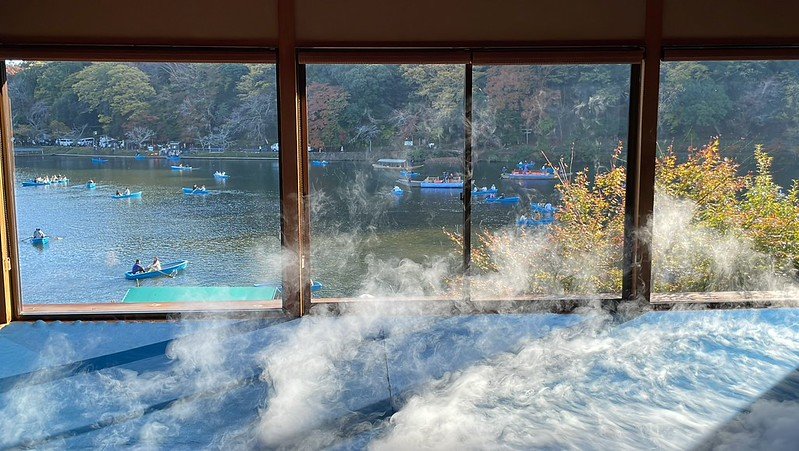
Người đến xem không đi qua một mê cung, như trong những tác phẩm trước của bà. Họ đứng trong một căn phòng, và nhìn mây.
Đá khô, khói và mùi nhang
Chất liệu chính là đá khô và khói. Đá khô là băng carbon dioxide, rất lạnh. Khi gặp không khí ấm, nó bốc hơi thành một lớp sương trắng dày, nặng hơn không khí, bò sát mặt sàn. Ueda thử nghiệm để lớp sương ấy mang theo mùi, và mùi bà nhắm tới là mùi nhang chùa.
Khi mùi đi cùng sương, người xem thấy được đường nó đi. Mây tràn ra, chảy xuống, vỡ thành những dải mỏng khi có người bước qua. Mùi mà bình thường chỉ ngửi được, giờ có hình dạng, có hướng, có tốc độ.
Tên tác phẩm gọi đó là điêu khắc. Nhưng đây là một thứ điêu khắc không có khối cố định. Hình của nó đổi theo từng phút, theo nhiệt độ căn phòng, theo số người đang đứng trong đó. Không có hai người xem nào thấy cùng một tác phẩm. Và khi đá khô tan hết, bức tượng biến mất, chỉ còn lại mùi.
Phần âm thanh do Friedrich Glorian thực hiện, với cồng Tây Tạng. Tiếng cồng rung lâu, trầm, lan trong không gian theo cách giống mây lan trên sàn. Âm thanh và mùi được sắp đặt để đi cùng nhau theo thời gian, như hai phần của một bản nhạc.
Ueda nói bà muốn tạo ra một nơi để chơi với mùi như trẻ con. Ý ấy đến từ ký ức thời nhỏ của bà. Mây đá khô là thứ trẻ con nào cũng muốn chạm vào, và không đứa nào nắm được. Mùi cũng vậy.
Câu hỏi từ những năm đại dịch
Aerosculpture tiếp nối một câu hỏi Ueda đặt ra trong đại dịch: nếu ta nhìn thấy được mùi thì sao? Trong những năm ấy, cả thế giới lo về một thứ vô hình trong không khí. Virus đi qua hơi thở, qua phòng kín, qua khoảng cách giữa hai người. Không ai thấy nó.
Ueda nghĩ rằng mùi có thể làm lộ ra chuyển động vô hình ấy. Nếu một mùi đi được từ người này sang người kia, thì những thứ khác trong không khí cũng đi đúng đường đó. Mùi trở thành một công cụ để nhìn, không chỉ để ngửi.
Nhưng ở Arashiyama, câu hỏi ấy không mang màu lo âu. Nó được chuyển thành một thứ nhẹ hơn: một biển mây thơm trong một lữ quán cổ, tiếng cồng, và người xem đứng yên nhìn không khí chuyển động. Nỗi sợ của những năm trước được đổi thành sự tò mò.
Năm 2023, tác phẩm vào chung kết giải Sadakichi dành cho tác phẩm thử nghiệm với mùi hương. Đặt cạnh Olfactory Labyrinth Ver. 4, nơi Ueda dùng mũi để đo khoảng cách, Aerosculpture đi theo hướng ngược lại. Ở đó mắt nhường việc cho mũi. Ở đây mũi nhờ mắt nhìn hộ.
Ten days in Arashiyama
From 3 to 12 November 2022, a riverside inn in Arashiyama, Kyoto, became an exhibition space. The inn was the Riverside Ryokan Arashiyama Benkei. Arashiyama lies on the western edge of the old capital, a district of temples that has long been a place of pilgrimage and rest.
The work was Aerosculpture: Sea of Fragrant Cloud by Maki Ueda, a Japanese artist who has worked with smell for many years. It was produced for the Kyoto Arashiyama Art Festival, a festival of performing arts.
That detail matters. The work was not invited as a static object. It was placed in a festival of things that unfold in time: theatre, music, dance. Ueda wanted to show that scent can also be a performing art.
Visitors did not walk through a labyrinth, as in her earlier works. They stood in a room and watched clouds.
Dry ice, smoke and incense
The main materials were dry ice and smoke. Dry ice is frozen carbon dioxide, very cold. Meeting warm air, it turns into a thick white mist, heavier than air, that creeps along the floor. Ueda experimented with making that mist carry a smell, and the smell she aimed for was temple incense.
When the smell travels with the mist, its path can be seen. The cloud spills, flows down, breaks into thin ribbons as someone walks through. A smell normally only breathed now has a shape, a direction, a speed.
The title calls it sculpture. But it is a sculpture with no fixed form. Its shape changes minute by minute, with the room's temperature, with how many people stand in it. No two visitors see the same work. When the dry ice is spent, the sculpture vanishes, and only the smell remains.
The sound was by Friedrich Glorian, on Tibetan gongs. The gongs ring long and low, spreading through the room the way cloud spreads across the floor. Sound and smell were arranged to move together in time, like two parts of one score.
Ueda said she wanted to make a place to play with scent like a child. The idea came from her own childhood memories. Dry ice cloud is something every child wants to touch and none can hold. Scent is the same.
A question from the pandemic years
Aerosculpture continues a question Ueda asked during the pandemic: what if we could see scent? In those years the whole world worried about something invisible in the air. A virus moving through breath, closed rooms, the space between two people. No one could see it.
Ueda thought scent might reveal that invisible movement. If a smell can travel from one person to another, other things in the air follow the same path. Scent becomes a tool for seeing, not only for smelling.
Yet in Arashiyama the question carries no anxiety. It is turned into something lighter: a sea of scented cloud in an old inn, the sound of gongs, and visitors standing still to watch the air move. The fear of earlier years becomes curiosity.
In 2023 the work was a finalist for the Sadakichi Award for experimental work with scent. Set beside Olfactory Labyrinth Ver. 4, where Ueda used the nose to measure distance, Aerosculpture goes the other way. There the eyes handed their task to the nose. Here the nose asks the eyes to look for it.
Olfactory Art