
Essays · Olfactory Art
Maki Ueda. Viral Parfum.
Thứ không nhìn thấy vẫn để lại dấu.
What cannot be seen still leaves a mark.
© Maki Ueda · Maki Ueda (official site)
Một phòng trưng bày giữa đại dịch
Từ ngày 7 tháng 5 đến ngày 29 tháng 8 năm 2021, Städtische Galerie Bremen ở Đức trưng bày triển lãm Smell It!, do Ingmar Lähnemann giám tuyển. Đó là mùa hè thứ hai của đại dịch. Không khí trong phòng kín, thứ mà triển lãm lấy làm chất liệu, lúc ấy cũng là thứ khiến người ta e ngại nhất.
Trong triển lãm ấy, Maki Ueda, nghệ sĩ Nhật Bản đã làm việc với mùi từ nhiều năm, ra mắt Viral Parfum. Tên tác phẩm ghép hai chữ lẽ ra không bao giờ đứng cạnh nhau: virus và nước hoa.
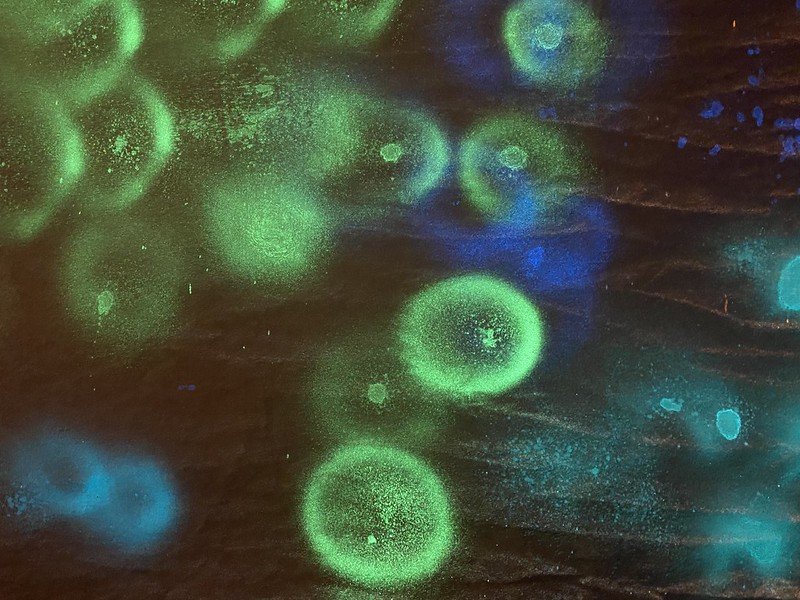
Tác phẩm là một sắp đặt không gian. Nó dùng mùi và ánh sáng đen, loại đèn tia cực tím làm một số chất phát sáng trong bóng tối. Dưới ánh sáng thường, căn phòng không có gì đặc biệt. Dưới đèn cực tím, những vệt màu hiện ra khắp nơi.
Năm 2022, Viral Parfum nhận giải Sadakichi của Art and Olfaction Awards, dành cho tác phẩm thử nghiệm với mùi. Đây không phải lần đầu Ueda làm việc với khoảng cách giữa mũi và vật: ở Olfactory Labyrinth Ver. 4, bà dùng mùi để dựng những cây anh đào vô hình. Ở Viral Parfum, thứ vô hình là một thứ ai cũng muốn tránh.
Sáu mùi, sáu màu, sáu biến thể
Ueda làm sáu hợp hương. Mỗi hợp hương đại diện cho một biến thể của virus corona và mang một màu riêng: xanh da trời, xanh lá, vàng, xanh lam, trắng, cam. Các màu này không nhìn thấy dưới ánh sáng thường. Chúng chỉ hiện ra dưới đèn cực tím.
Nghệ sĩ công bố cả thành phần của từng mùi. Số một có tinh dầu ngọc lan tây. Số ba chỉ có ngọc lan tây. Số năm có linalool và vanillin. Số sáu là một hỗn hợp hương hoa cam do bà tự làm. Những cái tên ấy là nguyên liệu quen thuộc của người làm nước hoa, không có gì đáng sợ. Chính vì vậy chúng hợp với tác phẩm: thứ đại diện cho virus lại được làm từ những mùi hoa.
Người xem được mời cầm bình xịt và xịt "nước hoa virus" lên bất cứ đâu trong phòng. Tường, sàn, đồ vật. Người đến sau dùng mũi để tìm nơi virus đã bám vào. Dưới đèn cực tím, họ thấy dấu vết của những người trước mình.
Căn phòng dần trở thành một bản đồ lây lan. Không có số liệu, không có biểu đồ. Chỉ có những vệt màu và những mùi đan chéo nhau, mỗi vệt là một cử chỉ của một người đã đứng ở đó.
Hoa loa kèn trắng
Khi sáu mùi gặp nhau trong không khí, chúng tạo thành mùi hoa loa kèn trắng. Ueda chọn loài hoa này như một lời tưởng niệm những người đã mất trong đại dịch. Ở nhiều nơi, loa kèn trắng là hoa của tang lễ.
Đây là điểm xoay của tác phẩm. Từng mùi đơn lẻ đại diện cho một thứ gây hại. Nhưng khi chúng lan rộng, chồng lên nhau, bám vào khắp phòng, thứ hiện ra lại là một bông hoa. Sự lây lan, trong tác phẩm, không kết thúc bằng con số. Nó kết thúc bằng một lời tiễn.
Ueda nói rõ những điểm giống nhau giữa mùi và virus: cả hai đều vô hình, đi qua không khí, bám vào bề mặt, rồi tan dần theo thời gian. Năm 2021, những điều ấy là nguồn lo âu hằng ngày. Bà lấy chúng ra khỏi nỗi sợ và đặt chúng vào một căn phòng, nơi người ta có thể quan sát chúng chậm rãi.
Điều đáng nhớ ở Viral Parfum là nó không cố làm người xem quên. Nó làm cho thứ vô hình hiện ra, dưới một ánh đèn, bằng một mùi. Rồi mùi tan đi, như mọi mùi khác. Nhưng người đã ngửi thấy mùi loa kèn trong căn phòng ấy khó mà ngửi loài hoa này theo cách cũ.
A gallery in the middle of a pandemic
From 7 May to 29 August 2021, the Städtische Galerie Bremen in Germany showed Smell It!, curated by Ingmar Lähnemann. It was the second summer of the pandemic. The air of a closed room, the very material of the exhibition, was then what people feared most.
There Maki Ueda, a Japanese artist who has worked with smell for many years, premiered Viral Parfum. The title joins two words that should never stand side by side: virus and perfume.
The work is a spatial installation of smell and black light, the ultraviolet lamps that make certain substances glow in the dark. Under ordinary light the room looks unremarkable. Under ultraviolet, streaks of colour appear everywhere.
In 2022 Viral Parfum received the Sadakichi Award from the Art and Olfaction Awards, for experimental work with scent. Ueda had worked before with the distance between nose and object: in Olfactory Labyrinth Ver. 4 she used smell to raise invisible cherry trees. In Viral Parfum, the invisible thing is one everyone wanted to avoid.
Six smells, six colours, six variants
Ueda made six accords. Each stands for a variant of the coronavirus and carries its own colour: sky blue, green, yellow, blue, white, orange. The colours cannot be seen in ordinary light. They appear only under ultraviolet.
The artist published the ingredients of each. Number one contains ylang ylang oil. Number three is ylang ylang alone. Number five contains linalool and vanillin. Number six is a neroli composition of her own. These are ordinary perfumery materials, nothing frightening. That is why they suit the work: what stands for the virus is made of flower smells.
Visitors are invited to take a spray and apply the "viral parfum" anywhere in the room. Walls, floor, objects. Those who come later use their noses to find where the virus has attached. Under the ultraviolet lamps they see the traces of the people before them.
The room slowly becomes a map of spread. No statistics, no charts. Only streaks of colour and crossing smells, each one the gesture of someone who stood there.
White lily
When the six smells meet in the air, they form the smell of white lily. Ueda chose the flower as a tribute to those who died in the pandemic. In many places the white lily is a funeral flower.
This is where the work turns. Each smell alone stands for something harmful. But as they spread, overlap and settle across the room, what emerges is a flower. Spread, in this work, does not end in a number. It ends in a farewell.
Ueda names the likeness between smell and virus plainly: both are invisible, travel through the air, attach to surfaces, and fade over time. In 2021 these were daily sources of anxiety. She took them out of fear and placed them in a room where they could be observed slowly.
What stays with Viral Parfum is that it does not try to make visitors forget. It makes the invisible appear, under a lamp, through a smell. Then the smell fades, like every smell. But anyone who smelled lily in that room will find it hard to smell the flower the old way again.

Olfactory Art