
Essays · Olfactory Art
Maki Ueda. That Microplastics Smell Delicious!
Một mùi có thể biến rác thành mồi.
A smell can turn waste into bait.
Maki Ueda (official artist site) · Maki Ueda (official artist site)
Bóng xanh, bóng trắng, một mùi
That Microplastics Smell Delicious! là một sắp đặt Maki Ueda làm năm 2023 và giới thiệu tại Tokyo Biennale 2023 vào ngày 22 tháng 9 năm ấy. Dự án thuộc chương trình do Masaki Fujihata cùng Super Sorted Trash Cans Project 2023 thực hiện.
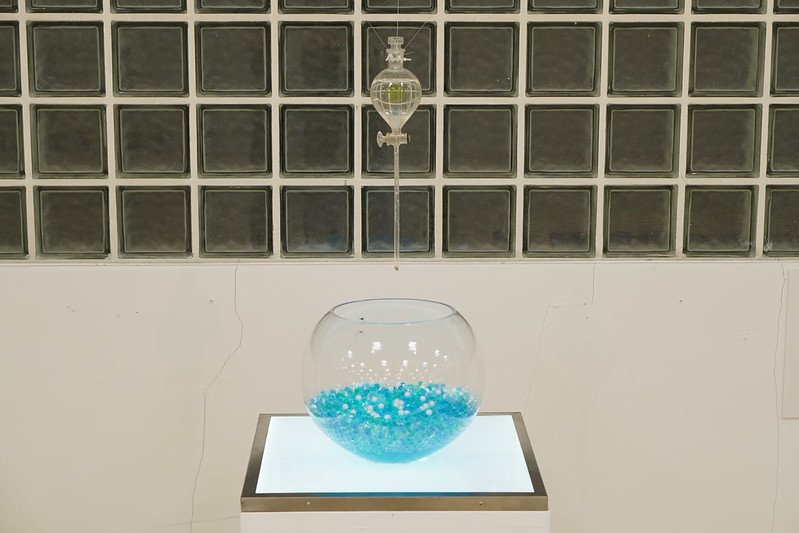
Hình thức của tác phẩm rất đơn giản. Trong một khối chứa là những quả bóng màu xanh và màu trắng. Bóng xanh là đại dương. Bóng trắng là nhựa. Nhìn bằng mắt, hai loại bóng tách bạch, không thể nhầm.
Nhưng tác phẩm không dành cho mắt. Một cơ chế nhỏ nhả ra một mùi theo liều lượng được kiểm soát, khoảng hai mươi giọt mỗi ngày. Mùi ấy là dimethyl sulfide, viết tắt là DMS, một chất do sinh vật phù du tạo ra. Nhiều người sẽ nhận ra nó là một phần của thứ mùi mà ta vẫn gọi là mùi biển.
DMS sôi ở khoảng 38 độ C, tức là rất dễ bay hơi. Theo mô tả của nghệ sĩ, bà phải điều chỉnh dung môi để mùi giữ được độ ổn định trong điều kiện phòng triển lãm. Một mùi dễ mất như vậy cần được giữ lại bằng tính toán, từng giọt.
Vì sao sinh vật biển ăn nhựa
Tác phẩm dựa trên một phát hiện khoa học. Sinh vật biển ăn nhầm vi nhựa không phải vì hình dạng của nó, mà vì mùi của nó. Nhựa dễ hút mùi, trong đó có DMS. Nhiều sinh vật biển nhìn không rõ nhưng có khứu giác nhạy. Với chúng, một mẩu nhựa đã thấm mùi DMS trở thành một thứ mồi giả.
Một nghiên cứu công bố trên tạp chí Science Advances năm 2016 đã mô tả cơ chế này ở chim biển. Khi ở ngoài biển vài tuần, các mẩu nhựa bị vi sinh vật bám kín, và lớp vi sinh ấy khiến nhựa mang dấu hiệu mùi DMS. Trong tự nhiên, DMS được giải phóng khi sinh vật phù du thực vật bị những sinh vật phù du động vật như nhuyễn thể ăn. Một số loài chim biển dùng chính mùi ấy để tìm tới nơi có nhiều nhuyễn thể.
Nghiên cứu ghi nhận rằng những loài chim phản ứng với DMS ăn nhựa thường xuyên hơn khoảng năm lần so với những loài không phản ứng. Kết quả này sau đó cũng được giới khoa học tranh luận về phương pháp. Nhưng ý chính vẫn đáng để dừng lại: một tín hiệu vốn giúp chim tìm thức ăn, nay dẫn chúng tới rác.
Mùi như một thông điệp
Maki Ueda là nghệ sĩ người Nhật làm việc nhiều năm tại Hà Lan. Phần lớn tác phẩm của bà dùng mùi để khám phá không gian và khứu giác, như Olfactoscape hay loạt mê cung mùi. That Microplastics Smell Delicious! rẽ sang một hướng khác: dùng mùi để nói về ô nhiễm đại dương.
Nhiều tác phẩm về môi trường dùng hình ảnh mạnh: bãi rác, xác chim, con số. Ueda chọn một đường vòng. Bà không cho người xem thấy hậu quả. Bà cho họ ngửi nguyên nhân. Mùi DMS trong phòng không ghê rợn. Nó chỉ hơi mặn, hơi lưu huỳnh, như một bờ biển. Và chính vì nó quen thuộc, người xem mới hiểu con chim bị lừa dễ dàng thế nào.
Cái tên của tác phẩm cũng làm việc đó. Vi nhựa có mùi ngon! Câu cảm thán nghe như một quảng cáo vui vẻ. Nhưng người nói câu ấy là một con chim biển, và câu ấy là một cái bẫy.
Tác phẩm đáng nhớ vì nó đảo vị trí của người xem. Ta thường nhìn vấn đề môi trường từ trên cao, như người quan sát. Ở đây, trong vài giây, ta ngửi thế giới bằng mũi của một sinh vật khác. Và ta nhận ra rằng những gì ta thải ra biển không chỉ có hình dạng. Chúng còn có mùi, và mùi ấy đang nói với những sinh vật khác một điều sai.
Blue balls, white balls, one smell
That Microplastics Smell Delicious! is an installation Maki Ueda made in 2023 and presented at Tokyo Biennale 2023 on 22 September that year, within a programme produced by Masaki Fujihata with the Super Sorted Trash Cans Project 2023.
Its form is simple. Inside a container are blue balls and white balls. Blue is the ocean. White is plastic. To the eye, the two are distinct and impossible to confuse.
But the work is not for the eye. A small mechanism releases a smell in controlled doses, around twenty drops a day. The smell is dimethyl sulfide, DMS, a compound produced by plankton. Many people will recognise it as part of what we call the smell of the sea.
DMS boils at around 38°C, so it evaporates very easily. According to the artist, she adjusted the solvents so the smell would stay stable in exhibition conditions. A smell that escapes so readily has to be held in place by calculation, drop by drop.
Why sea creatures eat plastic
The work rests on a scientific finding. Marine creatures mistake microplastics for food not because of how they look but because of how they smell. Plastic absorbs odours easily, DMS among them. Many sea creatures see poorly but smell keenly. To them, plastic soaked in DMS becomes a false bait.
A study published in Science Advances in 2016 described this mechanism in seabirds. After a few weeks at sea, plastic fragments are coated by microbes, which give the plastic a DMS signature. In nature, DMS is released when phytoplankton are eaten by zooplankton such as krill, and some seabirds use that smell to find feeding grounds.
The study reported that bird species responsive to DMS ate plastic about five times as often as species that were not. Its methods were later debated by other scientists. But the core idea is worth pausing on: a signal that once helped birds find food now leads them to waste.
Smell as a message
Maki Ueda is a Japanese artist who has worked for many years in the Netherlands. Much of her work uses smell to explore space and perception, like Olfactoscape or her smell mazes. This work turns elsewhere: using smell to speak about ocean pollution.
Many environmental works rely on strong images: landfills, dead birds, statistics. Ueda takes a detour. She does not show the consequence. She lets people smell the cause. The DMS in the room is not horrifying. It is a little salty, a little sulfurous, like a shoreline. Because it is familiar, visitors understand how easily a bird is fooled.
The title does the same work. Microplastics smell delicious! It sounds like a cheerful advertisement. But the speaker is a seabird, and the sentence is a trap.
What stays is the shift in position. We usually look at environmental problems from above. Here, for a few seconds, we smell the world through another creature's nose, and realise that what we throw into the sea has not only a shape, but a smell, and that smell tells other creatures something false.
Olfactory Art