
Essays · Olfactory Art
Donna Huanca. CUEVA DE COPAL.
Cơ thể vắng mặt. Mùi của nó thì không.
The body is absent. Its smell is not.
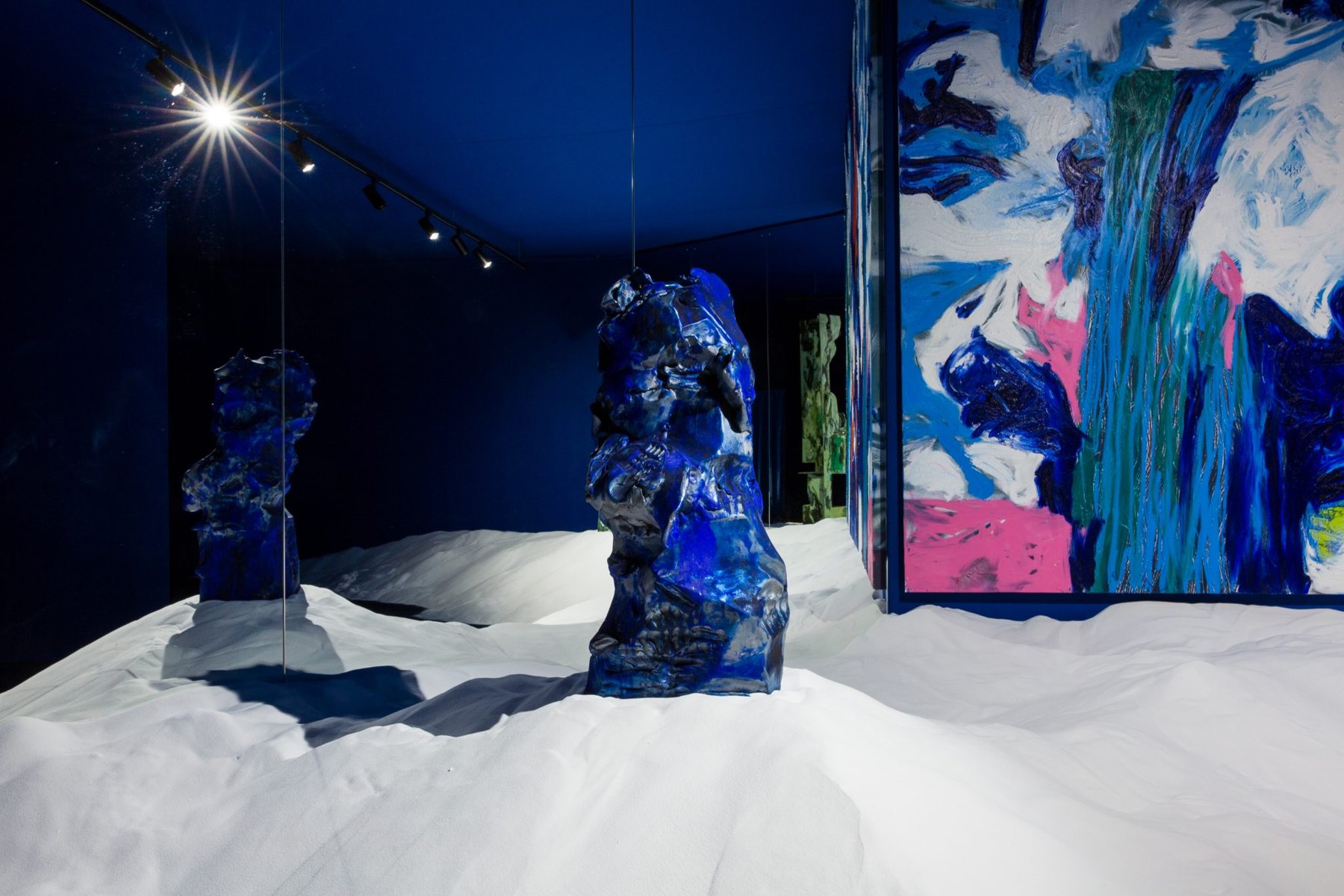
Photo: Lisa Whiting Photography. Courtesy Arnolfini, Bristol · ArtReview
Đi qua một tấm rèm xanh
Lối vào CUEVA DE COPAL là một tấm rèm dải nhựa màu xanh điện. Sau nó là một hành lang hẹp. Rồi căn phòng mở ra.
Sàn phủ cát trắng, trắng như xương. Chính lớp cát cho người xem biết hình dáng thật của căn phòng: một hình tam giác. Ở đầu xa nhất, đối diện lối vào, là bốn bức tranh khổ lớn, đặt như điểm hội tụ của cả không gian. Đó là CUEVA DE COPAL #1 đến #4, đều làm năm 2021, bằng sơn dầu và cát.
Tiếng động lấp đầy phòng: nước sóng sánh, gió lướt qua, chim hót. Không có con chim nào, không có dòng nước nào. Chỉ có âm thanh, phát ra từ một nơi không thấy, như thể cái hang nằm sát một dòng suối ở ngoài kia.
Và có mùi. Một mùi gỗ, do chính Donna Huanca làm ra, lan khắp phòng. Nó gợi tới nhựa copal, loại nhựa cây được đốt trong các nghi lễ thanh tẩy của nhiều nền văn hoá bản địa ở Trung và Nam Mỹ. Tên tác phẩm dịch ra là Hang Copal.
Những cơ thể dưới lớp màu
Huanca là nghệ sĩ người Mỹ gốc Bolivia. Trong nhiều sắp đặt trước đây, cô đưa người mẫu vào không gian, thân thể được sơn phủ, đứng hoặc di chuyển chậm giữa người xem. Cơ thể sống là một phần của tác phẩm, như tranh, như tượng.
CUEVA DE COPAL được dựng tại Arnolfini, Bristol, và mở cửa đến cuối tháng 5 năm 2022. Vì những giới hạn của đại dịch, lần này không có người biểu diễn. Căn phòng trống người.
Nhưng cơ thể không hoàn toàn biến mất. Bốn bức tranh lớn mang những dấu vết ảnh chụp của thân thể người mẫu, nằm dưới nhiều lớp màu tự nhiên. Nhìn gần, người xem thấy một đường cong vai, một vùng da, rồi mất dấu. Tranh không vẽ cơ thể. Nó chôn cơ thể.
Trong phòng còn hai tác phẩm điêu khắc mang dáng người: Vipassana Journal (Ripped Torso) và Arbol de Sapito (Sapito Tree), cùng làm năm 2021. Sau lưng chúng là những tấm gương lớn. Người xem nhìn tượng và thấy chính mình phía sau, đứng trên cát.
Một cái hang cho các giác quan
Hang là nơi con người trú ẩn đầu tiên, và cũng là nơi những nghi lễ đầu tiên diễn ra trong bóng tối. Huanca không dựng một cái hang bằng đá. Cô dựng nó bằng cát dưới chân, âm thanh bên tai và mùi trong không khí. Mắt chỉ là một giác quan trong số nhiều giác quan được gọi tới.
Mùi ở đây có một việc cụ thể. Trong các nghi lễ thanh tẩy mà tác phẩm gợi tới, khói copal được dùng để đánh dấu một ngưỡng: bước vào không gian thiêng, rời khỏi đời thường. Huanca không đốt copal thật. Cô làm một mùi gỗ để gợi nó. Người xem không cần biết nghi lễ ấy vẫn cảm được rằng căn phòng này không giống hành lang vừa đi qua.
Dùng mùi để đổi trạng thái của một không gian không phải chuyện hiếm trong nghệ thuật đương đại. Những sắp đặt mềm của Ernesto Neto trong the body that carries me cũng mời người xem bước vào bằng cả cơ thể, không chỉ bằng mắt. Điểm khác của Huanca là sự vắng mặt: cô dựng một nghi lễ mà không có người hành lễ, và để mùi gỗ đứng vào chỗ ấy.
Khi rời CUEVA DE COPAL, người xem mang theo một ít cát dưới đế giày và một chút mùi gỗ trên áo. Không có người biểu diễn nào, nhưng mỗi người khách đã để lại dấu chân trên cát. Căn phòng thay đổi mỗi ngày theo những người đi qua. Tác phẩm tự ghi lại khán giả của nó.
Through a blue curtain
The way into CUEVA DE COPAL is a curtain of electric blue plastic strips. Behind it, a narrow corridor. Then the room opens.
The floor is covered in white sand, white as bone. The sand is what reveals the room's true shape: a triangle. At the far end, facing the entrance, hang four monumental paintings, placed as the focal point of the whole space. They are CUEVA DE COPAL #1 to #4, all from 2021, in oil and sand.
Sound fills the room: sloshing water, passing wind, birdsong. There are no birds and no water. Only sound, coming from somewhere unseen, as if the cave sat beside a stream outside.
And there is smell. A woody scent, made by Donna Huanca herself, spreads through the room. It evokes copal, the tree resin burned in cleansing rituals of many Indigenous cultures of Central and South America. The title translates as Copal Cave.
Bodies under paint
Huanca is a Bolivian American artist. In many earlier installations she brought models into the space, their bodies painted, standing or moving slowly among visitors. The living body was part of the work, like the paintings and sculptures.
CUEVA DE COPAL was installed at Arnolfini, Bristol, and ran until the end of May 2022. Because of pandemic restrictions, there were no performers this time. The room was empty of people.
But the body did not fully disappear. The four large paintings carry photographic traces of the models' bodies, buried under layers of natural pigment. Up close, you see the curve of a shoulder, a patch of skin, then lose it. The paintings do not depict the body. They bury it.
Two figurative sculptures also stand in the room: Vipassana Journal (Ripped Torso) and Arbol de Sapito (Sapito Tree), both from 2021. Behind them are large mirrors. Visitors look at the sculptures and see themselves behind, standing in the sand.
A cave for the senses
A cave was the first human shelter, and also where early rituals took place in the dark. Huanca does not build a cave of stone. She builds it from sand underfoot, sound in the ear and smell in the air. The eye is only one of the senses called on.
Smell has a specific job here. In the cleansing rituals the work refers to, copal smoke marks a threshold: entering a sacred space, leaving the everyday. Huanca does not burn real copal. She makes a woody scent that evokes it. Visitors who know nothing of the ritual can still sense that this room is not like the corridor they just walked through.
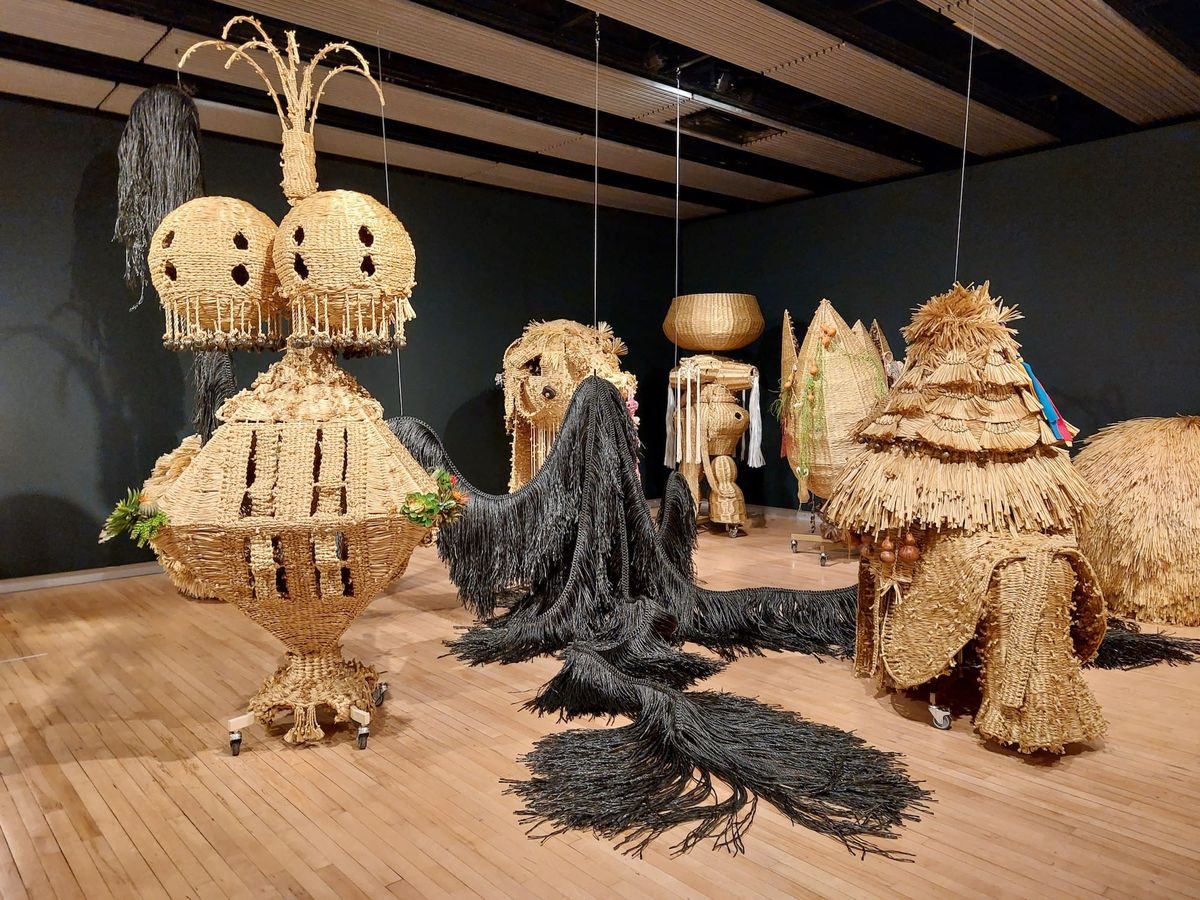
Using smell to change the state of a space is not rare in contemporary art. The soft installations of Ernesto Neto in the body that carries me also invite visitors in with the whole body, not only the eyes. What sets Huanca apart is absence: she stages a ritual with no one performing it, and lets a woody scent stand in that place.
Leaving CUEVA DE COPAL, visitors carry a little sand under their shoes and a trace of wood on their clothes. There were no performers, yet every visitor left footprints in the sand. The room changed each day with the people who passed through. The work recorded its own audience.
Olfactory Art