
Essays · Olfactory Art
Haegue Yang. Series of Vulnerable Arrangements, Version Utrecht.
Không khí cũng là một vật được sắp đặt.
Air, too, is an arranged object.
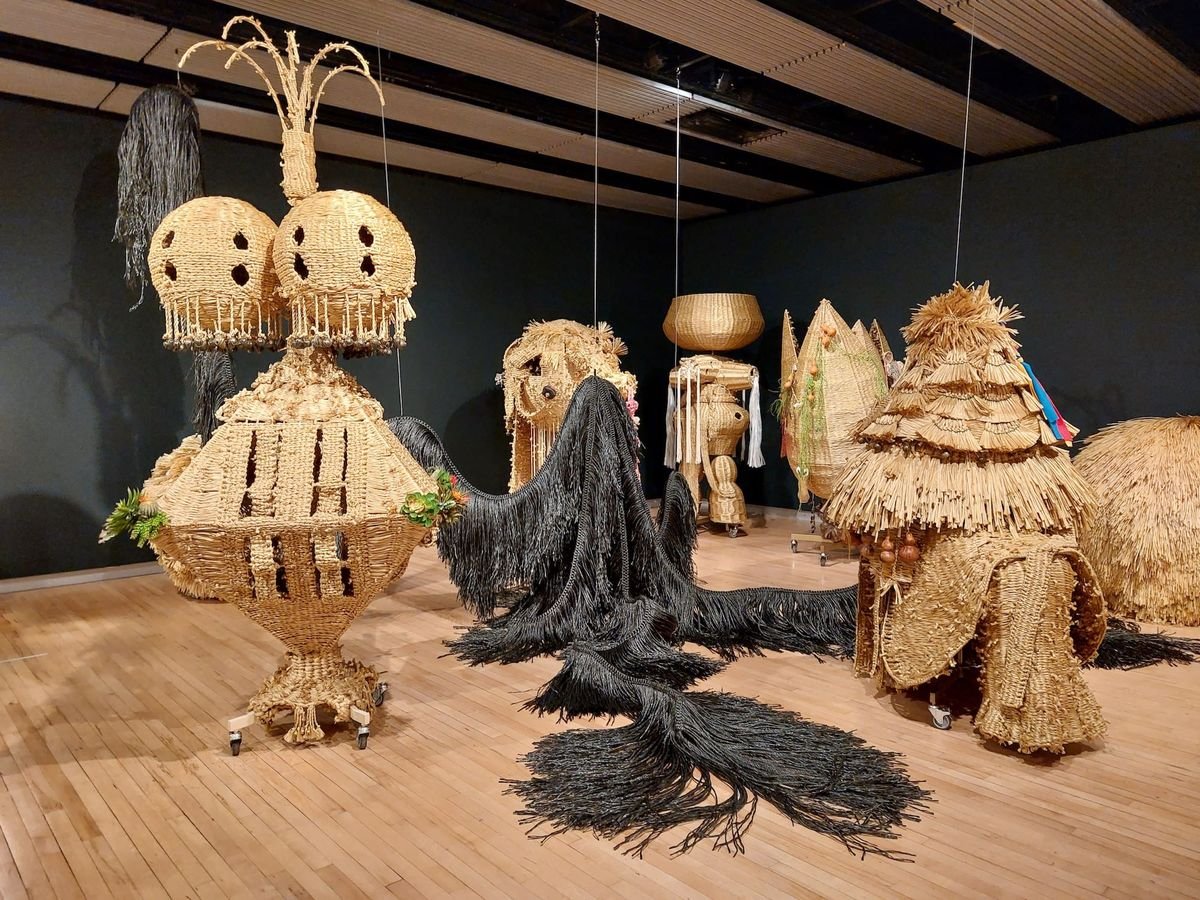
Installation view, Haegue Yang: Leap Year, Hayward Gallery (photo Anna Souter/Hyperallergic) · Hyperallergic
Một căn phòng ở Utrecht, năm 2006
Năm 2006, Haegue Yang là nghệ sĩ đầu tiên tham gia chương trình lưu trú nghiên cứu của BAK, basis voor actuele kunst, một trung tâm nghệ thuật ở Utrecht, Hà Lan. Kết quả của đợt lưu trú là triển lãm Haegue Yang Unevenly.
Triển lãm có ba video tiểu luận của bà: Unfolding Places và Restrained Courage làm năm 2004, Wasting Negative Places làm năm 2006. Đi cùng chúng là một sắp đặt mới, Series of Vulnerable Arrangements. Phiên bản làm cho BAK mang thêm tên thành phố: Version Utrecht.
Sắp đặt ấy không có tượng, không có tranh. Nó gồm những thiết bị kỹ thuật bình thường: đèn sưởi, máy tạo ẩm, quạt điện, máy phun mùi. Và những tấm rèm lá sách, loại rèm văn phòng có thể xoay để mở hay khép ánh sáng.
Theo những gì còn ghi lại, đây cũng là lần đầu Yang dùng rèm lá sách trong tác phẩm. Về sau, chất liệu đó trở thành một trong những dấu hiệu dễ nhận ra nhất của bà. Nhưng ở Utrecht, nó chỉ là một phần trong một hệ thống lớn hơn: hệ thống điều khiển không khí. Loạt này còn có những phiên bản sau, như Voice and Wind, mỗi bản được dựng lại cho một nơi chốn khác.
Thiết bị làm việc thay cho vật trưng bày
Một phòng trưng bày thường cố gắng trung tính. Tường trắng, đèn đều, nhiệt độ ổn định. Người ta muốn tác phẩm nổi lên trên một nền không có gì. Nhưng nền ấy không phải là không có gì. Nó được làm ra bởi máy lạnh, bởi đèn, bởi những quy định về độ ẩm để giữ tranh khỏi hỏng.
Yang lật ngược thứ tự đó. Bà đưa chính những thiết bị tạo nên khí hậu của phòng ra giữa. Đèn sưởi làm một góc ấm lên. Quạt đẩy không khí theo một hướng. Máy tạo ẩm thêm hơi nước. Máy phun mùi thả một mùi vào luồng gió.
Người xem không đứng trước tác phẩm. Họ đứng trong nó. Khi đi từ góc này sang góc khác, cơ thể ghi nhận những thay đổi nhỏ: một luồng ấm trên má, một chút ẩm, một mùi thoáng qua rồi mất. Mỗi thay đổi là một phần của tác phẩm, và không phần nào đứng yên để chụp ảnh.
Rèm lá sách làm thêm một việc. Chúng chia không gian mà không chặn hẳn. Ánh sáng lọt qua các khe. Gió cũng lọt qua. Mùi cũng vậy. Căn phòng được ngăn ra nhưng vẫn thông nhau, như một cơ thể có nhiều ngăn mà chung một nhịp thở.
Vì sao gọi là dễ tổn thương
Tên tác phẩm dùng chữ vulnerable, dễ tổn thương. Chữ ấy có thể đọc theo nhiều cách.
Cách thứ nhất là về vật. Những sắp đặt này không bền. Tắt điện là mùi ngừng lan, quạt ngừng quay, hơi ấm tan. Không có gì được cố định. Tác phẩm chỉ tồn tại khi máy đang chạy và khi có người đi qua để cảm nhận.
Cách thứ hai là về người xem. Mắt có thể chọn không nhìn. Da và mũi thì khó chọn hơn. Trong căn phòng của Yang, người xem bị chạm vào bởi nhiệt, bởi ẩm, bởi mùi, dù họ có muốn hay không. Sự tiếp xúc ấy vừa gần gũi vừa không hẳn dễ chịu.
Cách thứ ba là về chính nơi trưng bày. Yang cho thấy rằng điều kiện để xem nghệ thuật, thứ khí hậu tưởng như trung tính của bảo tàng, là một sắp đặt, do ai đó quyết định. Đã là sắp đặt thì có thể sắp đặt khác đi.
Trở lại Hayward, gần hai mươi năm sau
Năm 2024, Version Utrecht được đưa vào Haegue Yang: Leap Year, triển lãm lớn của bà tại Hayward Gallery, London, kéo dài đến ngày 5 tháng 1 năm 2025. Triển lãm do Yung Ma phụ trách.
Trong một chương trình rộng, với những điêu khắc đan rơm, những bức cắt dán từ giấy hanji, những khối điêu khắc gắn chuông và bánh xe được người biểu diễn kích hoạt hàng tuần, tác phẩm năm 2006 nằm ở những phòng cuối. Nó có vẻ khô hơn, kỹ thuật hơn những gì đi trước.
Nhưng đặt ở cuối, nó như một chú thích cho cả triển lãm. Mọi vật trước đó đều đứng trong một không khí đã được điều chỉnh. Ở phòng cuối, Yang để chính không khí ấy lộ ra. Người xem ra về với một câu hỏi nhỏ về căn phòng mình vừa đi qua: nó ấm vì đâu, nó có mùi gì, và ai đã quyết định điều đó.
A room in Utrecht, 2006
In 2006 Haegue Yang became the first artist in the research residency programme at BAK, basis voor actuele kunst, an art centre in Utrecht in the Netherlands. The residency led to an exhibition, Haegue Yang Unevenly.
It showed three of her video essays: Unfolding Places and Restrained Courage from 2004, Wasting Negative Places from 2006. Alongside them stood a new installation, Series of Vulnerable Arrangements. The version made for BAK carried the city's name: Version Utrecht.
There were no statues and no paintings. The installation was made of ordinary technical devices: heaters, a humidifier, electric fans, scent atomisers. And Venetian blinds, the office kind that tilt to let light in or shut it out.
By most accounts, this was the first time Yang used blinds in her work. They later became one of her most recognisable materials. In Utrecht, though, they were only one part of a larger system: a system for handling air. The series went on to other versions, such as Voice and Wind, each rebuilt for a different place.
Devices at work instead of objects on show
A gallery usually tries to be neutral. White walls, even light, stable temperature. The work is meant to rise from a background of nothing. But that background is not nothing. It is produced by air conditioning, by lamps, by humidity rules that keep paintings from decaying.
Yang reverses the order. She brings the devices that make the room's climate into the middle. A heater warms one corner. A fan pushes air one way. A humidifier adds moisture. An atomiser releases a scent into the current.
Visitors do not stand in front of the work. They stand inside it. Moving from corner to corner, the body registers small changes: warmth on a cheek, a little damp, a smell that passes and is gone. Each change belongs to the work, and none of it holds still for a photograph.
The blinds do one more thing. They divide the space without closing it. Light slips through the slats. So does air. So does smell. The room is partitioned yet connected, like a body with many chambers and one breath.
Why vulnerable
The title uses the word vulnerable. It can be read in several ways.
First, the objects. These arrangements do not last. Cut the power and the scent stops spreading, the fans stop, the warmth fades. Nothing is fixed. The work exists only while the machines run and someone walks through to feel it.
Second, the viewer. Eyes can choose not to look. Skin and nose find it harder to choose. In Yang's room, visitors are touched by heat, damp and smell whether they want it or not. The contact is intimate and not entirely comfortable.
Third, the institution. Yang shows that the conditions for seeing art, the supposedly neutral climate of a museum, are an arrangement someone decided on. Anything arranged can be arranged differently.
Back at the Hayward, almost twenty years on
In 2024 Version Utrecht was included in Haegue Yang: Leap Year, her large survey at the Hayward Gallery in London, which ran until 5 January 2025, curated by Yung Ma.
In a wide programme of woven straw figures, collages of hanji paper, and sculptures on castors hung with bells and set in motion by performers each week, the 2006 piece sat in the final rooms. It looks drier and more technical than what comes before.
Placed at the end, it works like a footnote to the whole show. Every object before it stood in air that had been adjusted. In the last rooms, Yang lets that air show itself. Visitors leave with a small question about the room they just crossed: why it was warm, what it smelled of, and who decided that.
Olfactory Art