
Essays · Olfactory Art
Eduardo Paolozzi. Astute sizing up perfume trends.
Khi mùi hương trở thành một con số trên biểu đồ.
When a scent becomes a figure on a chart.
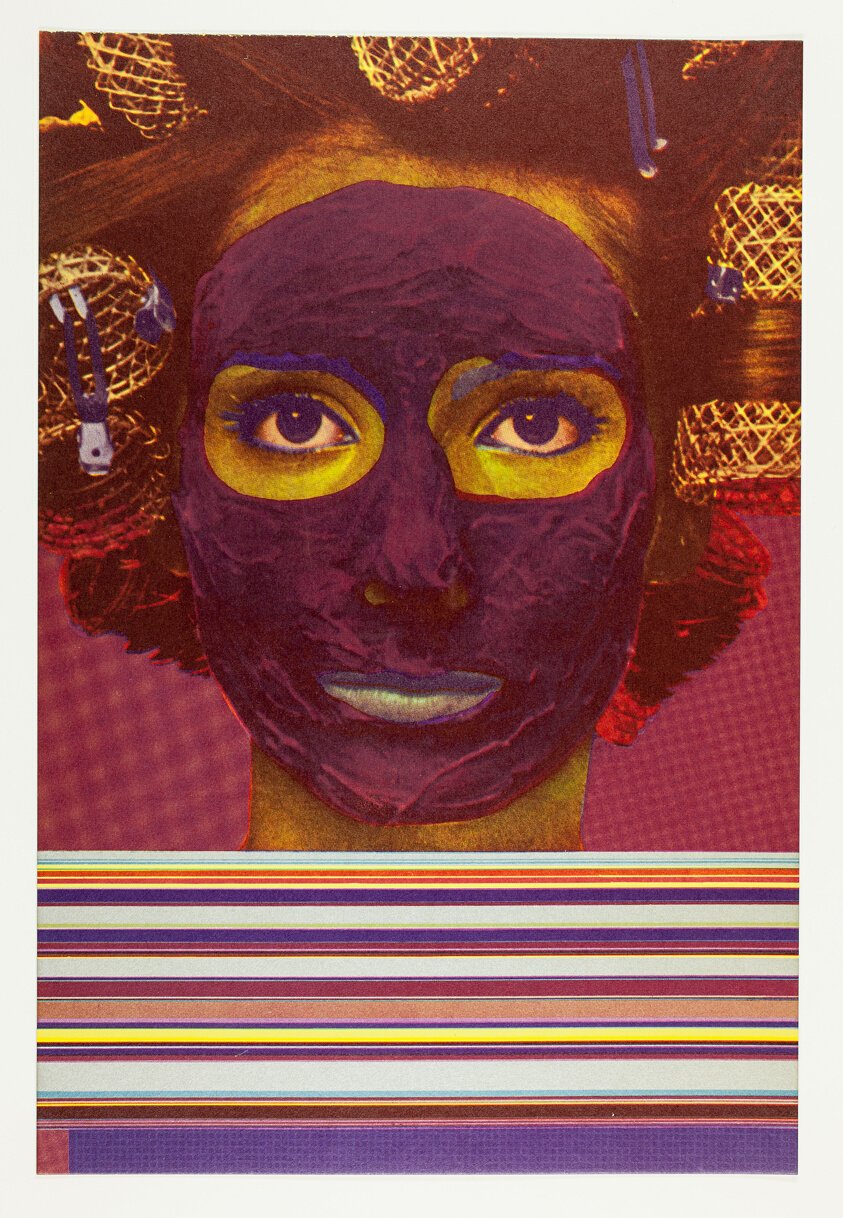
The Art Institute of Chicago, Elizabeth Gott Templeton Endowment · The Art Institute of Chicago
Một tờ trong năm mươi sáu tờ
Astute sizing up perfume trends là một tờ trong General Dynamic F.U.N., bộ tranh in Eduardo Paolozzi làm từ khoảng 1965 đến 1970. Bộ tranh được Editions Alecto ở London phát hành năm 1970, gồm 56 tờ in ảnh lithograph và in lưới, đựng trong một hộp, in 350 bộ. Nó là tập thứ hai của một dự án lớn hơn mang tên Moonstrips Empire News.
Theo hồ sơ của Art Institute of Chicago, tờ này là in ảnh lithograph trên giấy, khổ 38 x 25,4 cm, do xưởng in Richard Davis ở London thực hiện. Khổ giấy nhỏ, gần với một trang tạp chí. Điều đó không ngẫu nhiên: nguyên liệu của Paolozzi phần lớn đến từ chính các trang tạp chí.
Nhiều tờ trong bộ có tên dài và lạ, như những dòng chữ bị cắt khỏi một văn bản nào đó. Studies in Human Salvage. More Power to Everybody. Decency and Decorum in Production. Becoming is Meaning like Nothing is Going. Astute sizing up perfume trends đứng trong dãy tên ấy như một mẩu tin kinh doanh lạc vào một bài thơ.
Cái tên của cả bộ cũng là một trò chơi chữ. General Dynamic gợi đến General Dynamics, tập đoàn chế tạo máy bay chiến đấu F 111 được dùng trong chiến tranh Việt Nam. F.U.N. viết hoa và chấm câu như một từ viết tắt quân sự. Niềm vui và cỗ máy chiến tranh nằm trong cùng một dòng chữ.
Cắt dán thế giới đại chúng
Eduardo Paolozzi sinh năm 1924 ở Leith, Scotland, trong một gia đình gốc Ý, và mất năm 2005. Ông là điêu khắc gia, nhưng cũng là một trong những người mở đường cho pop art ở Anh. Đầu những năm 1950, ông ở trong Independent Group tại London, một nhóm nghệ sĩ và nhà phê bình quan tâm đến quảng cáo, khoa học viễn tưởng, máy móc và văn hoá đại chúng Mỹ.
Cách làm của ông từ sớm đã là cắt dán. Ông gom hình từ tạp chí, truyện tranh, sách kỹ thuật, bao bì, rồi ghép chúng lại. Không phải để chế giễu từng hình, mà để cho thấy cả một hệ thống hình ảnh đang vận hành ra sao.
General Dynamic F.U.N. đưa cách làm ấy đến một mức dày đặc. Các tờ in ghép những mảng hình học, những biểu tượng quen mắt, những sơ đồ như lấy ra từ máy tính. Người xem đứng trước một dòng thông tin không ngừng, giống cảm giác lật một chồng tạp chí thật nhanh.
Kỹ thuật in ảnh lithograph cho phép Paolozzi đưa thẳng hình chụp và bản in có sẵn vào tác phẩm. Tờ in không cố giả vờ là một bức vẽ tay. Nó nhận mình là sản phẩm của máy in, cùng họ với chính những trang quảng cáo nó mượn.
Nước hoa trong phòng họp
Vì sao lại là nước hoa? Vào cuối những năm 1960, nước hoa đã là một ngành công nghiệp lớn, được bán bằng hình ảnh nhiều hơn bằng mùi. Người mua thường gặp một chai nước hoa trên trang báo trước khi gặp nó trên da. Quảng cáo nói về gương mặt, về thành phố, về một đời sống mong muốn. Mùi thì không thể in.
Cái tên Paolozzi chọn đẩy điều đó lên thêm một bước. Không chỉ quảng cáo, mà cả việc đo đếm đằng sau quảng cáo: ai đó đang ngồi đánh giá xu hướng, dự đoán mùa tới người ta sẽ muốn ngửi gì. Mùi hương trở thành một đường cong trên biểu đồ.
Tờ in không nói điều này là tốt hay xấu. Paolozzi hiếm khi rao giảng. Ông chỉ đặt câu chữ ấy vào giữa những mảnh máy móc và biểu tượng, cạnh những tờ khác nói về chiến tranh, sản xuất, con người như vật liệu tái chế. Đặt cạnh nhau, việc đo xu hướng nước hoa trông cũng lạ lùng như mọi thứ khác trong bộ.
Điều đáng nhớ ở đây là một câu hỏi vẫn còn nguyên. Mùi là giác quan gần cơ thể nhất, khó chia sẻ nhất, khó ghi lại nhất. Vậy mà nó lại được nói đến nhiều nhất bằng hình ảnh và con số. Năm 1960, điện ảnh từng thử đưa mùi vào rạp chiếu bằng máy móc. Paolozzi không thêm mùi vào tranh. Ông chỉ cho ta thấy khoảng cách giữa một mùi và mọi thứ người ta nói về nó.
One sheet among fifty six
Astute sizing up perfume trends is one sheet from General Dynamic F.U.N., a print portfolio Eduardo Paolozzi made between about 1965 and 1970. Editions Alecto in London published it in 1970: 56 photolithographs and screenprints in a box, in an edition of 350. It was the second volume of a larger project called Moonstrips Empire News.
According to the Art Institute of Chicago, this sheet is a photolithograph on paper, 38 by 25.4 cm, printed by Richard Davis in London. The format is small, close to a magazine page. That is no accident: much of Paolozzi's material came from magazine pages.
Many sheets in the set carry long, odd titles, like lines cut from some other text. Studies in Human Salvage. More Power to Everybody. Decency and Decorum in Production. Becoming is Meaning like Nothing is Going. Astute sizing up perfume trends sits in that row like a business item that wandered into a poem.
The portfolio title is a pun as well. General Dynamic recalls General Dynamics, the company that built the F 111 fighter used in the Vietnam War. F.U.N. is capitalised and punctuated like a military acronym. Pleasure and the war machine share one line of type.
Collaging the mass world
Eduardo Paolozzi was born in 1924 in Leith, Scotland, to an Italian family, and died in 2005. He was a sculptor, and also one of the people who opened the way for British pop art. In the early 1950s he belonged to the Independent Group in London, artists and critics drawn to advertising, science fiction, machines and American popular culture.
From early on his method was collage. He gathered images from magazines, comics, technical manuals and packaging, then put them together. Not to mock any single picture, but to show how a whole system of images was working.
General Dynamic F.U.N. pushes that method to a dense pitch. The sheets set geometric blocks beside familiar emblems and diagrams that look drawn by a computer. The viewer faces a stream of information that does not stop, like flipping through a stack of magazines very fast.
Photolithography let Paolozzi bring photographs and existing printed matter straight into the work. The print does not pretend to be a drawing. It admits it is a product of the press, related to the very advertisements it borrows from.
Perfume in the boardroom
Why perfume? By the late 1960s, perfume was a large industry, sold more through pictures than through smell. People often met a bottle on the printed page before they met it on skin. Advertising spoke of faces, cities, a desired life. The scent itself could not be printed.
Paolozzi's title takes this one step further. Not just the advertisement, but the counting behind it: someone sitting and sizing up trends, predicting what people will want to smell next season. Scent becomes a curve on a chart.
The print does not say whether this is good or bad. Paolozzi rarely preached. He simply placed the phrase among machine parts and emblems, beside sheets about war, production, and people as salvage. Seen in that company, measuring perfume trends looks as strange as everything else in the set.
What stays is a question that is still open. Smell is the sense closest to the body, the hardest to share, the hardest to record. Yet it is spoken of mostly through pictures and numbers. In 1960, cinema had tried to bring smell into the theatre by machine. Paolozzi adds no smell to his print. He only shows the distance between a scent and everything said about it.
Olfactory Art