
Essays · Contemporary Art
Gerhard Richter. Cage.
Không kiểm soát hết. Chỉ quyết định giữ lại điều gì.
Not controlling everything. Only deciding what to keep.
Tate · Tate
Sáu tấm toan vuông
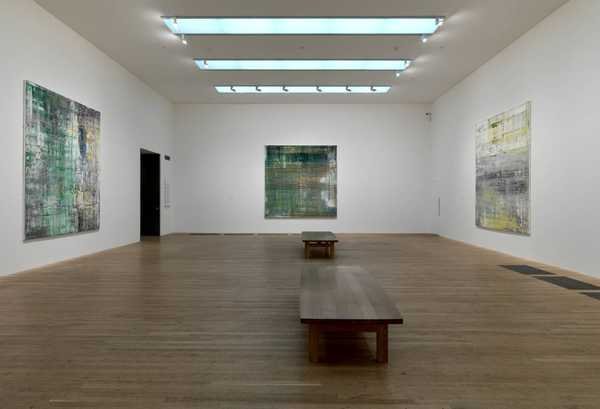
Cage (1) đến Cage (6) là sáu bức tranh trừu tượng hình vuông, vẽ bằng sơn dầu trên toan. Ba bức cạnh 2,9 mét. Ba bức còn lại lớn hơn một chút, cạnh 3 mét. Chúng được làm để treo cùng nhau trong một phòng trưng bày lớn.
Bề mặt cả sáu bức đều dày, nhám, có kết cấu. Trên đó là những dải ngang và dọc nối tiếp nhau, cùng vô số vết cào, vết lõm chạy nhiều hướng. Ở vài chỗ, lớp sơn trên cùng bị lột đi, để lộ vài lớp màu nằm bên dưới.
Mỗi bức một khác. Cage (1) chủ yếu là xanh lá mạ, có một thanh xanh chai chạy ngang phía trên và một dải trắng dọc bên phải. Cage (2) là xám nhạt, trắng, xanh mạ, lấm tấm đỏ tươi và xám than. Cage (3) chằng chịt vết cào. Cage (5) phần lớn là xám. Cage (6) có nhiều màu lộ ra nhất: xanh lá, trắng, vàng, đen, xanh dương.
Gerhard Richter, sinh năm 1932, vẽ loạt tranh này tại xưởng của ông ở Cologne năm 2006.
Thanh gạt là nhân vật chính
Nhà sử học nghệ thuật và giám tuyển Robert Storr đã theo dõi quá trình Richter làm loạt Cage, ghi lại bằng ảnh và chữ từng giai đoạn. Ông nhận xét rằng trong những bức tranh này hầu như không thấy nét cọ. Công cụ chính là thanh gạt.
Thanh gạt của Richter là loại lớn, có khi rộng vài mét, với một mép trong suốt và dẻo. Ông kéo nó qua mặt toan, dàn những lượng sơn đã đặt sẵn. Theo Storr, tuỳ vào lượng sơn, độ đặc, vị trí và lực tay, lớp sơn mới có thể phủ kín lớp cũ, có thể quyện với lớp cũ thành vệt và mảng màu loang, hoặc không bám và để lại những hốc nhỏ.
Richter cũng dùng một loại dầu làm chậm khô để sơn không đóng lại quá nhanh. Nhờ vậy, ông có thể gạt, cào và gạt lại nhiều lần trên cùng một tấm toan. Mỗi lần là một lớp mới đè lên lịch sử của những lớp trước.
Nghe John Cage
Loạt tranh mang tên nhà soạn nhạc thực nghiệm người Mỹ John Cage. Richter rất ngưỡng mộ Cage và đã nghe nhạc của ông trong thời gian vẽ loạt tranh năm 2006.
Richter gặp Cage lần đầu vào những năm 1960, khi còn là sinh viên Học viện Düsseldorf. Cage biểu diễn ở đó một tác phẩm trong đó ông viết bằng một cây bút gắn micro, để tiếng ngòi bút cào trên giấy vang ra cho mọi người nghe.
Năm 2006, trong một cuộc trò chuyện với giám tuyển Hans Ulrich Obrist, Richter nói về tầm quan trọng lâu dài của những khái niệm của Cage: kỷ luật, ngẫu nhiên, trùng hợp. Ông giải thích rằng dù có nhiều kinh nghiệm, ông không phải lúc nào cũng đoán được điều gì sẽ xảy ra khi đắp hay gạt đi một lượng sơn lớn. Có những bất ngờ đáng thất vọng, có những bất ngờ dễ chịu. Ông phải nghĩ về chúng trước khi vẽ tiếp.
Storr cho rằng điều Richter và Cage có chung là sẵn lòng buông một kiểu kiểm soát để những điều khác xảy ra.
Ngẫu nhiên được làm việc lại
Nhưng Richter không để ngẫu nhiên quyết định tất cả. Ông nói những trùng hợp chỉ có ích cho bức tranh khi chúng đã được xử lý: bị loại bỏ, được cho phép, được nhấn mạnh, hoặc được đưa vào một hình thức cụ thể. Theo ông, chính việc đó làm nên tay nghề và tính nghệ thuật.
Loạt Cage được trưng bày lần đầu tại Venice Biennale lần thứ 52 năm 2007, trong triển lãm do Storr giám tuyển. Từ năm 2007, sáu bức tranh được một nhà sưu tập tư nhân cho Tate mượn và đã nhiều lần treo ở Tate Modern.
Đứng trước sáu tấm toan, người xem không thấy một hình ảnh để nhận ra. Họ thấy dấu vết của những lần thanh gạt đi qua, và những lớp màu được để lộ ra có chủ ý. Bề mặt là một bản ghi về thời gian làm tranh, như những vệt sơn của Twombly ghi lại một năm trôi qua.
Six square canvases
Cage (1) to Cage (6) are six square abstract paintings in oil on canvas. Three measure 2.9 metres a side. The other three are slightly larger, 3 metres a side. They are meant to hang together in one large gallery.
All six have a thick, rough, textured surface. Across it run horizontal and vertical bands, along with scratches and indentations going in many directions. In places the top layer of paint has been pulled away, exposing several layers beneath.
Each is different. Cage (1) is mostly lime green, with a bottle green bar across the upper part and a white vertical band on the right. Cage (2) is pale grey, white and lime, flecked with bright red and charcoal. Cage (3) is dense with scratches. Cage (5) is mainly grey. Cage (6) shows the widest range of underlying colour: green, white, yellow, black, blue.
Gerhard Richter, born in 1932, painted the series in his studio in Cologne in 2006.
The squeegee as protagonist
The art historian and curator Robert Storr followed Richter through the making of Cage, recording each stage in photographs and text. He noted that there are hardly any brush marks in these paintings. The main tool is the squeegee.
Richter's squeegees are large, sometimes several metres wide, with a clear flexible edge. He drags one across the canvas, spreading paint laid down in advance. As Storr describes it, depending on the amount, consistency and placement of the paint and the pressure used, the new layer may cover the old one smoothly, merge with it into streaks and blooms, or fail to stick and leave small hollows.
Richter also used a retarder so the paint would not set too fast. That let him drag, scrape and drag again over the same canvas. Each pass laid a new layer over the history of the earlier ones.
Listening to John Cage
The series is named after the American experimental composer John Cage. Richter admired him greatly and listened to his music while painting the series in 2006.
Richter first encountered Cage in the 1960s as a student at the Düsseldorf Academy. Cage performed a piece there in which he wrote with a pen fitted with a microphone, so the scratch of the nib on paper was amplified for the room.
In a 2006 conversation with the curator Hans Ulrich Obrist, Richter spoke of the lasting importance of Cage's ideas: discipline, chance, coincidence. He explained that however practised he is, he cannot always foresee what will happen when he applies or removes a large amount of paint. Some surprises disappoint, some please. He has to think them through before going on.
Storr suggested that what Richter and Cage share is a willingness to give up one kind of control so that other things can happen.
Chance, worked over
But Richter does not let chance decide everything. He has said coincidences only become useful to a painting once they have been dealt with: eliminated, allowed, emphasised, or brought into a particular form. That, for him, is what makes the work skilled and artistic.
The Cage paintings were first shown at the 52nd Venice Biennale in 2007, in an exhibition curated by Storr. Since 2007 they have been lent to Tate from a private collection and have hung many times at Tate Modern.
Before the six canvases, the viewer finds no image to recognise. There are only the marks of the squeegee's passes, and layers of colour uncovered on purpose. The surface is a record of the time of painting, as Twombly's streaks of paint record a year going by.
Contemporary Art