
Essays · Photography
Hiroshi Sugimoto. Seascapes.
Biển là cảnh mà người đầu tiên và người hôm nay cùng thấy.
The sea is a view the first humans and we still share.
Fraenkel Gallery · Fraenkel Gallery
Một bố cục, nhiều vùng biển
Hiroshi Sugimoto bắt đầu loạt Seascapes vào khoảng năm 1980 và chưa dừng lại. Hơn bốn mươi năm, ông đi đến nhiều vùng biển và hồ lớn trên thế giới để chụp cùng một thứ: đường chân trời nơi nước gặp trời.
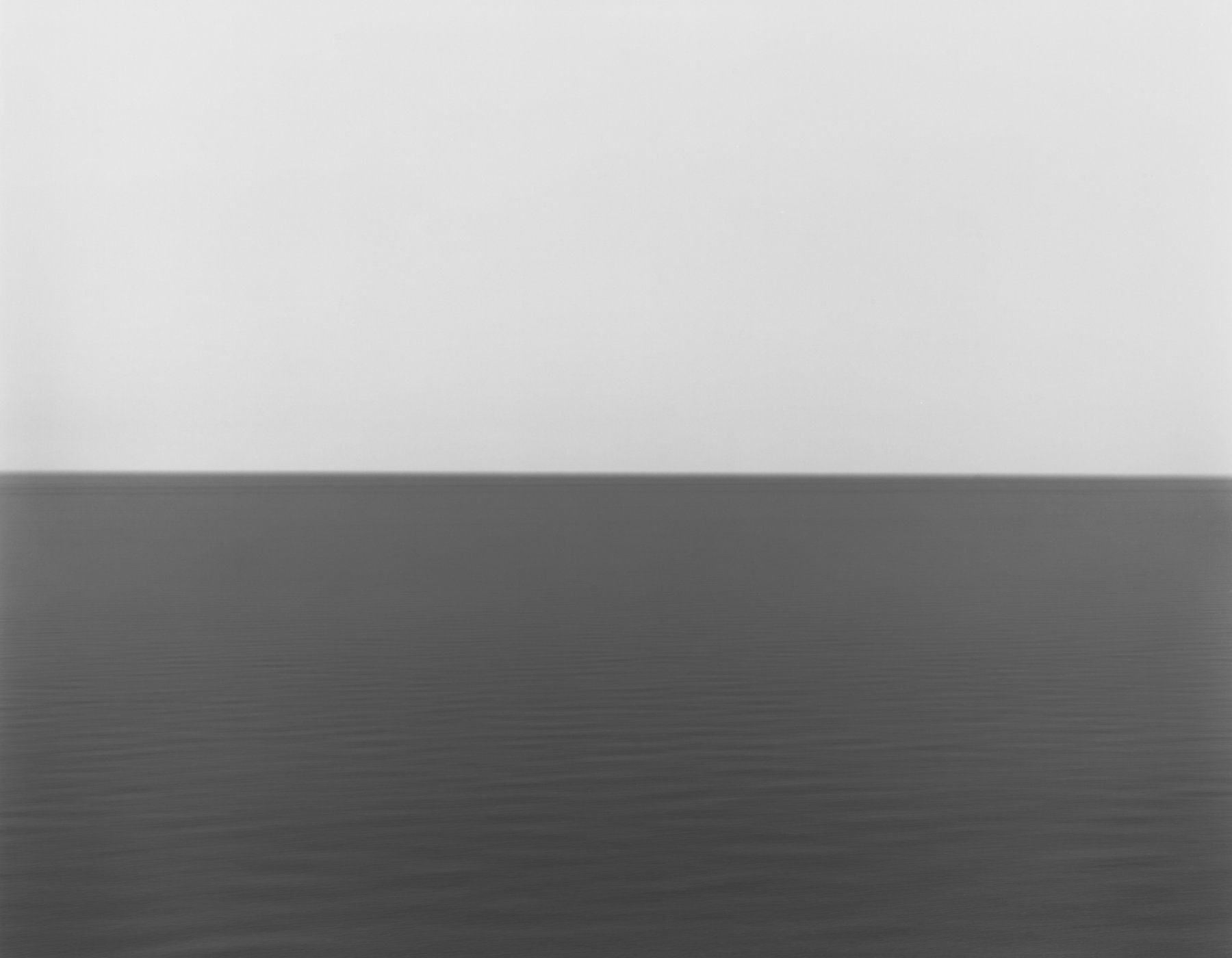
Luật của loạt ảnh rất chặt. Đường chân trời phải sắc nét. Bầu trời không có mây. Khung hình được chia gần như đúng hai nửa, trên là trời, dưới là nước. Không có bờ, không có tàu, không có chim, không có gì để bám mắt vào. Ảnh là bản in bạc gelatin đen trắng, gắn trên bìa khổ 20 x 24 inch, mỗi tấm in 25 bản.
Tên mỗi bức ảnh là tên vùng nước và địa điểm. Yellow Sea, Cheju, năm 1992. Ionian Sea, Santa Cesarea, năm 1993. North Pacific Ocean, Stinson Beach, năm 1994. Sea of Japan, Rishiri Island, năm 1996. Bass Strait, Table Cape, năm 1997. Lake Superior, Cascade River, năm 1995 và 2003. Bay of Sagami, Enoura, năm 2022.
Đọc danh sách ấy thì thấy khoảng cách rất xa: Hàn Quốc, Ý, California, Nhật, Úc, Bắc Mỹ. Nhìn ảnh thì gần như không phân biệt được. Chính sự giống nhau ấy là nội dung của loạt ảnh.
Xoá đi dấu hiệu của thời gian
Một bức ảnh phong cảnh thường chứa rất nhiều chỉ dấu. Kiểu tàu thuyền cho biết thời đại. Nhà cửa trên bờ cho biết văn hoá. Mây cho biết thời tiết, mùa, giờ trong ngày. Sugimoto loại bỏ tất cả những thứ ấy. Cái còn lại là một cảnh mà người xem không thể xác định được năm nào.
Sugimoto từng viết rằng khi nhìn biển, suy nghĩ của ông đi ngược về nguồn gốc của ý thức con người, và rằng biển nhắc ông rằng trong máu mình vẫn còn dấu vết của hàng trăm nghìn năm tiến hoá. Ý nghĩ ấy giải thích vì sao ông cần xoá đi mọi thứ thuộc về hiện tại. Ông không muốn chụp một bãi biển năm 1994. Ông muốn chụp cảnh mà một người nguyên thuỷ đứng trên bờ cũng đã từng thấy.
Đá thay đổi, bờ lở, thành phố mọc lên rồi mất đi. Nhưng một mặt nước phẳng dưới bầu trời trống, nhìn từ đủ xa, hẳn là gần giống nhau qua rất nhiều thế kỷ. Seascapes đặt người xem đúng vào vị trí ấy: một người đứng nhìn biển, không có gì khác.
Vì vậy đứng trước một tấm Seascapes, người xem thường im lặng lâu hơn dự tính. Không có gì để đọc, không có chi tiết để tìm. Mắt đi dọc đường chân trời từ trái sang phải rồi dừng lại. Cái nhìn ấy chậm dần, giống như hơi thở chậm dần khi ta ngồi lâu trên một bãi biển vắng.
Sự lặp lại như một thực hành
Sugimoto sinh năm 1948 ở Tokyo và sống nhiều năm ở New York. Ông làm việc theo loạt, và nhiều loạt của ông kéo dài hàng chục năm: những rạp chiếu phim, những mô hình bảo tàng, những công trình kiến trúc. Nhưng Seascapes có lẽ là loạt mà sự lặp lại hiện rõ nhất.
Tại sao chụp cùng một khung hình nhiều đến thế? Vì mỗi lần lại khác. Mặt nước có hôm phẳng như gương, có hôm gợn nhỏ. Trời có hôm sáng trắng, có hôm xám đậm. Có tấm đường chân trời rõ như nét dao, có tấm tan vào sương. Chỉ khi giữ mọi yếu tố khác cố định, người xem mới thấy được những khác biệt nhỏ ấy.
Tên cuối trong danh sách, Bay of Sagami, Enoura, có một ý nghĩa riêng. Enoura là nơi Sugimoto xây Đài quan sát Enoura, một khu nghệ thuật nhìn ra vịnh Sagami, gần Odawara. Sau bốn mươi năm đi khắp các vùng biển, ông xây một nơi để người khác có thể đứng và nhìn đúng cảnh mà ông đã dành cả đời để chụp.
Cùng lối làm việc ấy, ở loạt Theaters, Sugimoto dùng máy ảnh để nén cả một bộ phim vào một tấm hình. Ở Seascapes, ông làm điều ngược lại: dùng một tấm hình để mở ra một khoảng thời gian dài hơn lịch sử.
One composition, many seas
Hiroshi Sugimoto began Seascapes around 1980 and has not stopped. For more than forty years he has travelled to seas and great lakes around the world to photograph one thing: the horizon where water meets sky.
The rules are strict. The horizon must be sharp. The sky must be cloudless. The frame is divided almost exactly in half, sky above, water below. No shore, no ship, no bird, nothing for the eye to hold. The prints are black and white gelatin silver, mounted at 20 by 24 inches, each in an edition of 25.
Each title names the body of water and the place. Yellow Sea, Cheju, 1992. Ionian Sea, Santa Cesarea, 1993. North Pacific Ocean, Stinson Beach, 1994. Sea of Japan, Rishiri Island, 1996. Bass Strait, Table Cape, 1997. Lake Superior, Cascade River, 1995 and 2003. Bay of Sagami, Enoura, 2022.
Read the list and the distances are enormous: Korea, Italy, California, Japan, Australia, North America. Look at the pictures and they are nearly indistinguishable. That sameness is what the series is about.
Erasing the signs of time
A landscape photograph usually carries many clues. The shape of a boat tells the era. Buildings on the shore tell the culture. Clouds tell the weather, the season, the hour. Sugimoto removes all of them. What remains is a scene whose year cannot be fixed.
Sugimoto has written that when he looks at the sea his thoughts travel back to the origins of human consciousness, and that the sea reminds him his blood still carries traces of hundreds of thousands of years of evolution. That thought explains why he needs to remove everything belonging to the present. He does not want to photograph a beach in 1994. He wants the view an early human standing on the shore might also have seen.
Rock changes, coasts erode, cities rise and vanish. But a flat stretch of water under an empty sky, seen from far enough away, must look much the same across a great many centuries. Seascapes puts the viewer exactly there: someone looking at the sea, and nothing else.
So before a Seascape, viewers often stay silent longer than they expected. There is nothing to read, no detail to find. The eye travels along the horizon from left to right and stops. The looking slows, the way breath slows after sitting a long time on an empty beach.
Repetition as a practice
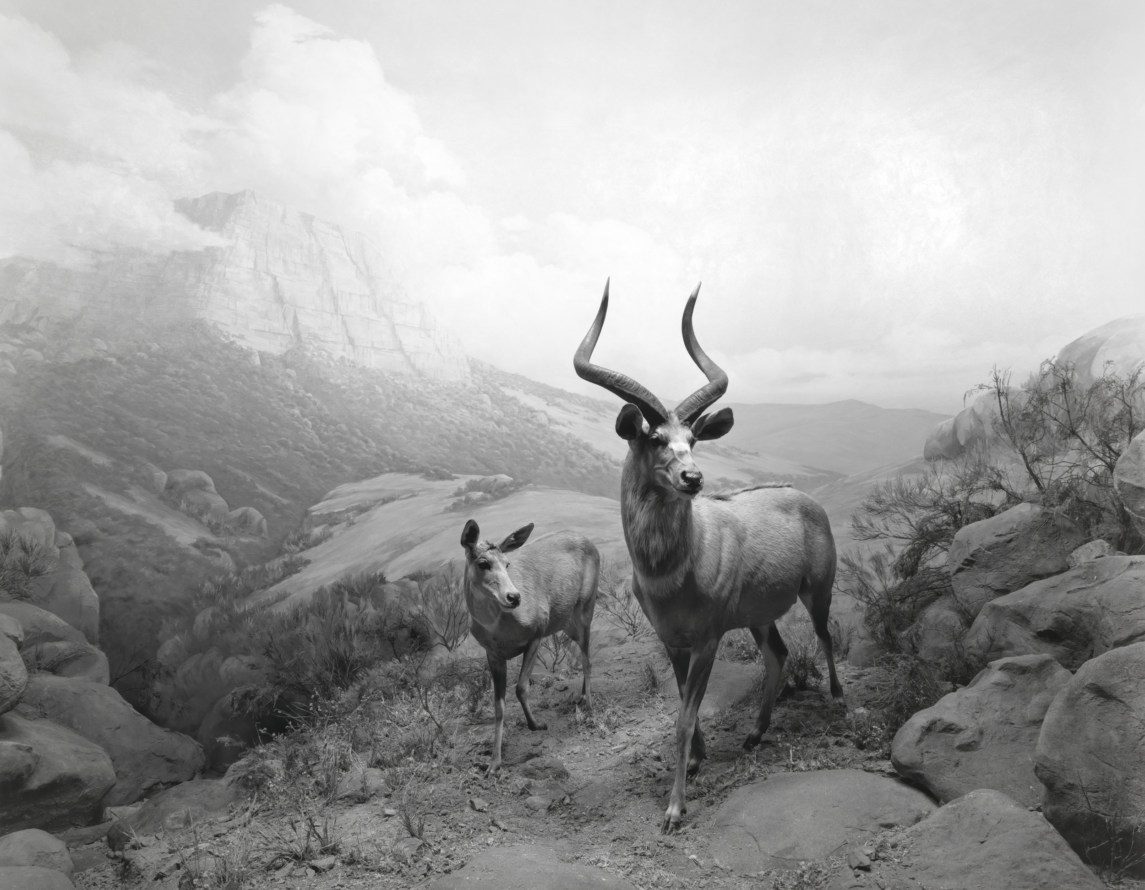
Sugimoto was born in Tokyo in 1948 and lived for many years in New York. He works in series, and many of them run for decades: cinemas, museum dioramas, buildings. But in Seascapes repetition is perhaps most visible.
Why take the same picture so many times? Because each time is different. Some days the water is flat as glass, some days finely rippled. Some skies are bright white, some deep grey. In some the horizon is sharp as a blade, in others it dissolves into haze. Only when everything else is held fixed can the viewer see such small differences.
The last title on the list, Bay of Sagami, Enoura, has a particular weight. Enoura is where Sugimoto built the Enoura Observatory, an art site looking out over Sagami Bay near Odawara. After forty years travelling the world's seas, he built a place where others can stand and see the very view he has spent a life photographing.
In the same spirit, in Theaters, Sugimoto uses the camera to compress a whole film into one image. In Seascapes he does the reverse: he uses one image to open a span of time longer than history.
Photography