
Essays · Olfactory Art
Hổ phách. Một mùi không đến từ hổ phách.
Người ta nhìn thấy màu vàng nâu, rồi tưởng ra hơi ấm.
People saw amber brown, then imagined warmth.
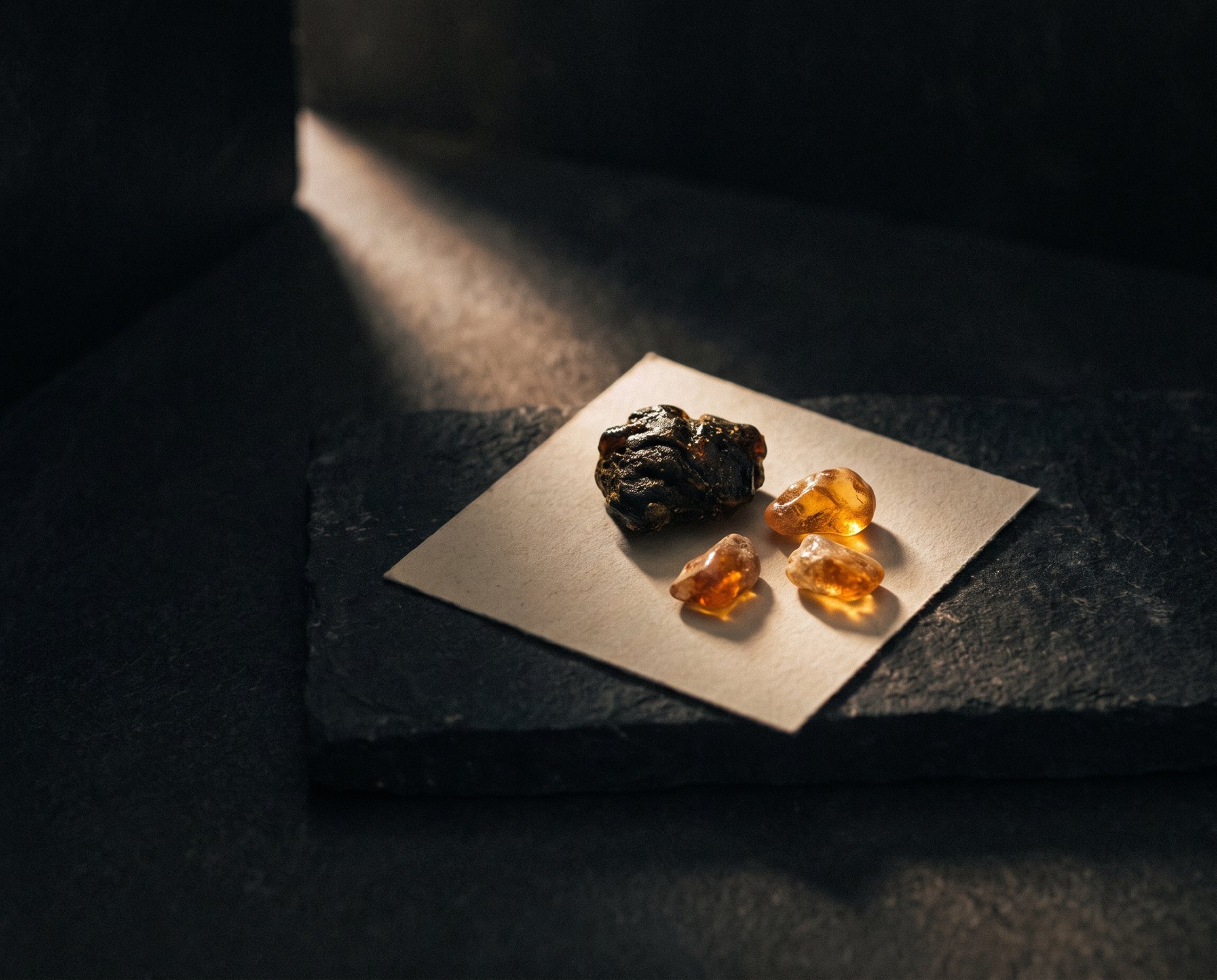
Hổ phách hoá thạch: một vật không mùi
Hổ phách là nhựa cây đã hoá thạch. Hàng chục triệu năm trước, cây tiết nhựa để bịt vết thương trên thân. Nhựa chảy, đông lại, bị đất vùi lấp. Qua thời gian rất dài, các thành phần dễ bay hơi mất dần, phần còn lại cứng lại thành một vật trong như đá, nhẹ như nhựa.
Vùng bờ biển Baltic nổi tiếng với hổ phách từ thời cổ đại. Người Hy Lạp gọi nó là elektron, và nhận ra rằng khi chà xát, nó hút được những mảnh vụn nhỏ. Chữ electron trong vật lý đến từ đó.
Điều đáng chú ý nhất với người ngửi: ở nhiệt độ thường, hổ phách gần như không có mùi. Chính quá trình hoá thạch đã lấy đi phần thơm. Chỉ khi bị đốt hay nung nóng, nó mới toả ra một mùi nhựa khét. Thứ mùi đó không giống chút nào với cái mà nước hoa gọi là amber.
Vậy mà chữ amber đã trở thành tên một họ mùi. Mùi của một vật không có mùi.
Labdanum, vani, cánh kiến trắng
Cái mà người làm nước hoa gọi là amber là một sự ấm được dựng lên. Nó thường có ba nguồn.
Nguồn thứ nhất là labdanum, nhựa của cây cistus, một loại cây bụi vùng Địa Trung Hải. Vào mùa nóng, lá và cành non tiết ra một lớp nhựa dính. Sử gia Hy Lạp Herodotus từng mô tả người ta gom nhựa này từ râu những con dê đi qua bụi cây. Ở đảo Crete, người ta kéo những chiếc cào bằng dải da qua bụi để lấy nhựa. Mùi labdanum dày, ấm, hơi da thuộc, hơi mận khô.
Nguồn thứ hai là vani. Năm 1874, hai nhà hoá học Đức Ferdinand Tiemann và Wilhelm Haarmann tổng hợp được vanillin, phân tử chính của mùi vani. Từ đó, vị ngọt ấm này trở nên rẻ và dễ có, và đi vào hầu hết các bản amber.
Nguồn thứ ba gần với Việt Nam hơn cả: cánh kiến trắng, nhựa của cây bồ đề Styrax tonkinensis, mọc ở Lào, miền bắc Việt Nam và các vùng lân cận. Tên loài nhắc đến Bắc Kỳ. Nhựa này có mùi vani, mùi sô cô la trắng, ngọt và mềm. Trong nước hoa, nó thường đi cùng labdanum và vani để làm nên cái ấm của amber.
Ba loại nhựa, ba vùng đất. Không loại nào là hổ phách.
Hai chữ, hai vật
Câu chuyện rối thêm một lớp vì có một vật thứ hai cũng mang tên amber: long diên hương, tiếng Anh là ambergris. Đó là một khối chất hình thành trong ruột cá nhà táng, trôi trên biển nhiều năm, bị ánh nắng và nước biển làm biến đổi rồi dạt vào bờ. Khác với hổ phách, long diên hương có mùi thật: mùi biển, mùi da ấm, mùi gỗ ẩm.
Chữ amber trong các ngôn ngữ châu Âu có gốc từ tiếng Ả Rập, và ban đầu gắn với long diên hương. Về sau, cùng một chữ được dùng cho nhựa hoá thạch. Tiếng Pháp giữ dấu vết của sự nhập nhằng ấy: ambre gris là hổ phách xám, tức long diên hương, còn ambre jaune là hổ phách vàng, tức nhựa hoá thạch.
Vậy là khi nói amber, người ta có thể đang nghĩ tới một viên đá không mùi, một khối chất từ cá voi, hay một bản dựng từ nhựa cây sống. Ba vật khác nhau dưới một chữ.
Một màu được gọi thành mùi
Vì sao một họ mùi lại mang tên một viên đá không mùi? Không ai trả lời chắc được. Nhưng có một cách nhìn: chữ amber nói về màu trước khi nói về mùi. Vàng nâu, trong, ấm như ánh đèn qua mật ong. Người ta ngửi labdanum, vani, cánh kiến trắng, và thấy trong đầu đúng cái màu ấy. Rồi đặt tên theo màu.
Đó là một điều thường xảy ra với mùi. Ta không có đủ chữ riêng cho mũi, nên mượn chữ của mắt. Mùi xanh. Mùi trắng. Mùi tối. Amber chỉ là một ví dụ rõ nhất, vì chữ mượn ấy đã trở thành tên cả một họ.
Viên hổ phách trong tay vẫn không có mùi. Nhưng nó đã cho mũi một cái tên.
Fossil amber: a thing without smell
Amber is fossilised tree resin. Tens of millions of years ago, trees bled resin to seal wounds in their bark. The resin flowed, hardened and was buried. Over a very long time its volatile parts escaped, and what remained became something clear as stone and light as plastic.
The Baltic coast has been known for amber since antiquity. The Greeks called it elektron and noticed that, when rubbed, it drew small scraps toward it. The word electron comes from there.
For anyone smelling it, the key fact is this: at room temperature amber has almost no smell. Fossilisation took the fragrant part away. Only when burned or heated does it give off a scorched resin smell, nothing like what perfume calls amber.
Yet amber became the name of a family of smells. The smell of a thing that does not smell.
Labdanum, vanilla, Siam benzoin
What perfumers call amber is a constructed warmth. It usually has three sources.
The first is labdanum, the resin of cistus, a Mediterranean shrub. In the hot season its leaves and young twigs exude a sticky resin. The Greek historian Herodotus described it being gathered from the beards of goats that had brushed the bushes. On Crete, rakes of leather strips were drawn through the shrubs to collect it. Labdanum smells dense and warm, of leather and dried plum.
The second is vanilla. In 1874 the German chemists Ferdinand Tiemann and Wilhelm Haarmann synthesised vanillin, the main molecule of vanilla's smell. That warm sweetness became cheap and easy to find, and entered nearly every amber.
The third is close to Vietnam: Siam benzoin, the resin of Styrax tonkinensis, a tree of Laos, northern Vietnam and nearby areas. The species name points to Tonkin. The resin smells of vanilla and white chocolate, sweet and soft. In perfume it often joins labdanum and vanilla to make amber's warmth.
Three resins, three regions. None of them is amber.
Two words, two things
The story gains another layer because a second thing also carries the name: ambergris. It forms in the gut of the sperm whale, drifts at sea for years, is changed by sun and seawater, and washes ashore. Unlike fossil amber, ambergris has a real smell: sea, warm skin, damp wood.
The European word amber comes from Arabic and was first tied to ambergris. Later the same word passed to fossil resin. French keeps the trace of this confusion: ambre gris, grey amber, is ambergris, while ambre jaune, yellow amber, is the fossil resin.
So when someone says amber, they may mean an odourless stone, a substance from a whale, or a construction of living resins. Three things under one word.
A colour named as a smell
Why would a family of smells take the name of an odourless stone? No one can say for certain. But here is one way to see it: the word amber speaks of colour before it speaks of smell. Golden brown, clear, warm like lamplight through honey. People smelled labdanum, vanilla and benzoin, saw that colour in their minds, and named the smell after it.
This happens often with smell. We lack words of the nose's own, so we borrow from the eye. A green smell. A white smell. A dark smell. Amber is simply the clearest case, because the borrowed word became the name of a whole family.
The amber in your hand still has no smell. But it gave the nose a name.
Olfactory Art