
Essays · Olfactory Art
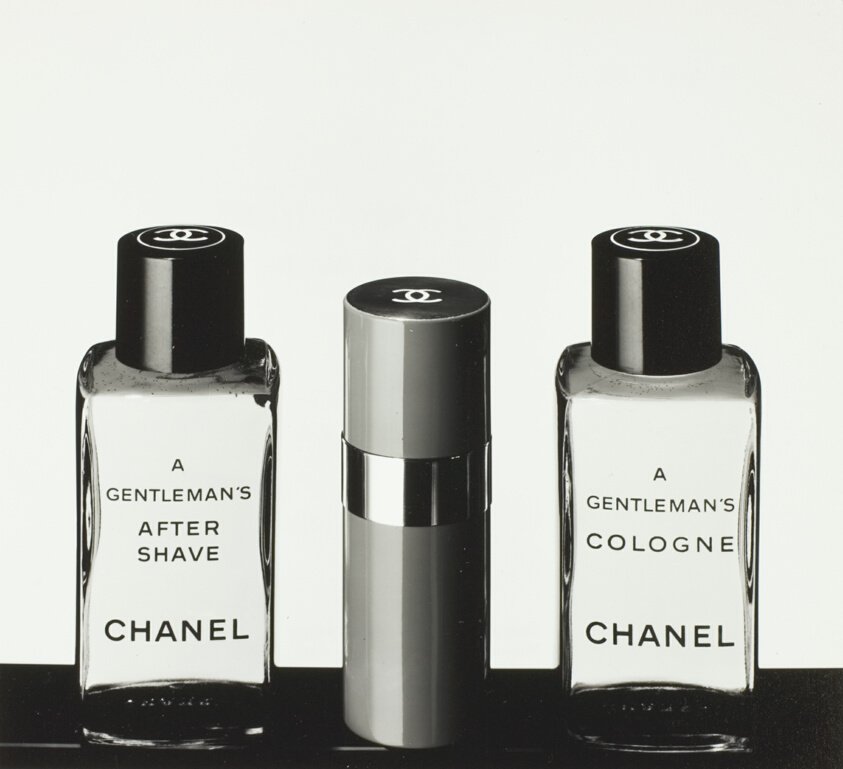
Irving Penn. 3 Chanel Products, New York.
Ảnh không giữ được mùi. Nó giữ được vật.
A photograph cannot hold a scent. It can hold the object.
The Art Institute of Chicago, Gift of Irving Penn; Copyright The Irving Penn Foundation · The Art Institute of Chicago
Một đơn hàng, một phông nền
Irving Penn sinh năm 1917 và mất năm 2009. Ông là một trong những nhiếp ảnh gia Mỹ làm việc lâu nhất cho tạp chí và cho quảng cáo. Thời trang, chân dung, và tĩnh vật: ba mảng ấy chạy song song suốt đời ông.
Năm 1968, ở New York, Penn chụp ba sản phẩm của Chanel. Viện Nghệ thuật Chicago, nơi giữ bức ảnh hôm nay, xếp nó vào các nhóm quảng cáo, tĩnh vật và mỹ phẩm. Không có người mẫu. Không có bàn tay nào cầm vật lên. Chỉ có vật.
Cái tên bức ảnh cũng giản dị như vậy. 3 Chanel Products, New York. Mặt sau bản in còn ghi lại đúng dòng chữ ấy trong một khung vuông, cùng năm 1968 trong ngoặc. Penn đặt tên như người ghi sổ: bao nhiêu vật, của ai, ở đâu.
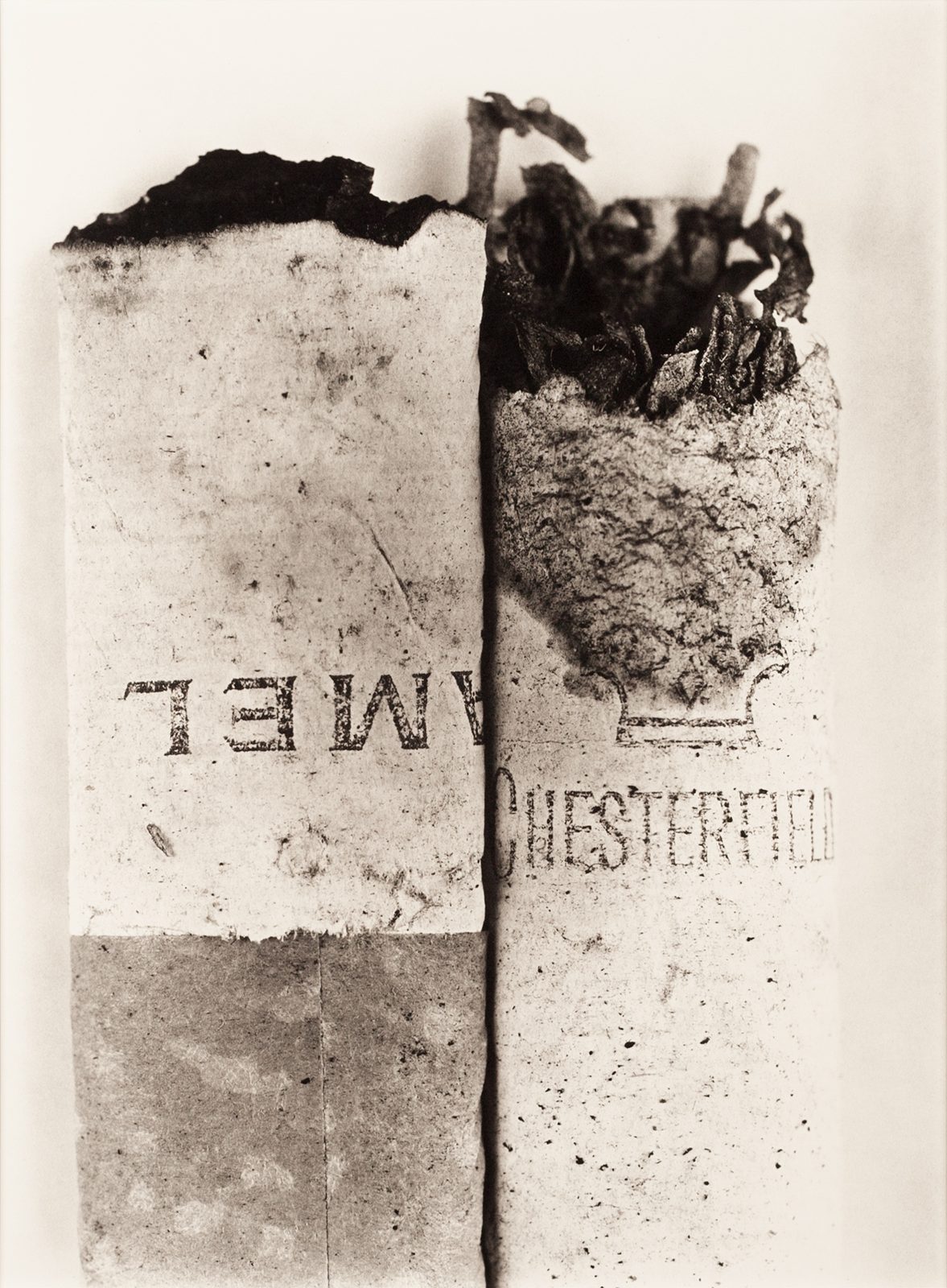
Đó là cách ông làm với rất nhiều tĩnh vật khác. Tên ảnh của Penn thường chỉ gọi đúng thứ đang nằm trước ống kính, rồi thêm tên thành phố. Không có tính từ. Bốn năm sau, ông chụp những mẩu thuốc lá nhặt từ vỉa hè, và gọi chúng cũng bằng một con số: Cigarette No. 17, New York.
Từ ảnh quảng cáo đến bản in bạc
Một ảnh quảng cáo thường sống ngắn. Nó được in trên trang báo, được lật qua, rồi được thay bằng mùa sau. Nhưng Penn giữ lại phim của mình, và nhiều năm sau, ông quay về in chúng bằng tay trong phòng tối.
Bản in của 3 Chanel Products mà Chicago giữ được làm năm 1992. Đó là ảnh gelatin bạc, khổ nhỏ, khoảng 22,6 x 19,9 cm. Mặt sau có nhiều con dấu và dòng chữ: chữ ký của Penn, dấu PHOTOGRAPH BY IRVING PENN, dòng ghi năm in, và một con dấu cho biết bản in đã được nhuộm selen. Nhuộm selen làm tông đen sâu hơn và giúp bản in bạc bền hơn theo thời gian.
Một dòng khác trên mặt sau ghi rằng số bản in bạc có chữ ký từ tấm phim này sẽ không vượt quá bảy. Nghĩa là một hình ảnh từng sinh ra để nhân bản vô hạn trên giấy báo, giờ được giới hạn lại, đếm từng bản, như một bản khắc.
Năm 1996, Penn tặng bản in này cho Viện Nghệ thuật Chicago. Một năm sau, nó xuất hiện trong cuốn catalog và triển lãm hồi cố Irving Penn: A Career in Photography, mở ở Chicago từ tháng 11 năm 1997, rồi đi đến Bảo tàng Hermitage ở St. Petersburg, Hamburg, Munich, San Francisco, Houston và Paris. Năm 2009, năm Penn mất, Chicago đưa nó ra lần nữa trong triển lãm tưởng niệm Irving Penn: A Tribute.
Chụp một thứ không nhìn thấy
Mùi là thứ khó chụp nhất. Máy ảnh chỉ ghi được ánh sáng dội lại từ bề mặt. Với một hãng nước hoa, điều đó đặt ra một bài toán cũ: làm sao bán một thứ không ai nhìn thấy, qua một trang giấy không ai ngửi được?
Nhiều quảng cáo trả lời bằng câu chuyện. Một người phụ nữ, một căn phòng, một buổi tối. Người xem được mời bước vào một đời sống, và mùi hương là tấm vé. Cách của Penn trong những tĩnh vật như thế này đi theo hướng ngược lại. Ông lấy đi câu chuyện, chỉ để lại vật.
Khi vật đứng một mình, người xem bắt đầu nhìn những thứ nhỏ: đường viền, độ bóng, chữ trên nhãn, bóng đổ xuống mặt phẳng. Ảnh đen trắng còn lấy đi cả màu. Cái còn lại là hình khối và ánh sáng. Chính sự tiết chế ấy khiến vật có vẻ nặng hơn, thật hơn.
Có lẽ vì thế mà một bức ảnh bán hàng có thể bước vào bảo tàng mà không cần đổi gì. Penn không thêm vào. Ông chỉ nhìn kỹ, rồi in lại cho cẩn thận.
Và người đứng trước bản in hôm nay, ở một phòng trưng bày không có mùi gì, vẫn có thể nhớ ra. Không phải vì bức ảnh gợi. Mà vì vật trong ảnh là vật thật, loại vật từng nằm trên bàn trang điểm của rất nhiều người, ở rất nhiều nơi.
A commission, a backdrop
Irving Penn was born in 1917 and died in 2009. He was one of the American photographers who worked longest for magazines and for advertising. Fashion, portraits and still life ran side by side through his whole career.
In 1968, in New York, Penn photographed three Chanel products. The Art Institute of Chicago, which holds the print today, files it under advertising, still life and cosmetics. No model. No hand lifting anything. Only objects.
The title is just as plain. 3 Chanel Products, New York. The back of the print repeats that line in a box, with the year 1968 in brackets. Penn named his picture the way a clerk keeps a ledger: how many, whose, where.
He did the same with many other still lifes. His titles tend to name exactly what lies in front of the lens, then add the city. No adjectives. Four years later he photographed cigarette ends picked up from the street, and titled them with a number too: Cigarette No. 17, New York.
From advertisement to silver print
An advertising photograph usually lives a short life. It is printed on a page, turned past, and replaced the next season. Penn kept his negatives, and years later he went back to print them himself in the darkroom.
The Chicago print of 3 Chanel Products was made in 1992. It is a small gelatin silver print, about 22.6 by 19.9 cm. The back carries a crowd of stamps and notes: Penn's signature, the stamp PHOTOGRAPH BY IRVING PENN, the year of printing, and a stamp saying the print was toned in selenium, a process that deepens the blacks and helps a silver print last.
Another line states that signed silver prints of this negative will not exceed seven. An image once made to be reproduced endlessly on magazine paper is now limited and counted, like an etching.
Penn gave the print to the Art Institute in 1996. A year later it appeared in the catalogue and retrospective Irving Penn: A Career in Photography, which opened in Chicago in November 1997 and travelled to the State Hermitage in St. Petersburg, then Hamburg, Munich, San Francisco, Houston and Paris. In 2009, the year Penn died, Chicago showed it again in Irving Penn: A Tribute.
Photographing what cannot be seen
Scent is the hardest thing to photograph. A camera records only the light that bounces off a surface. For a perfume house this is an old problem: how do you sell something no one can see, on a page no one can smell?
Many advertisements answer with a story. A woman, a room, an evening. The viewer is invited into a life, and the scent is the ticket. Penn's still lifes of this kind go the other way. He removes the story and leaves the object.
When an object stands alone, the eye turns to small things: an outline, a shine, the letters on a label, a shadow on the surface. Black and white removes even colour. What remains is form and light, and that restraint makes the object seem heavier, more real.
Perhaps that is why a sales picture could enter a museum without changing anything. Penn added nothing. He looked closely, then printed with care.
Someone standing before the print today, in a gallery that smells of nothing, can still remember. Not because the image evokes, but because the objects in it were real, the kind that sat on dressing tables of many people, in many places.
Olfactory Art