
Essays · Photography
Irving Penn. Flowers.
Penn chờ bông hoa qua khỏi lúc đẹp nhất.
Penn waited for the flower to pass its best.
© The Irving Penn Foundation · Fraenkel Gallery
Một đơn đặt hàng cho số Giáng sinh
Năm 1967, Alexander Liberman, giám đốc nghệ thuật của Vogue Mỹ, đặt Irving Penn chụp một loạt tĩnh vật hoa cho số tháng 12. Lần đầu là hoa tulip. Công việc ấy kéo dài thành một thói quen: suốt những số Giáng sinh từ 1967 đến 1973, Penn chụp hoa cho tạp chí.
Bảy loài hoa đi qua ống kính của ông trong giai đoạn này: anh túc, tulip, hồng, huệ tây, mẫu đơn, lan và thu hải đường. Không có khu vườn, không có bó hoa cắm sẵn. Mỗi bông được đặt riêng, trước một nền trơn màu trung tính, chụp gần như chân dung.
Penn đã quen làm việc như vậy với người. Ông nổi tiếng với những bức chân dung trong một góc studio hẹp, trước tấm phông cũ, không đạo cụ. Với hoa, ông dùng đúng sự tiết chế đó. Bông hoa không được trang trí. Nó chỉ được nhìn.
Chụp hoa sau lúc đẹp nhất
Điều làm những bức ảnh hoa của Penn khác với ảnh hoa trên lịch là thời điểm ông chọn. Nhiều bông trong loạt ảnh không ở độ tươi nhất. Có bông tulip đã xoè hết cỡ, cánh không còn ôm lấy nhau. Có bông anh túc với cánh mỏng như giấy, bắt đầu nhăn lại. Người xem nhìn thấy cả phần hoa sắp buông, chứ không chỉ phần hoa đang khoe.
Hoa ở giai đoạn này mất đi vẻ gọn gàng của nụ. Nhưng chúng cho thấy những thứ nụ giấu: đường gân, độ trong của cánh, cách một hình khối mở ra rồi buông xuống. Bài giới thiệu của Fraenkel Gallery về loạt ảnh nói tới cả sức sống lẫn sự vô thường của cái đẹp. Hai thứ ấy nằm trong cùng một bông.
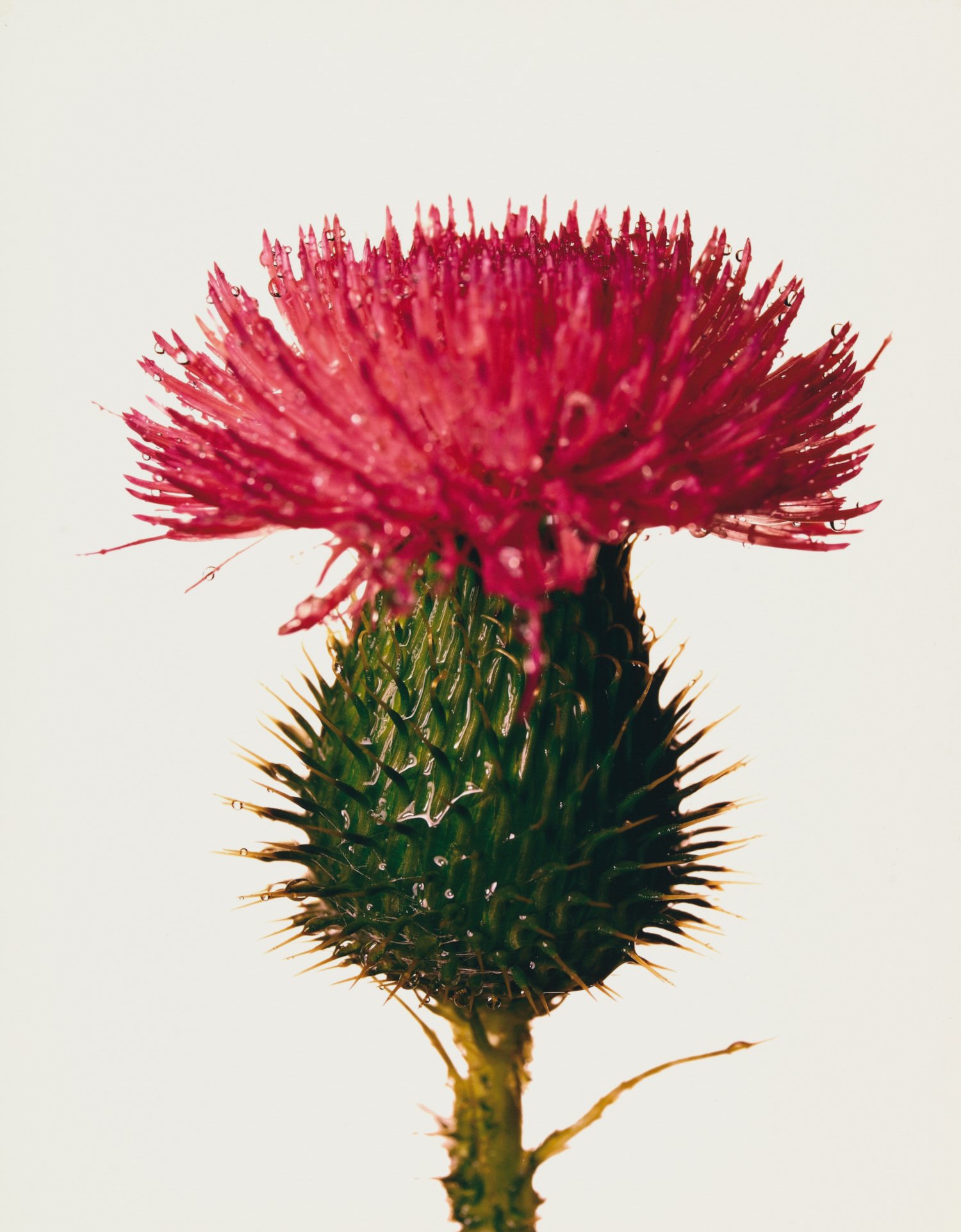
Nền trơn làm cho điều ấy dễ thấy hơn. Không có gì để so sánh, không có bối cảnh để kể chuyện. Mắt người xem buộc phải dừng lại ở hình, chất và màu của chính bông hoa. Một nhành cúc gai dại hay một bông lan Rhyncholaelia digbyana với viền cánh tua rua được nhìn kỹ như một món đồ trong bảo tàng.
Màu in chậm, sách ra muộn
Penn chụp hoa bằng màu, trong khi phần lớn ảnh tĩnh vật nghệ thuật thời đó vẫn là đen trắng. Màu là cái khó. In màu cho đúng độ chuyển của một cánh anh túc hay độ tím của một bông cyclamen rất tốn kém.
Chính vì chi phí in màu, phải gần mười năm Penn mới tìm được nhà xuất bản cho cuốn sách tập hợp loạt ảnh. Cuốn Flowers ra đời năm 1980 tại nhà Harmony Books ở New York, với 75 ảnh màu.
Một số bản in được làm bằng kỹ thuật chuyển nhuộm, dye transfer, một quy trình in màu phức tạp cho phép kiểm soát từng kênh màu. Bông lan chụp năm 1969 trong bộ sưu tập của Fraenkel Gallery là một bản dye transfer in năm 1990. Nhiều bản in sau này dùng máy in phun.
Penn không dừng ở loạt ảnh cho Vogue. Những bức ảnh hoa trong danh mục của Fraenkel trải từ cuối thập niên 1960 tới năm 2006: anh túc Iceland, anh túc phương Đông, cyclamen tím, huệ tây, tulip China Pink. Hoa trở thành một đề tài ông quay lại suốt gần bốn mươi năm.
Vì sao những bông hoa ấy đáng nhớ
Ảnh hoa dễ trở thành ảnh trang trí. Penn tránh điều ấy bằng cách không nịnh bông hoa. Ông không chọn lúc hoàn hảo, không thêm sương, không thêm lọ đẹp. Ông để bông hoa đứng một mình ở giai đoạn thật của nó.
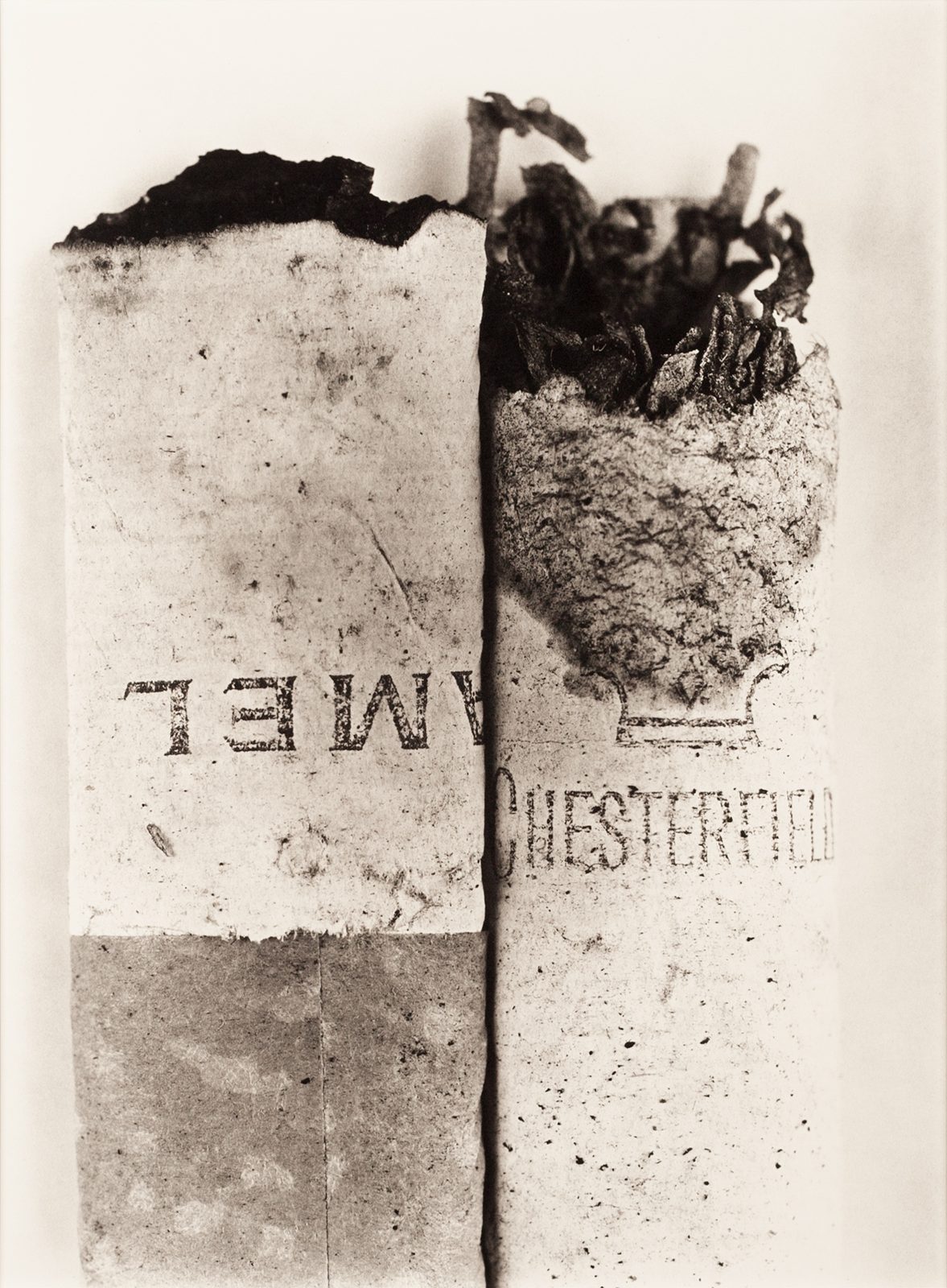
Cùng một con mắt ấy, vài năm sau, đã cúi xuống những mẩu thuốc lá trên vỉa hè. Hoa và mẩu thuốc, một thứ người ta tặng nhau, một thứ người ta vứt đi. Với Penn, cả hai đều là vật đang đi qua thời gian, và đều đáng được nhìn chậm.
A commission for the Christmas issue
In 1967 Alexander Liberman, art director of American Vogue, asked Irving Penn to photograph a series of flower still lifes for the December issue. The first were tulips. The job became a habit: for the Christmas issues from 1967 to 1973, Penn photographed flowers for the magazine.
Seven kinds of flower passed before his lens in those years: poppies, tulips, roses, lilies, peonies, orchids and begonias. No garden, no arranged bouquet. Each bloom was set on its own, before a plain neutral ground, and photographed almost as a portrait.
Penn already worked this way with people. He was known for portraits made in a narrow corner of the studio, before an old backdrop, with no props. With flowers he used the same restraint. The flower is not decorated. It is only looked at.
Photographing flowers after their peak
What sets Penn's flowers apart from calendar flowers is the moment he chose. Many blooms in the series are not at their freshest. A tulip opened as wide as it can go, its petals no longer holding together. A poppy with petals thin as paper, beginning to crumple. The viewer sees the part of the flower about to let go, not only the part on display.
At this stage a flower loses the neatness of the bud. But it shows what the bud hides: veins, the translucence of a petal, the way a form opens and then lets go. Fraenkel Gallery's text on the series speaks of both the vitality and the impermanence of beauty. Both are in the same bloom.
The plain ground makes this easier to see. Nothing to compare, no setting to tell a story. The eye has to stay with the form, texture and colour of the flower itself. A bull thistle or a Rhyncholaelia digbyana orchid with its fringed lip is studied as closely as an object in a museum.
Slow colour, a late book
Penn photographed the flowers in colour, when most art still life photography of the time was black and white. Colour was the hard part. Printing the shift across a poppy petal or the violet of a cyclamen accurately was expensive.
Because of those printing costs, it took Penn almost ten years to find a publisher for a book of the series. Flowers finally appeared in 1980 from Harmony Books in New York, with 75 colour plates.
Some prints were made as dye transfers, a demanding colour process that allows each colour channel to be controlled separately. An orchid photographed in 1969, in Fraenkel Gallery's holdings, is a dye transfer printed in 1990. Many later prints are inkjet.
Penn did not stop with the Vogue series. The flower pictures listed by Fraenkel run from the late 1960s to 2006: Iceland poppy, oriental poppy, Persian violet cyclamen, lily, China Pink tulip. Flowers became a subject he returned to for almost forty years.
Why these flowers stay with you
Flower pictures easily become decoration. Penn avoids this by refusing to flatter the flower. He does not choose the perfect moment, adds no dew, no handsome vase. He lets the bloom stand alone at its real stage.
The same eye, a few years later, bent down to cigarette ends on the pavement. Flowers and butts: one thing people give each other, one thing people throw away. For Penn, both were objects passing through time, and both deserved a slow look.
Photography