
Essays · Olfactory Art
Máret Ánne Sara. Hyundai Commission: Goavve-Geabbil.
Đi vào bên trong một chiếc mũi.
Walking inside a nose.
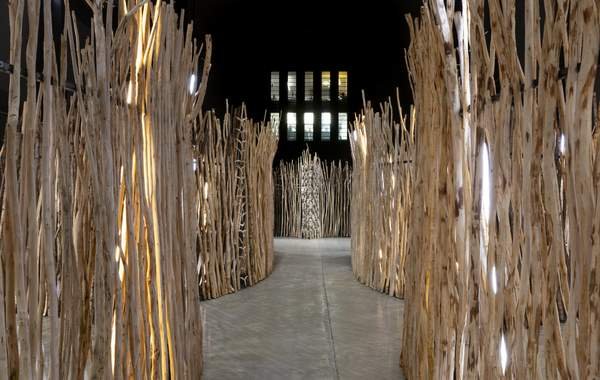
Photo © Tate (Sonal Bakrania) · Tate
Hai mươi tám mét da và cáp
Từ ngày 14 tháng 10 năm 2025 đến 6 tháng 4 năm 2026, Turbine Hall của Tate Modern ở London dành cho một tác phẩm của Máret Ánne Sara, trong chuỗi Hyundai Commission hằng năm. Giám tuyển là Helen O'Malley và Hannah Gorlizki.
Sara sinh năm 1983, sống ở Guovdageaidnu, vùng Sápmi thuộc Na Uy, trong một gia đình chăn tuần lộc. Bà từng tham gia Documenta 14 năm 2017 và Venice Biennale lần thứ 59 năm 2022.
Phần chính của tác phẩm là một khối điêu khắc cao hết 28 mét của Turbine Hall. Da tuần lộc được bó lại bằng những sợi cáp điện. Cạnh đó là những cây sào gỗ khắc dấu tai, loại ký hiệu người chăn khắc lên tai tuần lộc để nhận ra đàn của mình. Xương và vật liệu công nghiệp được đưa vào tường.
Hình ảnh ấy nói thẳng một điều. Da của con vật, thứ nuôi sống người Sámi qua bao thế hệ, bị trói bằng dây dẫn điện, thứ đến cùng với mỏ và các dự án năng lượng đang lấn vào đồng cỏ của tuần lộc.
Khi băng đóng trên mặt đất
Tên tác phẩm ghép hai từ tiếng Bắc Sámi. Goavve chỉ một hiện tượng của mùa đông: mưa và tuyết tan đóng lại thành những lớp băng trên mặt đất, khiến tuần lộc không đào xuống được để tìm thức ăn bên dưới.
Với người chăn tuần lộc, đây không phải một khái niệm. Nó là một mùa đói. Tác phẩm đặt hiện tượng ấy vào bối cảnh khí hậu đang ấm lên, và mỗi lớp băng là một tấm khoá đậy trên đồng địa y.
Cách làm của Sara bắt nguồn từ duodji, truyền thống Sámi làm ra đồ dùng từ những gì còn lại của con vật. Không phần nào bị bỏ đi. Trong tác phẩm, truyền thống ấy gặp những vật liệu của thế giới công nghiệp, và hai thứ đứng cạnh nhau không êm ả.
Mê cung của chiếc mũi
Phần thứ hai nằm ở đầu phía đông Turbine Hall, tên là Geabbil. Đó là một lối đi như mê cung, dựng theo giải phẫu khoang mũi của tuần lộc.
Theo Tate, chiếc mũi này có thể làm ấm không khí thêm 80 độ C trong chưa đầy một giây. Nhờ đó con vật thở được trong cái lạnh cực độ của phương Bắc. Những nếp gấp chằng chịt bên trong mũi là một bộ máy sưởi đã tiến hoá qua rất lâu.
Người xem đi qua những nếp gấp ấy như không khí đi qua. Trong lối đi, vật liệu được tẩm mùi. Một mùi là tín hiệu sợ hãi mà tuần lộc tiết ra để báo nguy cho đàn. Một mùi khác, được gọi là hy vọng, đến từ những cây bản địa như địa y và cỏ shoegrass.
Âm thanh đi kèm: tiếng động ghi từ cảnh quan Sápmi, joik, lối hát truyền thống của người Sámi, và những hiểu biết truyền miệng của các bậc lớn tuổi trong cộng đồng.
Khoa học của người bản địa
Tate giới thiệu tác phẩm như một lời đề nghị lắng nghe khoa học bản địa. Người chăn tuần lộc biết về băng, về gió, về mùi của đàn khi sợ hãi, theo cách mà số liệu vệ tinh không ghi được. Hiểu biết ấy nằm trong cơ thể, trong bài joik, trong dấu khắc trên tai con vật.
Ba năm trước, ở Venice, Sara đã dùng dạ dày tuần lộc và một mùi để nói về cái hiểu bằng bụng, trong Gutted. Ở London, bà chuyển từ bụng lên mũi, từ một phòng trưng bày lên một sảnh cao 28 mét. Câu hỏi vẫn vậy: ai được quyền nói về vùng đất này, và bằng giác quan nào?
Đứng trong Geabbil, câu trả lời không đến bằng lời. Nó đến bằng không khí: lạnh, rồi ấm, rồi mang mùi của một vùng đất ở rất xa.
Twenty eight metres of hide and cable
From 14 October 2025 to 6 April 2026, the Turbine Hall at Tate Modern in London was given to a work by Máret Ánne Sara, as part of the annual Hyundai Commission. The curators were Helen O'Malley and Hannah Gorlizki.
Sara was born in 1983 and lives in Guovdageaidnu, in the Norwegian part of Sápmi, in a reindeer herding family. She took part in Documenta 14 in 2017 and the 59th Venice Biennale in 2022.
The main part of the work is a sculptural mass filling the full 28 metre height of the Turbine Hall. Reindeer hides are bound with electrical power cables. Beside them stand wooden poles carved with earmarks, the signs herders cut into reindeer ears to know their own animals. Bones and industrial materials are set into the walls.
The image says one thing directly. The hide of the animal that has sustained the Sámi for generations is tied up with power lines, which arrive together with the mines and energy projects pushing into reindeer pastures.
When ice seals the ground
The title joins two North Sámi words. Goavve names a winter condition: rain and melted snow freeze into layers of ice on the ground, and reindeer can no longer dig down to the food beneath.
For herders this is not a concept. It is a hungry season. The work places it in the context of a warming climate, and each layer of ice is a lid locked over the lichen.
Sara's method comes from duodji, the Sámi tradition of making useful things from what remains of the animal. Nothing is thrown away. In the work, that tradition meets materials from the industrial world, and the two do not sit easily together.
The labyrinth of the nose
The second part stands at the eastern end of the Turbine Hall and is called Geabbil. It is a maze like passage built on the anatomy of a reindeer's nasal cavity.
According to Tate, this nose can warm air by 80 degrees Celsius in under a second. That is how the animal breathes in the extreme cold of the north. The dense folds inside the nose are a heating system shaped over a very long time.
Visitors pass through those folds the way air does. Along the passage, materials carry scent. One is the fear signal that reindeer release to warn the herd. Another, named hope, comes from native plants such as lichen and shoegrass.
Sound accompanies it: recordings from the landscapes of Sápmi, joik, the traditional Sámi way of singing, and oral knowledge from elders of the community.
Indigenous science
Tate presents the work as an invitation to listen to Indigenous science. Herders know about ice, wind and the smell of a frightened herd in ways satellite data cannot record. That knowledge lives in the body, in joik, in the marks cut into an animal's ear.
Three years earlier in Venice, Sara used reindeer stomachs and a smell to speak of knowing with the gut, in Gutted. In London she moved from the gut to the nose, from a pavilion to a hall 28 metres high. The question is the same: who may speak for this land, and through which sense?
Standing inside Geabbil, the answer does not come in words. It comes as air: cold, then warm, then carrying the smell of a land far away.
Olfactory Art