
Essays · Modern Art
Mark Rothko. Black on Maroon.
Một bức tranh đã từ chối căn phòng của nó.
A painting that turned down its room.
Tate · Tate
Đen trên đỏ sẫm
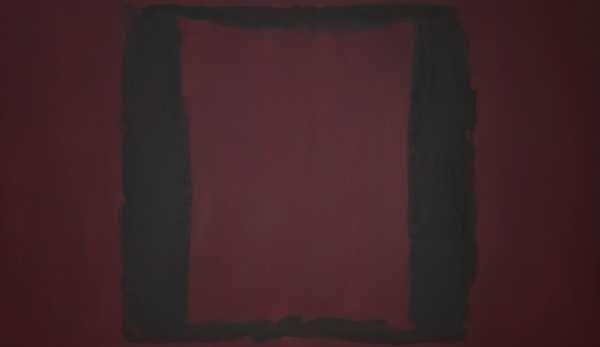
Black on Maroon là một tấm toan khổ ngang rất lớn: cao khoảng hai mét sáu mươi bảy, dài hơn bốn mét rưỡi. Mark Rothko vẽ nó năm 1959, bằng sơn dầu, sơn acrylic và keo tempera. Hôm nay nó thuộc bộ sưu tập Tate ở London.
Tên tranh nói gần hết những gì ta thấy. Màu đen, đặt trên nền đỏ nâu sẫm. Không có hình, không có vật, không có đường chân trời. Mép các mảng màu mềm, không kẻ sắc, như thể chúng hơi thở ra vào nền phía sau.
Với một tấm toan cỡ ấy, người đứng trước nó không nhìn trọn được trong một lần. Mắt phải đi dọc theo nó, như đi dọc một bức tường. Đó là điều Rothko muốn. Ông không vẽ một bức tranh để treo trên tường. Ông vẽ một phần của căn phòng.
Hồ sơ của Tate còn cho thấy một điều nhỏ. Chất liệu thay đổi giữa các bức trong cùng loạt. Có bức chỉ có sơn dầu và acrylic. Có bức thêm keo tempera, có bức thêm bột màu và keo. Rothko không lặp một công thức. Ông thử, pha, đổi, để tìm một bề mặt vừa mờ vừa sâu, hấp thụ ánh sáng thay vì phản chiếu nó. Đứng gần, lớp sơn trông như đã thấm vào vải chứ không nằm trên mặt vải.
Đơn đặt hàng Seagram
Năm 1958, Rothko nhận vẽ một loạt tranh tường cho nhà hàng Four Seasons, nằm trong toà nhà Seagram mới trên đại lộ Park ở New York. Toà nhà do Ludwig Mies van der Rohe thiết kế cùng Philip Johnson. Đó là một đơn hàng danh giá và rất lớn với một hoạ sĩ khi ấy.
Rothko làm việc với loạt tranh này trong khoảng 1958 và 1959. Bảng màu của ông tối lại hẳn so với những mảng màu rực rỡ trước đó: đen, nâu đỏ, đỏ sẫm. Những hình trong tranh thường được mô tả như khung cửa hay ô cửa mở, những khoảng trống vừa mời vừa chặn người nhìn. Rothko từng nói ông nghĩ đến tiền sảnh thư viện Laurentian của Michelangelo ở Florence, một không gian khép kín, nặng, gần như ngột ngạt.
Rồi ông rút lui. Rothko trả lại tiền và giữ tranh. Người ta thường kể rằng ông nhận ra căn phòng sang trọng ấy, nơi người ta đến để ăn và được nhìn thấy, không phải chỗ cho những bức tranh đòi hỏi im lặng. Dù lý do chính xác là gì, loạt tranh chưa bao giờ được treo ở nhà hàng.
Chín bức tranh đến London
Gần mười năm sau, Rothko quyết định tặng một phần loạt tranh cho Tate. Theo hồ sơ của Tate, một bức được trao năm 1968, tám bức khác năm 1969, đều do chính hoạ sĩ tặng thông qua Liên đoàn Nghệ thuật Hoa Kỳ. Bức Black on Maroon này nằm trong đợt năm 1969.
Rothko quan tâm kỹ đến việc tranh được treo thế nào: cùng nhau, trong một phòng riêng, ánh sáng thấp. Những bức tranh đến Tate năm 1970, đúng vào thời điểm Rothko qua đời ở New York.
Ngày nay, những bức tranh Seagram thường được treo chung trong một căn phòng ánh sáng mờ. Hiện chúng được trưng bày ở Tate Modern, trong khu In the Studio. Người bước vào cần vài phút để mắt quen với bóng tối, và chỉ khi ấy những sắc đỏ bên dưới lớp đen mới bắt đầu hiện ra.
Từ nhà hàng đến nhà nguyện
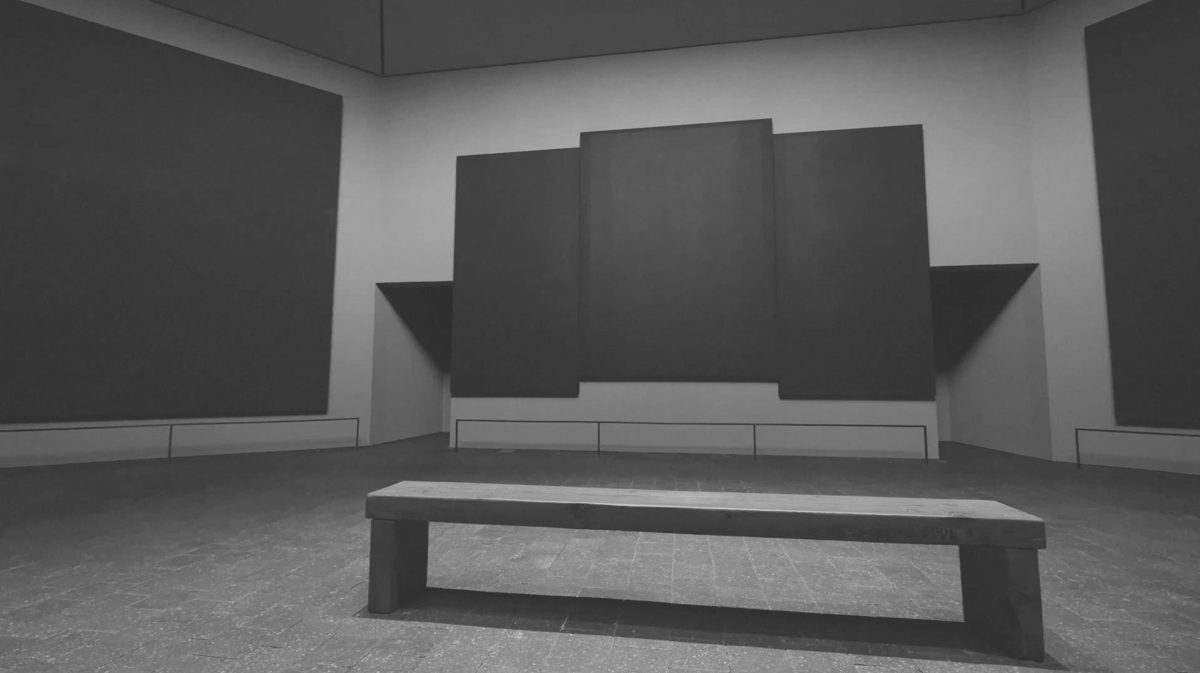
Câu chuyện của loạt Seagram không kết thúc ở London. Chính những bức tranh vẽ cho Four Seasons đã khiến John và Dominique de Menil tìm đến Rothko, và đặt ông làm một không gian thiêng ở Houston, về sau thành nhà nguyện Rothko.
Đặt hai nơi cạnh nhau, ta thấy một đường đi. Một phòng ăn sang trọng, nơi tranh chỉ là nền cho bữa tối. Một phòng bảo tàng tối, nơi tranh được đứng riêng. Một nhà nguyện, nơi căn phòng và tranh là một. Rothko càng về sau càng đòi hỏi quyền quyết định không gian quanh tác phẩm của mình.
Black on Maroon là điểm rẽ trên đường đi ấy. Nó được vẽ cho một nơi, rồi được giữ lại vì chính nơi đó. Một bức tranh, có khi, được hiểu rõ nhất qua căn phòng mà nó đã từ chối.
Black on deep red
Black on Maroon is a very large horizontal canvas: about 2.67 metres high and more than 4.5 metres long. Mark Rothko painted it in 1959 in oil paint, acrylic paint and glue tempera. Today it belongs to Tate in London.
The title says almost everything we see. Black, laid over a deep maroon ground. No figure, no object, no horizon. The edges of the colour are soft rather than ruled, as if the forms breathed in and out of the ground behind them.
At that scale, no one standing before it can take it in at once. The eye must travel along it, as along a wall. That was Rothko's intention. He was not painting a picture to hang on a wall. He was painting part of a room.
Tate's records reveal one more small thing. The materials vary from canvas to canvas within the series. Some are oil and acrylic alone. Some add glue tempera; others add loose pigment and glue. Rothko did not repeat a recipe. He tested, mixed and adjusted, looking for a surface both matte and deep, one that absorbs light rather than reflecting it. Up close, the paint seems to have soaked into the cloth rather than resting on it.
The Seagram commission
In 1958 Rothko agreed to paint a series of murals for the Four Seasons restaurant in the new Seagram Building on Park Avenue in New York, designed by Ludwig Mies van der Rohe with Philip Johnson. For a painter at the time it was a prestigious and very large commission.
Rothko worked on the series through 1958 and 1959. His palette darkened sharply from the glowing fields of earlier years: black, maroon, deep red. The forms are often described as frames or open windows, gaps that both invite and block the eye. Rothko said he had in mind the vestibule of Michelangelo's Laurentian Library in Florence, a closed, heavy, almost oppressive space.
Then he withdrew. Rothko returned the money and kept the paintings. The usual account is that he realised the luxurious room, where people went to dine and be seen, was no place for paintings that asked for silence. Whatever the exact reason, the series never hung in the restaurant.
Nine paintings reach London
Nearly a decade later Rothko decided to give part of the series to Tate. Tate's records show one painting presented in 1968 and eight more in 1969, all given by the artist through the American Federation of Arts. This Black on Maroon was part of the 1969 gift.
Rothko cared closely about how they would hang: together, in a room of their own, in low light. The paintings arrived at Tate in 1970, at the very moment of Rothko's death in New York.
Today the Seagram paintings are usually shown together in a dimly lit room. They are currently on view at Tate Modern, in the display In the Studio. Visitors need a few minutes for their eyes to adjust, and only then do the reds beneath the black begin to surface.
From restaurant to chapel
The Seagram story does not end in London. It was these very paintings for the Four Seasons that led John and Dominique de Menil to Rothko, and to commission from him a sacred space in Houston, later the Rothko Chapel.
Set the places side by side and a path appears. A luxurious dining room, where paintings are a backdrop to dinner. A dark museum gallery, where they stand on their own. A chapel, where room and paintings are one. The later Rothko grew, the more he insisted on deciding the space around his work.
Black on Maroon marks a turn on that path. It was painted for a place, then held back because of that same place. A painting is sometimes best understood through the room it refused.
Modern Art