
Essays · Contemporary Art
Mona Hatoum. Present Tense.
Đường biên có thể tan. Mùi thì nhận ra ngay.
A border can dissolve. A smell is recognised at once.
Tate · Tate
Một tấm bản đồ trên sàn
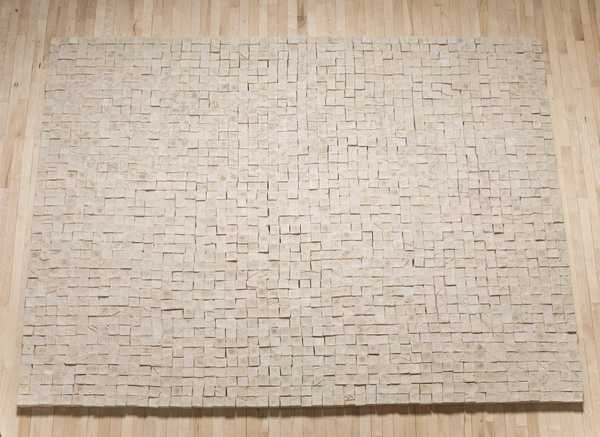
Present Tense là một tác phẩm nằm sát sàn, gồm khoảng 2.200 bánh xà phòng vuông xếp khít nhau thành một mặt phẳng hình chữ nhật, mỗi chiều hơn hai mét. Bề mặt màu kem, hơi trong. Trên đó, Mona Hatoum ấn vào những hạt thuỷ tinh đỏ rất nhỏ. Nhìn qua, các hạt đỏ giống một hình vẽ trừu tượng. Nhìn kỹ, đó là đường viền một tấm bản đồ.
Tấm bản đồ ấy là bản đồ được vẽ ra trong Hiệp định Oslo năm 1993 giữa chính quyền Israel và Palestine, đánh dấu những vùng đất sẽ được trao lại cho phía Palestine. Hạt đỏ vạch ra các vùng đó, rời nhau, lác đác.
Hatoum làm tác phẩm năm 1996 và trưng bày lần đầu cùng năm tại Anadiel Gallery, một phòng trưng bày của người Palestine ở khu Ả Rập của Jerusalem. Tác phẩm hiện thuộc bộ sưu tập Tate ở London, do hội Tate Members tặng năm 2013.
Xà phòng Nablus
Chất liệu không được chọn ngẫu nhiên. Xà phòng trong tác phẩm làm từ dầu ô liu, một sản phẩm truyền thống của người Palestine. Theo Tate, nghề làm xà phòng này bắt đầu ở thành phố Nablus, phía bắc Jerusalem, từ thế kỷ thứ mười và còn tiếp tục đến nay.
Hatoum kể rằng những người Palestine vào xem đã nhận ra mùi và chất liệu ngay lập tức. Bà nói mình coi bánh xà phòng như một biểu tượng của sự bền bỉ chống chịu. Còn tấm bản đồ, theo lời bà, trông như hàng trăm hòn đảo nhỏ không nối liền nhau, không có sự toàn vẹn nào về lãnh thổ.
Hai thứ đặt cạnh nhau tạo ra một sự trái ngược. Đường biên chính trị là thứ mới vẽ, có thể thay đổi, có thể xoá. Nghề xà phòng thì đã có hơn một nghìn năm. Tate mô tả tác phẩm như một cách cho thấy sự tạm bợ của những lần vẽ lại bản đồ gần đây, đối diện với lịch sử lâu dài của một dân tộc.
Hiện tại căng thẳng
Cái tên Present Tense chứa nhiều nghĩa cùng lúc. Nhà giám tuyển Nina Zimmer chỉ ra rằng nó là thì hiện tại trong ngữ pháp, là tình trạng căng thẳng đang diễn ra, và chữ present còn nghĩa là trao tặng, hay giương vũ khí. Một tựa đề ba chữ ôm cả món quà lẫn mối đe doạ.
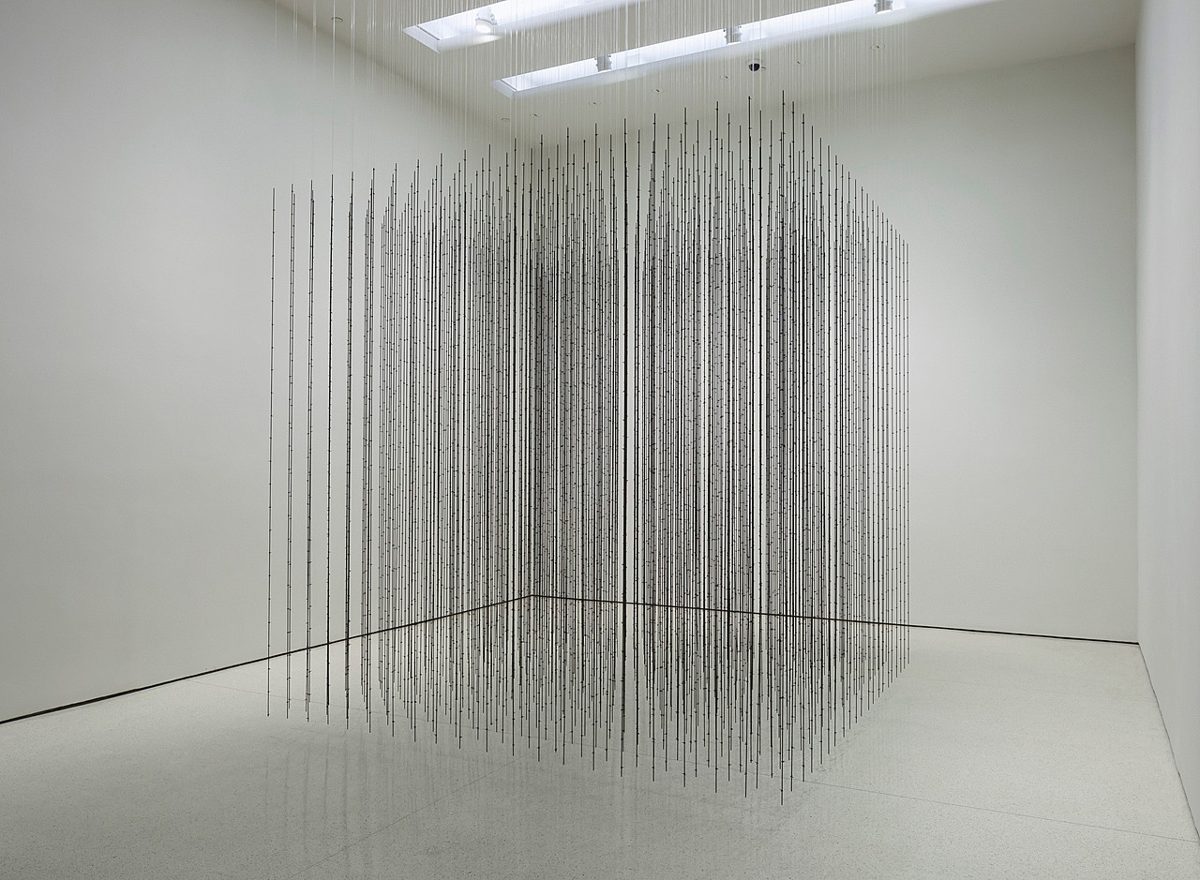
Tiểu sử của Hatoum làm những lớp nghĩa ấy nặng thêm. Bà là con của cha mẹ người Palestine sống ở Beirut. Năm 1975, trong một chuyến đến London, nội chiến Lebanon nổ ra và bà không về được nữa. Bản đồ, biên giới và sự giam giữ xuất hiện nhiều lần trong tác phẩm của bà về sau, như trong Impenetrable, khối lập phương làm bằng thép gai treo lơ lửng.
Dù vậy, Tate lưu ý rằng Present Tense không truyền đi một thông điệp chính trị duy nhất. Nó để người xem đứng trong những điều mơ hồ, mâu thuẫn của quyền lực.
Lưới và đường cong
Về hình thức, tác phẩm mượn ngôn ngữ của nghệ thuật tối giản: một lưới ô vuông đều đặn, những khối giống hệt nhau đặt sát sàn. Nhưng Hatoum từng nói rằng khác với vật thể tối giản, các tác phẩm của bà không chỉ nói về chính nó.
Chính đường cong của tấm bản đồ phá vỡ sự ngay ngắn của lưới. Một bên là trật tự hình học. Một bên là đường biên uốn lượn theo đàm phán. Giữa hai thứ ấy là những bánh xà phòng, thứ vật liệu mềm, sẽ mòn đi khi gặp nước, sẽ đổi màu theo năm tháng.
Tác phẩm được đặt tên theo thì hiện tại, nhưng nó được làm bằng một vật liệu biết già đi. Có lẽ đó là điều khiến Present Tense vẫn đứng vững sau gần ba mươi năm: nó không đông cứng một khoảnh khắc lịch sử, nó để khoảnh khắc ấy tiếp tục tan.
A map on the floor
Present Tense is a floor level work of about 2,200 square blocks of soap laid tightly together into a flat rectangle, more than two metres each way. The surface is creamy and slightly translucent. Into it Mona Hatoum pressed tiny red glass beads. At a glance the beads look like an abstract drawing. Up close, they are the outline of a map.
The map is the one drawn up under the 1993 Oslo Accords between Israeli and Palestinian authorities, marking land to be handed back to the Palestinians. The red beads trace those areas, separate and scattered.
Hatoum made the work in 1996 and first showed it that year at the Anadiel Gallery, a Palestinian gallery in the Arab part of Jerusalem. It is now in Tate's collection in London, presented by Tate Members in 2013.
Nablus soap
The material was not chosen at random. The soap is made from olive oil, a traditional Palestinian product. According to Tate, the industry began in the city of Nablus, north of Jerusalem, in the tenth century and continues today.
Hatoum recalled that the Palestinians who came to see it recognised the smell and the material at once. She said she saw the soap as a symbol of resistance. The map, in her words, looked like hundreds of little islands with no continuity and no territorial integrity.
The two things set side by side make a contrast. A political border is newly drawn; it can change, it can be erased. The soap trade is over a thousand years old. Tate describes the work as showing the fleeting nature of recent remapping against the long history of a people.
A tense present
The title holds several meanings at once. The curator Nina Zimmer pointed out that it is the grammatical present tense, the tense situation still unfolding, and that present can also mean to give a gift or to present arms. Two words carry both the gift and the threat.
Hatoum's biography deepens those layers. She was born to Palestinian parents living in Beirut. In 1975, while visiting London, the Lebanese civil war broke out and she could not return. Maps, borders and confinement appear again and again in her later work, as in Impenetrable, a suspended cube made of barbed wire.
Even so, Tate notes that Present Tense does not deliver a single political message. It leaves the viewer standing among the ambiguities and contradictions of power.
Grid and curve
Formally, the work borrows the language of minimalism: a regular grid, identical blocks laid on the floor. But Hatoum has said that unlike minimal objects, her works are not only about themselves.
The curving line of the map breaks the order of the grid. On one side, geometry. On the other, a border bent by negotiation. Between them lie the bars of soap, a soft material that wears away with water and changes colour over the years.
The work is named in the present tense, yet it is made of a material that ages. Perhaps that is why Present Tense still stands after almost thirty years: it does not freeze a moment of history, it lets that moment keep dissolving.
Contemporary Art