
Essays · Olfactory Art
Nez à nez. Parfumeurs contemporains.
Mùi không có hình. Căn phòng phải có.
A scent has no shape. The room must.
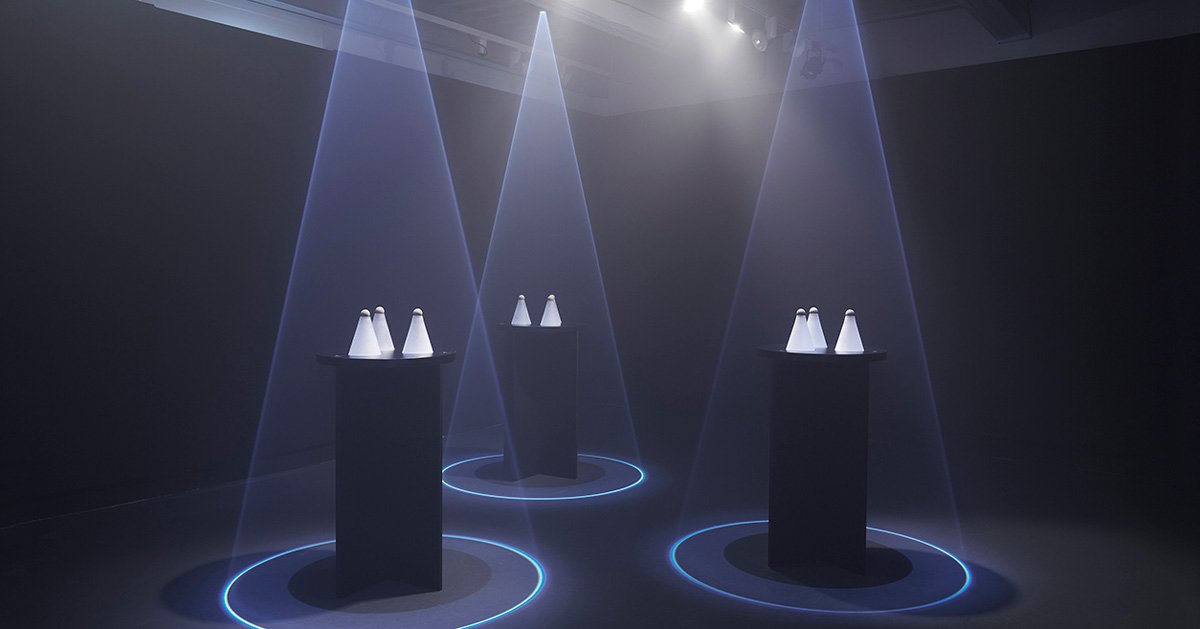
Photo: Daniela Droz and Tonatiuh Ambrosetti · designboom
Mười ba cái mũi
Từ ngày 15 tháng 2 đến ngày 16 tháng 6 năm 2019, mudac, bảo tàng thiết kế và nghệ thuật ứng dụng đương đại ở Lausanne, Thuỵ Sĩ, mở triển lãm Nez à nez. Parfumeurs contemporains. Tên tiếng Anh là Nose to Nose. Contemporary Perfumers.
Triển lãm được làm cùng Nez, một tạp chí Pháp chuyên về mùi hương và khứu giác. Tạp chí giúp chọn người và chọn mùi. Kết quả là mười ba nhà điều hương đương đại, khác nhau về phong cách, về tuổi nghề, có nam có nữ.
Trong số đó có Jean-Claude Ellena và Céline Ellena, Dominique Ropion, Isabelle Doyen, Olivia Giacobetti, Vero Kern, Rodrigo Flores-Roux, Patricia de Nicolaï, Marc-Antoine Corticchiato, Pierre Guillaume, Fabrice Pellegrin, Maurice Roucel. Có người làm cho các nhà mốt lớn, có người làm cho thương hiệu nhỏ của chính mình.
Tên triển lãm là một cách chơi chữ. Nez trong tiếng Pháp là cái mũi, cũng là cách giới nước hoa gọi người điều hương. Nez à nez là mặt đối mặt, nhưng ở đây là mũi đối mũi: người xem đứng trước từng người làm mùi, chỉ qua một khoảng không khí.
Sáu căn phòng của Glithero
Thiết kế triển lãm được giao cho Glithero, studio thiết kế ở London của Sarah van Gameren và Tim Simpson. Họ làm sáu sắp đặt khứu giác trong các phòng của bảo tàng. Mục tiêu, theo cách giới thiệu của triển lãm, là làm cho sự vô hình của nước hoa trở nên chạm được.
Mỗi phòng xếp các nhà điều hương theo một cách làm việc. Trong phòng dành cho những người điều hương có phong cách hướng ngoại, những chiếc quạt tẩm mùi mọc lên từ mặt bàn. Người xem cầm quạt, phẩy nhẹ, và mùi đến theo làn gió nhỏ.
Trong phòng dành cho những cách làm mới, mùi được đựng trong các bình thuỷ tinh hình nón, nút bằng một quả bóng bàn. Quả bóng buộc dây vào một bóng bay heli lơ lửng phía trên. Người xem kéo dây, nút bật ra, mùi thoát lên. Mỗi lần ngửi là một cử chỉ nhỏ có chủ ý.
Trong phòng về những công thức có lịch sử, trung tâm là một ô kính màu vẽ những chai nước hoa qua nhiều thế kỷ. Ánh sáng đi qua kính, rơi màu lên những bình đựng mùi bên dưới. Giữa triển lãm còn có một phòng đọc, cùng những đoạn phỏng vấn các nhà điều hương và tài liệu về nghề.
Một bảo tàng thiết kế ngửi nước hoa
Nước hoa thường được bày trong cửa hàng, không phải trong bảo tàng. Khi được bày trong bảo tàng, nó thường xuất hiện dưới dạng chai và quảng cáo, tức là phần nhìn thấy được. Nez à nez làm khác. Chai gần như không có mặt. Thứ được trưng là mùi, và người làm ra mùi.
Việc đặt triển lãm ở một bảo tàng thiết kế cũng có ý nghĩa. Nó coi nước hoa như một sản phẩm của thiết kế: có vật liệu, có quy trình, có người thiết kế. Nhà điều hương được nhìn như một người làm nghề sáng tạo, giống như một kiến trúc sư hay một nhà thiết kế đồ vật.
Năm 2012, ở New York, The Art of Scent của Chandler Burr đã đi theo một hướng tương tự, bày mùi trong những hốc tường trắng gần như trống trơn. Nez à nez đi ngược lại về hình thức. Thay vì xoá bỏ đồ vật, nó thiết kế đồ vật riêng cho từng cách ngửi.
Hai cách nhìn ấy trả lời cùng một câu hỏi: làm sao trưng bày một thứ không nhìn thấy? Một bên nói: hãy để trống, cho mũi làm việc. Bên kia nói: hãy cho mũi một vật để chạm tới. Ở Lausanne, chiếc quạt, sợi dây, ô kính màu đều là những lời mời người xem cúi xuống và hít vào.
Thirteen noses
From 15 February to 16 June 2019, mudac, the museum of contemporary design and applied arts in Lausanne, Switzerland, held Nez à nez. Parfumeurs contemporains, in English Nose to Nose. Contemporary Perfumers.
It was made with Nez, a French magazine devoted to scent and smell, which helped choose the people and the scents. The result was thirteen contemporary perfumers of different styles and career stages, men and women.
Among them were Jean-Claude Ellena and Céline Ellena, Dominique Ropion, Isabelle Doyen, Olivia Giacobetti, Vero Kern, Rodrigo Flores-Roux, Patricia de Nicolaï, Marc-Antoine Corticchiato, Pierre Guillaume, Fabrice Pellegrin and Maurice Roucel. Some work for large fashion houses, some for their own small labels.
The title is a play on words. Nez is French for nose, and also what the trade calls a perfumer. Nez à nez means face to face, but here it is nose to nose: the visitor stands before each maker with only a little air between them.
Glithero's six rooms
The design went to Glithero, the London studio of Sarah van Gameren and Tim Simpson. They made six olfactory installations across the museum's rooms. The aim, as the show put it, was to make the immateriality of perfume tangible.
Each room grouped perfumers by a way of working. In the room for the more outgoing perfumers, scented fans rose out of the tables. Visitors lifted a fan, waved it, and the scent came on a small breeze.
In the room for new approaches, scents sat in conical glass vessels stoppered with ping pong balls, each tied by a string to a helium balloon floating above. Pull the string, the stopper lifts, the scent escapes. Each sniff became a small, deliberate gesture.
In the room for historic formulas, the centre was a stained glass window depicting perfume bottles through the centuries. Light passed through the glass and fell in colours on the scent vessels below. At the heart of the show was a reading room, with interviews and material on the craft.
A design museum smells perfume
Perfume is usually shown in shops, not museums. When it does enter a museum, it tends to appear as bottles and advertising, the visible part. Nez à nez did otherwise. Bottles were almost absent. What was on show was the scent, and the people who made it.
Placing it in a design museum mattered too. It treated perfume as a product of design: materials, process, a designer. The perfumer appears as a creative professional, like an architect or an industrial designer.
In 2012 in New York, Chandler Burr's The Art of Scent took a similar line, showing scent in almost bare white wall niches. Nez à nez went the other way in form. Instead of removing objects, it designed an object for each way of smelling.
Both answer the same question: how do you exhibit something invisible? One says: leave it empty and let the nose work. The other says: give the nose something to reach for. In Lausanne, the fan, the string and the coloured glass were all invitations to lean in and breathe.
Olfactory Art