
Essays · Olfactory Art
Pamela Rosenkranz. Infection (Calvin Klein Obsession for Men).
Một mùi quyến rũ có thể là một cái bẫy.
A seductive smell can be a trap.
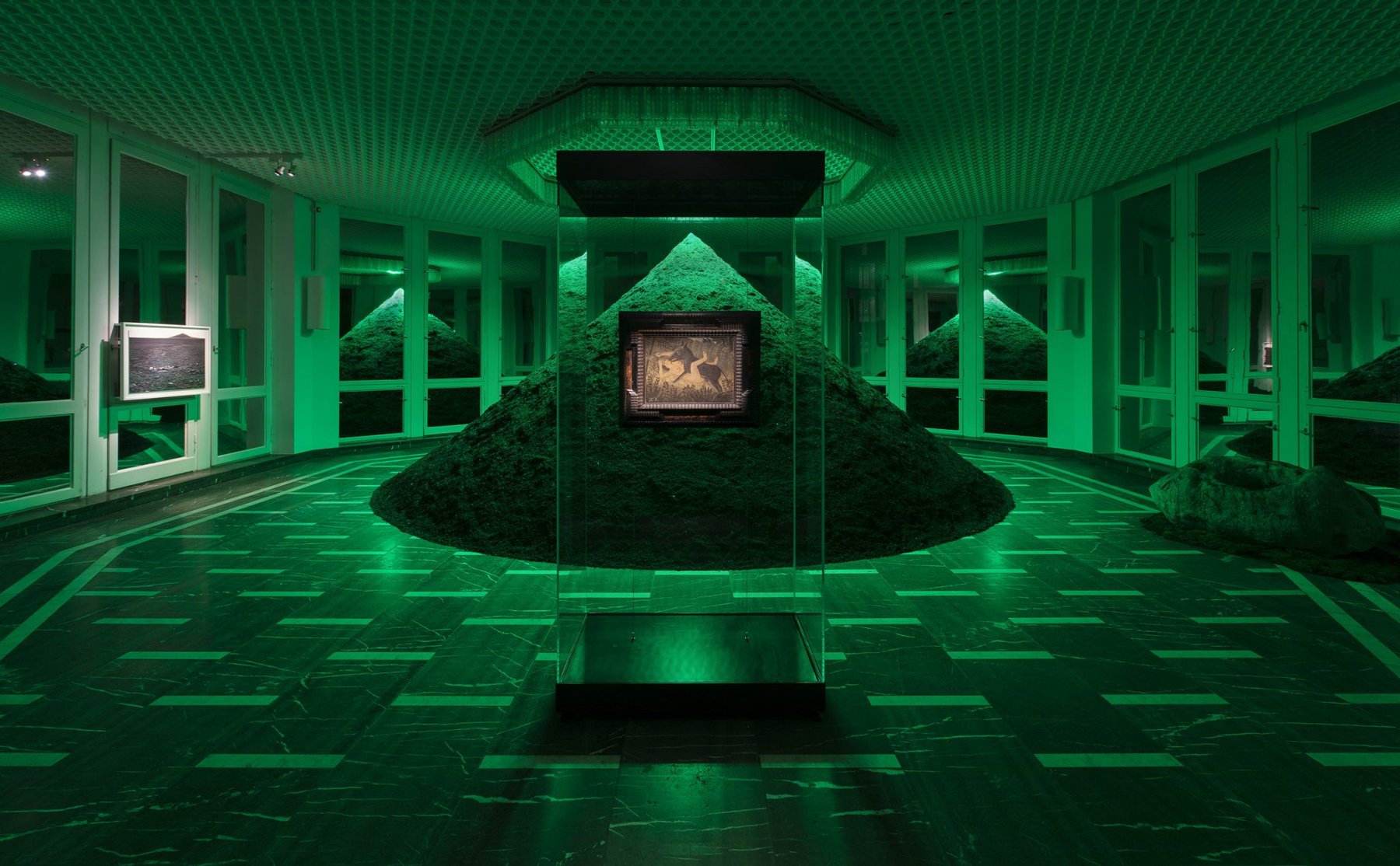
'Sun Rise | Sun Set', exhibition view, Schinkel Pavillon. © Schinkel Pavillon and the artists; photo: Andrea Rossetti · ArtReview
Một ngọn núi nhỏ trong nhà
Ở Schinkel Pavillon, Berlin, năm 2021, giữa một không gian kính và bê tông, có một gò đất hình nón. Nó chiếm nhiều mét khối, đủ lớn để người xem phải đi vòng quanh. Đỉnh gò phát sáng màu xanh lá, dưới một luồng đèn màu tập trung.
Gò đất không phải đất vườn. Đó là một thứ compost nguyên sơ, giàu chất: than, phân người, xương động vật. Những thành phần thô nhất của một mảnh đất màu mỡ, thứ thường nằm khuất dưới chân, không ai mang vào phòng trưng bày.
Và nó được tẩm nước hoa. Không phải một mùi làm riêng cho tác phẩm, mà là một sản phẩm bán đại trà: Calvin Klein Obsession for Men. Tên đầy đủ của tác phẩm ghi rõ điều đó trong ngoặc đơn, như một nhãn thành phần.
Người bước vào phòng ngửi thấy hai thứ cùng lúc. Mùi đất ẩm, nặng. Và một mùi nước hoa nam mà nhiều người có thể đã từng ngửi trên cổ áo ai đó.
Vì sao lại là Obsession
Lựa chọn chai nước hoa không ngẫu nhiên. Obsession for Men chứa một thành phần tổng hợp có tác dụng như pheromone của mèo. Các nhà nghiên cứu động vật hoang dã từng dùng chính mùi này để dụ mèo lớn tới gần máy ảnh bẫy trong rừng. Một thứ được bán cho đàn ông để hấp dẫn người khác hoá ra cũng hấp dẫn một loài thú săn mồi.
Từ đây, tác phẩm nối về một mối quan tâm lâu năm của Pamela Rosenkranz, nghệ sĩ người Thuỵ Sĩ: toxoplasma, một loại ký sinh trùng mà mèo truyền sang người. Ký sinh trùng này sống một phần vòng đời trong mèo và có thể nằm trong cơ thể người mà không gây dấu hiệu rõ ràng. Nó là một ví dụ về việc sinh vật khác sống bên trong ta, lặng lẽ.
Đặt mùi pheromone mèo lên một đống phân và đất, Rosenkranz ghép những mảnh ấy lại: mèo, ký sinh trùng, đất, cơ thể người, và ham muốn được đóng chai. Tên tác phẩm là Infection, lây nhiễm. Thứ lây ở đây trước hết là mùi. Nó bám vào quần áo người xem khi họ bước ra.
Rosenkranz đã làm việc nhiều năm với những chất liệu của ngành tiêu dùng, như trong Our Product, nơi màu da và hoá chất công nghiệp được đặt vào phòng trưng bày. Infection đi tiếp theo hướng ấy, nhưng xuống sâu hơn, tới tận đất.
Mặt trời mọc, mặt trời lặn
Infection nằm trong triển lãm nhóm Sun Rise | Sun Set tại Schinkel Pavillon, từ cuối tháng 2 đến cuối tháng 7 năm 2021. Triển lãm quy tụ mười chín nghệ sĩ từ nhiều thế hệ, trong đó có Max Ernst, Karl Blossfeldt, Emma Kunz, Jean Painlevé, Pierre Huyghe, Neri Oxman và Ryuichi Sakamoto.
Chủ đề chung là mối quan hệ rắc rối của con người với thế giới tự nhiên: cảm giác bấp bênh của địa cầu, sự kinh ngạc, và những vòng tuần hoàn không thể dừng. Giữa những bức ảnh thực vật của Blossfeldt và những bộ phim khoa học của Painlevé, gò đất của Rosenkranz là thứ gần mặt đất nhất.
Compost là một vòng tuần hoàn thu nhỏ. Thứ đã chết phân huỷ thành đất, đất nuôi thứ sống. Rosenkranz thêm vào vòng ấy một sản phẩm của thị trường, như để hỏi: ham muốn của con người, được thiết kế và đóng chai, có nằm ngoài vòng tuần hoàn ấy không? Hay nó cũng chỉ là một mắt xích, như ký sinh trùng, như con mèo?
Tác phẩm không trả lời. Nó chỉ phát sáng xanh, lặng lẽ, và toả mùi. Người xem đứng trước gò đất, vừa bị hút lại vừa muốn lùi ra. Chính sự lưỡng lự ấy là điều tác phẩm muốn người xem nhận ra ở mình.
A small mountain indoors
At Schinkel Pavillon, Berlin, in 2021, amid glass and concrete, stood a conical mound of earth. It took up several cubic metres, large enough that visitors had to walk around it. Its peak glowed green under a concentrated coloured light.
The mound was not garden soil. It was a rich, primordial compost: charcoal, human faeces, animal bones. The rawest ingredients of fertile ground, the kind of thing that stays hidden underfoot and is never brought into a gallery.
And it was soaked in perfume. Not a scent made for the work, but a mass market product: Calvin Klein Obsession for Men. The full title of the work states this in parentheses, like an ingredient label.
Anyone entering the room smelled two things at once. Heavy, damp earth. And a men's perfume that many may once have smelled on someone's collar.
Why Obsession
The choice of bottle is deliberate. Obsession for Men contains a synthetic ingredient that acts like a cat pheromone. Wildlife researchers have used this very scent to lure big cats toward camera traps in the forest. Something sold to men to attract others turns out to attract a predator as well.
From here the work links to a long interest of the Swiss artist Pamela Rosenkranz: toxoplasma, a parasite that cats pass on to humans. It lives part of its life cycle in cats and can reside in a human body without obvious signs. It is an example of other organisms quietly living inside us.
By putting a cat pheromone smell onto a heap of dung and earth, Rosenkranz joins the pieces: cat, parasite, soil, human body, and bottled desire. The title is Infection. What spreads first is the smell. It clings to visitors' clothes as they leave.
Rosenkranz has long worked with the materials of consumer industry, as in Our Product, where skin colour and industrial chemicals entered the gallery. Infection continues in that direction, but goes deeper, down to the soil.
Sun rise, sun set
Infection was part of the group exhibition Sun Rise | Sun Set at Schinkel Pavillon, from late February to late July 2021. It gathered nineteen artists across generations, among them Max Ernst, Karl Blossfeldt, Emma Kunz, Jean Painlevé, Pierre Huyghe, Neri Oxman and Ryuichi Sakamoto.
The shared theme was humanity's difficult relationship with the natural world: a sense of planetary precarity, wonder, and cycles that cannot be stopped. Among Blossfeldt's plant photographs and Painlevé's science films, Rosenkranz's mound was the thing closest to the ground.
Compost is a cycle in miniature. What dies breaks down into soil, soil feeds what lives. Rosenkranz adds a market product to that cycle, as if to ask: does human desire, designed and bottled, sit outside the cycle? Or is it just another link, like the parasite, like the cat?
The work does not answer. It glows green, quietly, and gives off its smell. Visitors stand before the mound, drawn in and wanting to step back. That hesitation is what the work asks them to notice in themselves.
Olfactory Art