
Essays · Photography
Robert Adams. The New West.
Phong cảnh chưa bao giờ trống người.
The landscape was never empty of us.
Philadelphia Museum of Art · Philadelphia Museum of Art
Một cuốn sách năm 1974
The New West: Landscapes Along the Colorado Front Range ra đời năm 1974, do Colorado Associated University Press ở Boulder xuất bản, với lời tựa của John Szarkowski, người phụ trách nhiếp ảnh của MoMA thời đó. Cuốn sách mỏng, ảnh đen trắng, khổ nhỏ.
Front Range là dải đồi núi phía đông của dãy Rocky, nơi đồng bằng gặp núi. Vào đầu thập niên 1970, vùng quanh Denver và Colorado Springs đang lớn rất nhanh. Đồng cỏ bị chia lô. Nhà lắp ghép mọc lên theo hàng. Trung tâm thương mại, bãi xe, đường cao tốc nối vào nhau.
Adams chia sách thành năm phần, đi theo địa hình từ thấp lên cao: đồng cỏ, khu nhà chia lô và nhà di động, thành phố, chân đồi, và núi. Người đọc đi một hành trình quen thuộc của miền Tây, từ đồng bằng tới đỉnh núi. Nhưng trên đường đi, thứ họ gặp là mái nhà và biển quảng cáo.
Chụp cái mà người khác bỏ qua
Trong gần một thế kỷ, nhiếp ảnh miền Tây Mỹ là nhiếp ảnh của sự hùng vĩ. Thung lũng sâu, vách đá, mây, sông. Máy ảnh thường cẩn thận tránh đường sá và nhà cửa, để giữ lại hình ảnh một vùng đất chưa ai chạm tới.
Adams làm ngược lại. Ông đặt máy ở giữa khu nhà mới xây, chụp một bức tường trát vữa dưới nắng trưa, một người phụ nữ sau cửa sổ, một con đường vừa ủi còn trơ đất. Ảnh của ông sáng, gần như bị cháy sáng, vì ánh nắng vùng cao nguyên rất gắt. Bầu trời thường trắng.
Không có mỉa mai trong những bức ảnh ấy. Adams không chụp để chê bai khu ngoại ô. Ông chụp nó như chụp một phong cảnh, bằng đúng sự chú ý mà người trước dành cho hẻm núi. Và vì thế, người xem bắt đầu thấy những thứ lẽ ra đã quá quen: bóng của một mái hiên, đường chân trời của dãy núi phía sau hàng rào.
Một triển lãm ở Philadelphia
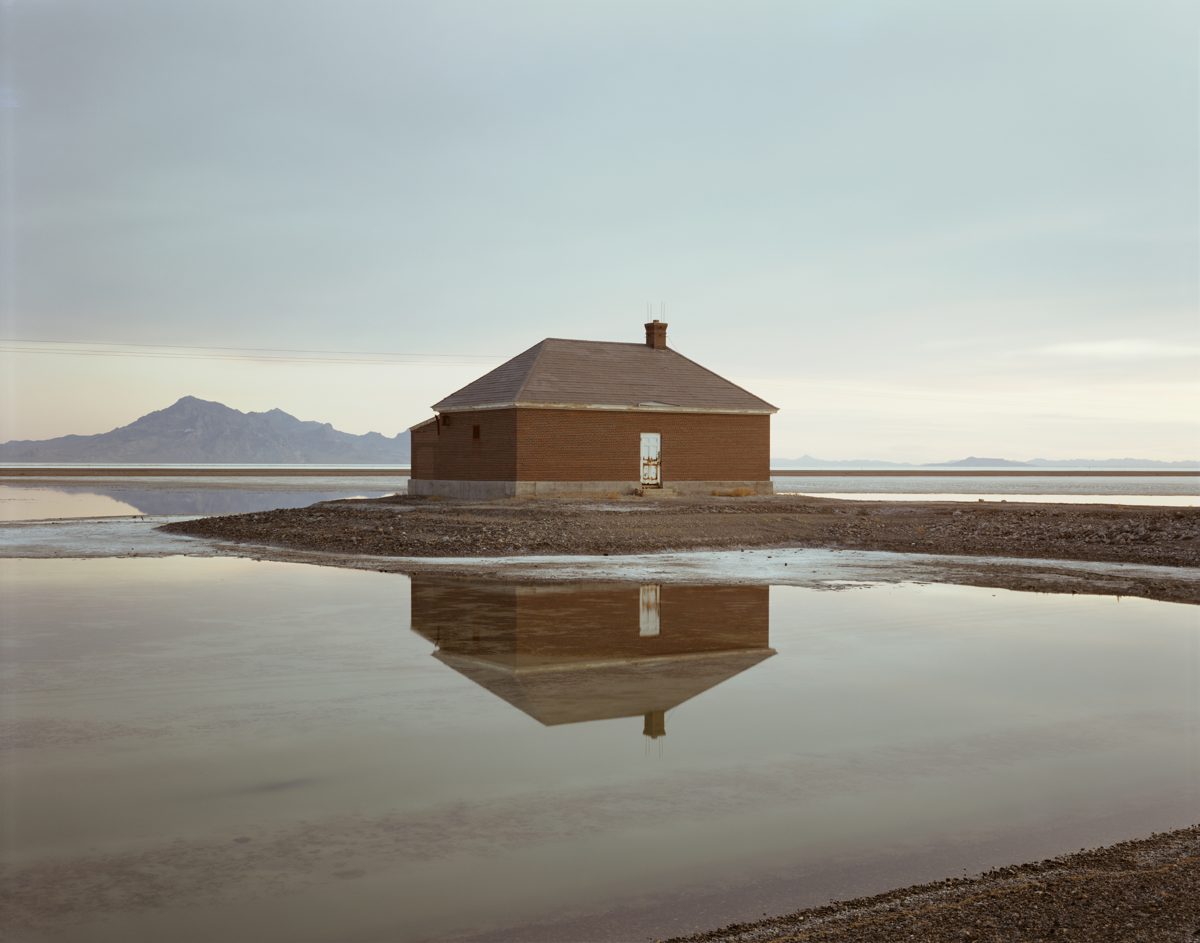
Từ ngày 25 tháng 4 đến ngày 12 tháng 7 năm 1981, Bảo tàng Nghệ thuật Philadelphia trưng bày The New West: Photographs by Robert Adams, do Michael E. Hoffman và Martha Chahroudi phụ trách. Phần chính của triển lãm lấy từ bộ ảnh From the Missouri West, mở rộng ra ngoài Colorado tới Nebraska, Wyoming, Arizona, California, Oregon và Utah.
Bảo tàng mô tả những gì Adams chụp: đường ủi cho khu nhà mới, hồ nhân tạo, xa lộ uốn lượn, những toà nhà thương mại ven đường. Và họ nhắc lại quan điểm của ông: ông không chấp nhận ý nghĩ rằng cái gì không hoang dã thì không tự nhiên.
Theo bảo tàng, ảnh của Adams gợi ra khả năng hoà giải sự có mặt của con người với thế giới tự nhiên. Tức là không phải chọn một trong hai. Con người đã ở đây. Núi cũng vẫn ở đây.
Phong cảnh sau New Topographics
Robert Adams sinh năm 1937. Ông từng dạy văn học Anh trước khi chuyển hẳn sang nhiếp ảnh. Năm 1975, ảnh của ông có mặt trong New Topographics, một triển lãm nhóm ở Rochester, cùng với Lewis Baltz, Bernd và Hilla Becher, Stephen Shore và một số người khác. Tên triển lãm sau này trở thành tên gọi cho cả một cách nhìn phong cảnh mới.
Nhưng giữa nhóm ấy, Adams có một giọng riêng. Ảnh của Baltz lạnh và phẳng. Ảnh của Adams vẫn có một nỗi lo, một sự quan tâm. Ông viết nhiều, và những gì ông viết cho thấy ông đau lòng khi thấy đất đai bị chia cắt, nhưng không buông bỏ ánh sáng trên đó.
Hơn năm mươi năm sau, The New West đọc như một cuốn sách về hiện tại. Mọi thành phố đang lớn đều có một vùng rìa như thế: đất trống, nhà mẫu, đường mới, và thứ gì đó còn lại của cảnh cũ ở phía xa. Adams dạy một cách nhìn vào vùng rìa ấy. Không than khóc, không tô hồng. Chỉ nhìn.
A book from 1974
The New West: Landscapes Along the Colorado Front Range appeared in 1974 from Colorado Associated University Press in Boulder, with a foreword by John Szarkowski, then MoMA's director of photography. A slim book, black and white, small in format.
The Front Range is the eastern edge of the Rockies, where plain meets mountain. In the early 1970s the area around Denver and Colorado Springs was growing fast. Grassland was divided into lots. Prefabricated houses went up in rows. Shopping centres, parking lots and highways joined up.
Adams arranged the book in five parts, following the land from low to high: prairie, tracts and mobile homes, the city, foothills, and the mountains. The reader takes a familiar Western journey, from plain to peak. But along the way what they meet are roofs and billboards.
Photographing what others passed over
For nearly a century, photography of the American West was photography of grandeur. Deep valleys, cliffs, clouds, rivers. The camera carefully avoided roads and houses to keep the picture of a land no one had touched.
Adams did the opposite. He set up in the middle of new housing and photographed a stucco wall in noon sun, a woman behind a window, a freshly graded road of bare earth. His prints are bright, close to overexposed, because high plains sunlight is harsh. The sky is often white.
There is no sneer in these pictures. Adams did not photograph the suburb to mock it. He photographed it as landscape, with the same attention earlier photographers gave to canyons. So the viewer begins to see things too familiar to notice: the shadow of an eave, the mountain skyline behind a fence.
An exhibition in Philadelphia
From 25 April to 12 July 1981, the Philadelphia Museum of Art showed The New West: Photographs by Robert Adams, curated by Michael E. Hoffman and Martha Chahroudi. Its core came from the portfolio From the Missouri West, reaching beyond Colorado into Nebraska, Wyoming, Arizona, California, Oregon and Utah.
The museum listed what Adams photographed: roads bulldozed for new housing, man made lakes, winding highways, roadside commercial buildings. It also recalled his view: he rejected the idea that what is not wild is not natural.
In the museum's words, his pictures suggest the possibility of reconciling human presence with the natural world. Not choosing one over the other. People are here. The mountains are here too.
Landscape after New Topographics
Robert Adams was born in 1937 and taught English literature before turning fully to photography. In 1975 his pictures appeared in New Topographics, a group show in Rochester, alongside Lewis Baltz, Bernd and Hilla Becher, Stephen Shore and others. The show's title later became the name for a whole new way of seeing landscape.
Within that group, Adams had his own voice. Baltz's pictures are cool and flat. Adams's still carry worry, and care. He wrote a great deal, and his writing shows grief at land being carved up, without giving up on the light that falls on it.
Fifty years on, The New West reads like a book about now. Every growing city has such an edge: empty lots, show homes, new roads, and something of the old view in the distance. Adams teaches a way of looking at that edge. No lament, no gloss. Just looking.
Photography