
Essays · Olfactory Art
Tự nhiên hay tổng hợp. Một tranh luận mỹ học.
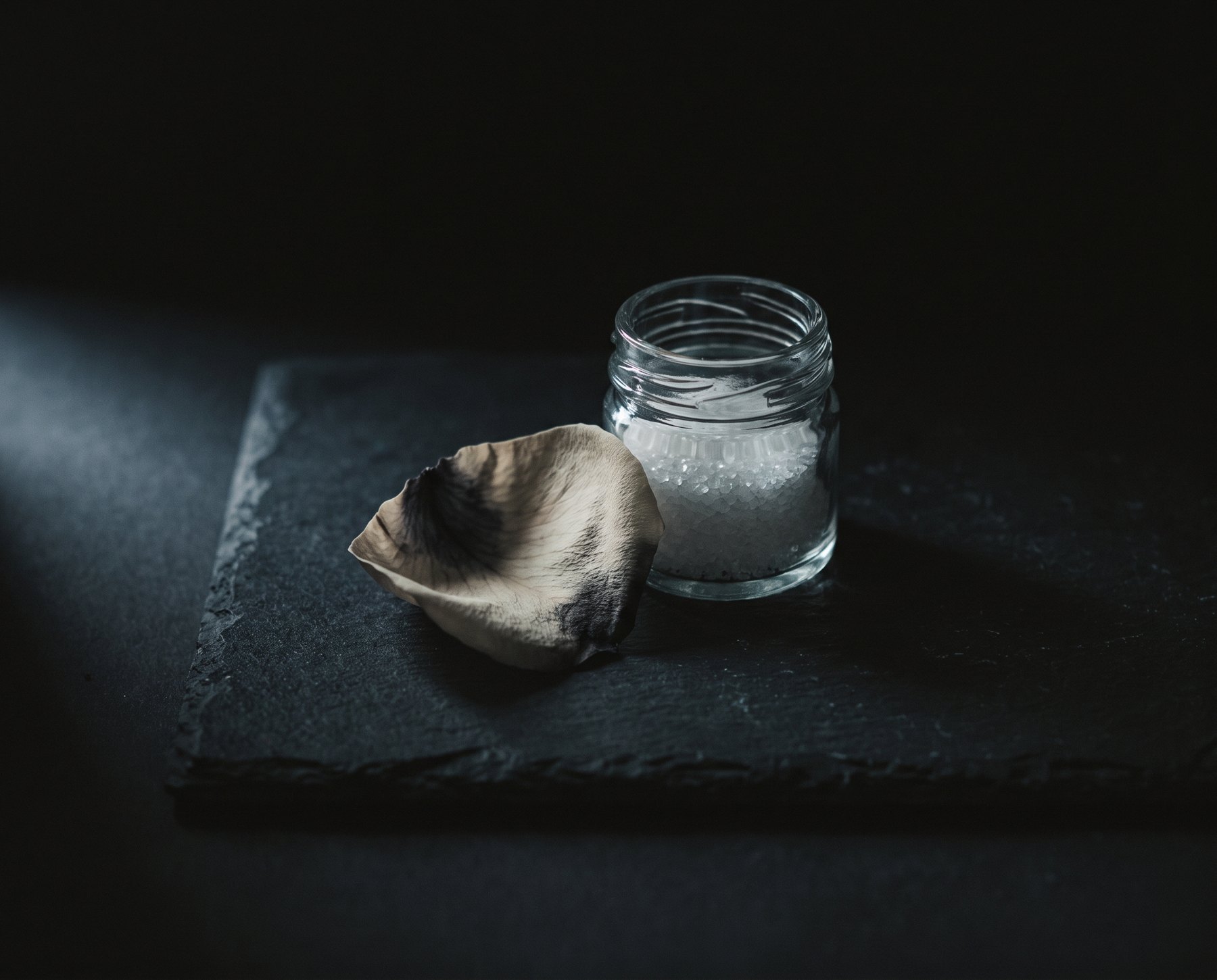
Cánh hoa và phân tử đều là dấu vết.
A petal and a molecule are both traces.
Từ 1868: nước hoa hiện đại không chỉ từ cây
Năm 1868, nhà hoá học người Anh William Henry Perkin công bố cách tổng hợp coumarin, phân tử cho mùi cỏ khô và hạnh nhân vốn có trong đậu tonka. Từ đó coumarin có thể được làm ra với số lượng lớn mà không cần đến hạt đậu. Sáu năm sau, năm 1874, Tiemann và Haarmann tổng hợp vanillin, mùi chính của quả vani.
Nước hoa đón hai phân tử ấy gần như ngay lập tức. Fougère Royale của Houbigant, do Paul Parquet sáng tác và thường được ghi năm 1882, dựng trục của nó trên coumarin tổng hợp. Năm 1889, Aimé Guerlain làm Jicky với cả coumarin lẫn vanillin tổng hợp trên một nền nhựa thơm. Hai chai ấy thường được nhắc như điểm bắt đầu của nước hoa hiện đại.
Nói cách khác, gần như ngay từ đầu, nước hoa hiện đại đã là sự gặp nhau của cây và phòng thí nghiệm. Ý tưởng về một thời xưa hoàn toàn tự nhiên, rồi bị hoá chất làm hỏng, là một câu chuyện đẹp nhưng không khớp với lịch sử.
Tự nhiên không đồng nghĩa với vô hại
Tranh luận hôm nay thường xoay quanh một giả định: thứ lấy từ cây thì lành, thứ làm trong phòng thí nghiệm thì đáng ngờ. Luật lại cho thấy một bức tranh phức tạp hơn.
Năm 2017, Liên minh châu Âu ban hành Quy chế 2017/1410, cấm atranol và chloroatranol trong mỹ phẩm. Hai chất này có tự nhiên trong chiết xuất rêu sồi và rêu cây. Theo văn bản của quy chế, uỷ ban khoa học về an toàn người tiêu dùng xếp chúng vào nhóm chất gây dị ứng da gặp nhiều nhất trong những năm trước đó. Một nguyên liệu tự nhiên kinh điển của nước hoa phải được xử lý lại để dùng tiếp.
Chiều ngược lại cũng đúng: có phân tử tổng hợp bị giới hạn, có phân tử không. Mỗi chất được xét riêng, theo dữ liệu của nó. Chữ tự nhiên hay tổng hợp nói về nguồn gốc. Nó không tự nói lên điều gì về da người.
Tranh luận thẩm mỹ: sự phức tạp và sự rõ ràng
Khi gác chuyện an toàn và tiếp thị sang một bên, còn lại một câu hỏi thú vị hơn: hai loại vật liệu này đẹp theo những cách nào?
Một tinh dầu từ cây là một đám đông. Nó chứa hàng chục, có khi hàng trăm chất, thay đổi theo đất, theo năm, theo mẻ chưng cất. Người yêu nguyên liệu tự nhiên thường nói đến chiều sâu ấy: mùi không đứng yên, có những góc bất ngờ, mỗi lần ngửi lại thấy một chi tiết khác.
Một phân tử tổng hợp là một nét vẽ. Nó sạch, rõ, lặp lại được. Năm 1966, Edmond Roudnitska dùng Hedione, một phân tử gợi mùi nhài trong suốt, trong Eau Sauvage cho Dior; ông cũng là người viết nhiều về mỹ học của nghề, trong đó có cuốn L'Esthétique en question năm 1977. Phân tử cho nhà điều hương khả năng vẽ một đường mảnh mà cây không cho được.
Hai vẻ đẹp ấy không loại trừ nhau. Phần lớn nước hoa hay đều dùng cả hai. Tranh luận thật ra không phải chọn phe, mà là hiểu mỗi vật liệu mang đến điều gì.
Hai loại dấu vết
Nghệ sĩ Sean Raspet đẩy câu hỏi này đi xa hơn. Năm 2018, ông thiết kế một phân tử mùi hoa chưa từng có trong tự nhiên hay trong tài liệu khoa học, rồi cho tổng hợp nó. Một mùi không có cây nào đứng sau. Nó là dấu vết của một ý tưởng.
Penta đọc cánh hoa và phân tử theo cùng một cách: cả hai đều ghi lại thứ đã xảy ra. Cánh hoa ghi lại một mùa, một vùng đất, một buổi sáng hái. Phân tử ghi lại một câu hỏi của con người, một phản ứng, một sự kiên nhẫn trong phòng thí nghiệm.
Hỏi thứ nào thật hơn có lẽ là hỏi sai. Nên hỏi: dấu vết này kể điều gì, và ta có muốn nghe điều đó không.
Since 1868: modern perfume was never only plants
In 1868 the English chemist William Henry Perkin reported a synthesis of coumarin, the molecule behind the smell of hay and almond in tonka beans. From then on coumarin could be made in quantity without the bean. Six years later, in 1874, Tiemann and Haarmann synthesised vanillin, the main smell of the vanilla pod.
Perfume took up both molecules almost at once. Houbigant's Fougère Royale, composed by Paul Parquet and usually dated 1882, built its axis on synthetic coumarin. In 1889 Aimé Guerlain made Jicky with both synthetic coumarin and vanillin over a resinous base. The two bottles are often cited as the start of modern perfume.
In other words, almost from the beginning, modern perfume was a meeting of plant and laboratory. The idea of an old, wholly natural age later spoiled by chemistry is a lovely story that does not match the history.
Natural does not mean harmless
Today's debate often turns on an assumption: what comes from a plant is gentle, what comes from a lab is suspect. The law paints a more complicated picture.
In 2017 the European Union adopted Regulation 2017/1410, prohibiting atranol and chloroatranol in cosmetics. Both occur naturally in oakmoss and treemoss extracts. According to the regulation, the scientific committee on consumer safety counted them among the allergens behind the highest number of skin contact allergy cases in previous years. A classic natural material of perfume had to be reworked to stay in use.
The reverse holds too: some synthetic molecules are restricted, some are not. Each substance is judged on its own data. Natural or synthetic describes origin. It says nothing by itself about skin.
The aesthetic debate: complexity and clarity
Set safety and marketing aside, and a more interesting question remains: in what ways are these two kinds of material beautiful?
An oil from a plant is a crowd. It holds dozens, sometimes hundreds of compounds, shifting with soil, year and batch. Lovers of natural materials speak of that depth: the smell never keeps still, it has unexpected corners, each time you find another detail.
A synthetic molecule is a single line. Clean, clear, repeatable. In 1966 Edmond Roudnitska used Hedione, a transparent jasmine-like molecule, in Eau Sauvage for Dior; he also wrote at length on the aesthetics of the craft, including L'Esthétique en question in 1977. A molecule lets a perfumer draw a fine line no plant can give.
The two beauties do not exclude each other. Most good perfumes use both. The real debate is not about choosing sides but about understanding what each material brings.
Two kinds of trace
The artist Sean Raspet pushed the question further. In 2018 he designed a floral molecule that had never existed in nature or in the scientific literature, and had it synthesised. A smell with no plant behind it. The trace of an idea.
Penta reads the petal and the molecule the same way: both record what happened. The petal records a season, a piece of land, a morning's picking. The molecule records a human question, a reaction, a patience in the lab.
Asking which is more real is perhaps the wrong question. Better to ask: what does this trace tell, and do we want to hear it.

Olfactory Art