
Essays · Olfactory Art
Cashmere. A smell about touch.
People smell something and think of touching.
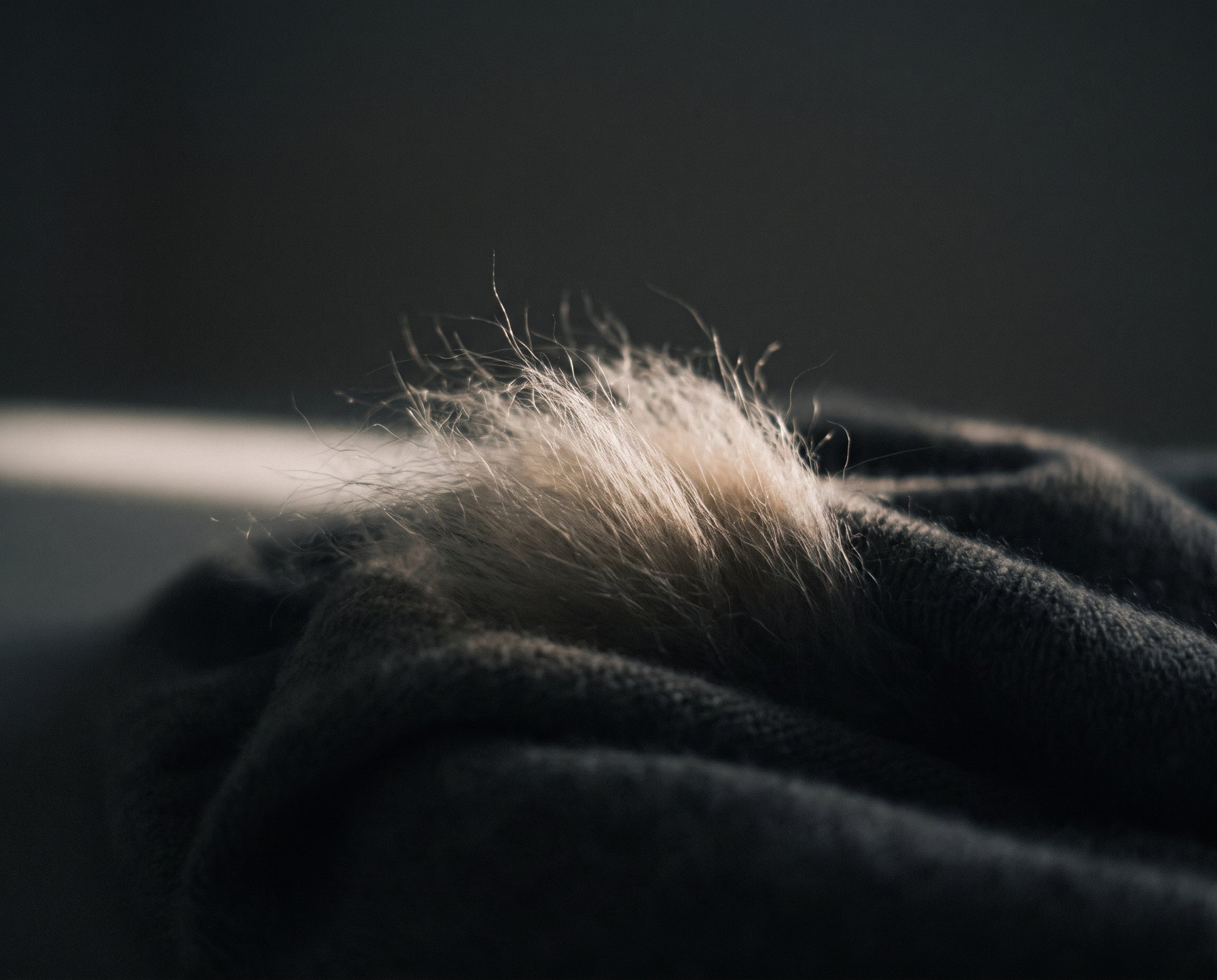
Cashmere wool: a thing almost without smell
Cashmere is wool taken from the fine down that grows beneath the outer coat of the cashmere goat, an animal of the cold highlands of Asia. The name comes from Kashmir, whose shawls woven from this wool were famous in Europe long ago.
Cashmere fibre is very fine, light and warm. What people remember is how it feels on the skin: so soft it seems to weigh nothing. A clean cashmere scarf smells of almost nothing. If it smells at all, it is of whoever wore it, of soap, of a wooden wardrobe.
Yet in perfume, cashmere is the name of a smell. Not the smell of wool. The smell of a molecule named after the feeling the wool leaves behind.
Cashmeran: wood, musk, warm dust
Cashmeran is the trade name of a molecule created by IFF in the 1970s. Its chemical name is long and dry: an indanone carrying five methyl groups. In structure it sits close to the polycyclic musks, the clean musks that went into detergent. But its smell leans toward wood, so it is usually placed between musk and wood.
Cashmeran is hard to describe in the nose's own words. People reach for many: warm wood, musk, pine, a light spice, slightly damp earth, warm dust. But the word used most does not belong to the nose at all. Soft. Like wool. Like skin.
In perfume, cashmeran is used to soften woody notes, link them to musks, and add a sense of warmth and closeness. It does not step forward as a main character. It is more like the lining inside a coat.
Like many molecules, cashmeran has limits on its use. IFRA published a restriction standard for it in 2020, with maximum levels that differ by product category.
Borrowing words from touch
Naming a smell after a wool is not strange. In most languages, smell is the sense poorest in words. We have many words for colour, sound, taste. For smell, few. Mostly we name a smell after what makes it: orange, smoke, grass. When the source is unclear, we borrow.
We borrow from touch more than we realise. A soft smell. A sharp smell. A heavy smell. A warm smell, a cool one. A smell smooth as velvet. None of these words is about chemistry. They are about feeling on skin.
Cashmeran goes only one step further. It borrows not an adjective but the name of a whole material. And people understand at once, even if they have never touched a real cashmere scarf.
When the nose speaks the hand's language
There is something to think about here. The name cashmere does not describe the smell. It describes what people want to feel when smelling it: wrapped, warm, lightly touched. The smell, in this case, is no longer information about a thing. It is an invitation into a sensation.
This shows how rarely smell stands alone. It clings to the other senses, to the memory of skin, of hands, of the temperature of a room. A woody smell is not only a smell. It is also the smoothness of the wood's surface, the warmth of an afternoon.
The cashmere scarf still has no smell. But a molecule borrowed its name, and ever since, each time people smell it, they think of touching.


Olfactory Art