
Essays · Contemporary Art
Harun Farocki. Parallel I-IV.
In a computer built world, there is only one kind of wind.
Tate · Tate
Four parts, one question
Parallel I-IV is a cycle of four videos by the German filmmaker and artist Harun Farocki. The first part, Parallel, was completed in 2012 and runs sixteen minutes in a loop. The other three followed in 2014: Parallel II at nine minutes, Parallel III at seven, Parallel IV at eleven.
All four deal with one kind of image: computer animation, specifically video game graphics. Farocki argued that computer generated images were becoming a general model, overtaking cinema.
Farocki died in 2014, the year the last three parts were finished, which places Parallel among his final works. The four part cycle is now in the Tate collection.
In the same years other artists were asking where older images stand against newer ones. Tacita Dean, for instance, defended celluloid film as it was disappearing. Farocki went the other way: he looked straight at the kind of image replacing cinema and tried to understand how it works.
From lines to near photographs
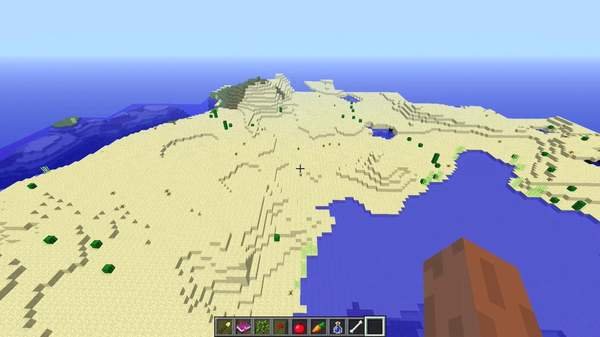
Parallel I opens a history of styles in computer graphics. The first games of the 1980s consisted only of horizontal and vertical lines. A road was two strokes. A mountain was a few jagged marks.
According to Farocki, that abstraction was seen as a failing, and the games industry spent decades correcting it. Today images aim at photorealism. Glittering water, trembling leaves, drifting clouds.
Set the generations of images side by side and we see an evolution: trees become more like trees, water more like water.
But his question is not how far the images have come. It is this: once computer images look so real, how do they change the way we see the real world?
The edge of the world
Parallel II and III search for the boundaries of game worlds. Where does a game world stop? Many worlds turn out to be discs floating in space, recalling pre-Hellenistic ideas of the earth.
These worlds also have an apron in front and a backdrop behind, like a theatre stage. Beyond a certain point, the landscape is only a painted flat.
The two parts also examine the nature of objects in games. Farocki finds that they have no real existence. Each of their properties must be built separately and assigned to them. A crate can look like wood and never break. A rock can have the colour of stone and no weight. Whatever is not programmed does not exist.
In the real world a thing carries all its qualities at once, including those no one notices. In a built world, a thing has only what it has been allowed.
Heroes without parents
Parallel IV turns to the protagonists, the figures players follow through 1940s Los Angeles, a post apocalyptic land, the Wild West or other genre worlds.
Farocki notes that these heroes have no parents and no teachers. They must work out the rules for themselves. They have barely more than one facial expression, very few traits, and speak short sentences that are almost interchangeable.
He calls them homunculi, human shaped beings made by humans. Whoever plays with them shares a little of the creator's pride.
After trees, water, ground and objects, the last part closes the cycle with the human figure. And that figure is built like everything else: one property at a time, with no past.
Parallel is worth remembering because it neither dismisses video games nor praises them. It looks at them with a documentary filmmaker's eye, and shows a new kind of image quietly changing how we picture the world.

Contemporary Art