
Essays · Olfactory Art
Ōjukukō (Ranjatai).
Each cut is someone who wanted to keep the scent.
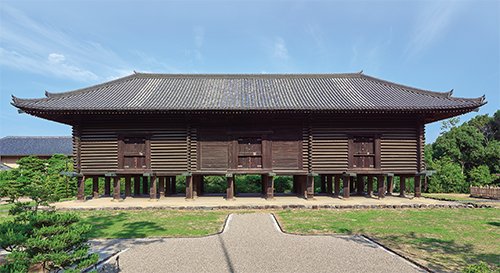
Tokyo National Museum (Shōsōin repository, exhibition page) · Tokyo National Museum
A piece of wood in a treasury
The Shōsōin is the treasure house of Tōdai-ji temple in Nara. It holds thousands of objects from the eighth century and after: instruments, textiles, mirrors, documents, medicines. Among them is a block of agarwood whose formal name is Ōjukukō.
According to the Tokyo National Museum, it is called the finest incense under the sun and regarded as one of the most honourable offerings to the Buddha. It is 156 cm long and weighs about 11.6 kg. Dark, dense, irregular in shape, like any true agarwood.
Its more common name is Ranjatai. The three characters of that name were chosen with care: each hides one character of the temple's name, Tōdai-ji. The name of the wood carries the address of the place that keeps it.
Those who cut it
Ranjatai is famous not only for its smell. It is famous for the people who took a piece of it.
The Tokyo National Museum names three: Ashikaga Yoshimasa, a shogun of the fifteenth century; Oda Nobunaga, who came close to unifying Japan in the sixteenth; and Emperor Meiji in the nineteenth. Each cut a small piece. Nobunaga cut his in 1574, after the court allowed him to open the treasury.
Small paper labels on the wood mark the places where it was cut. They read like notes in the margin of a text. Reading them, one reads part of the history of power in Japan.
Cutting Ranjatai was not ordinary incense appreciation. Being allowed to open the Shōsōin and take a sliver was a sign of standing. The scent became a kind of certificate.
Where the wood came from, and when
Agarwood does not grow in Japan. It forms inside certain tropical Asian trees when they are injured. Fragrant resin gathers around the wound, and over time that part of the wood grows dense and dark.
In October 2025 the Shōsōin Office of the Imperial Household Agency, with researchers from Kyoto University and the RIKEN SPring-8 Center, published an analysis of Ranjatai. The wood is Southeast Asian agarwood, brought to Japan by ship. Radiocarbon dating shows the tree grew between the late eighth and late ninth centuries. They found more than 300 substances in its smell.
The Tokyo National Museum also cites an old record: in 595, under Empress Suiko, a log of agarwood washed ashore on Awaji Island. Given the new dating, the wood now in the Shōsōin cannot be that log. But the story shows that agarwood came to Japan from the sea, and was treated as a treasure very early.
Why the wood stays with us
In autumn 2019 the Tokyo National Museum showed Ranjatai in its Heiseikan building, from 14 October to 24 November, in a special exhibition celebrating the new emperor's enthronement. Visitors queued to look at a piece of wood they could not smell.
That is the strangest thing about Ranjatai. An object valued for its scent, yet very few people have ever smelled it. Its smell is known through records, chemical analysis and cuts.
Ranjatai is not the work of an artist. It is the work of a tree, a wound, and centuries of people deciding to keep rather than burn.
Olfactory Art