
Essays · Olfactory Art
Sadakichi Hartmann. A Trip to Japan in Sixteen Minutes.
A sixteen minute journey, by nose alone.
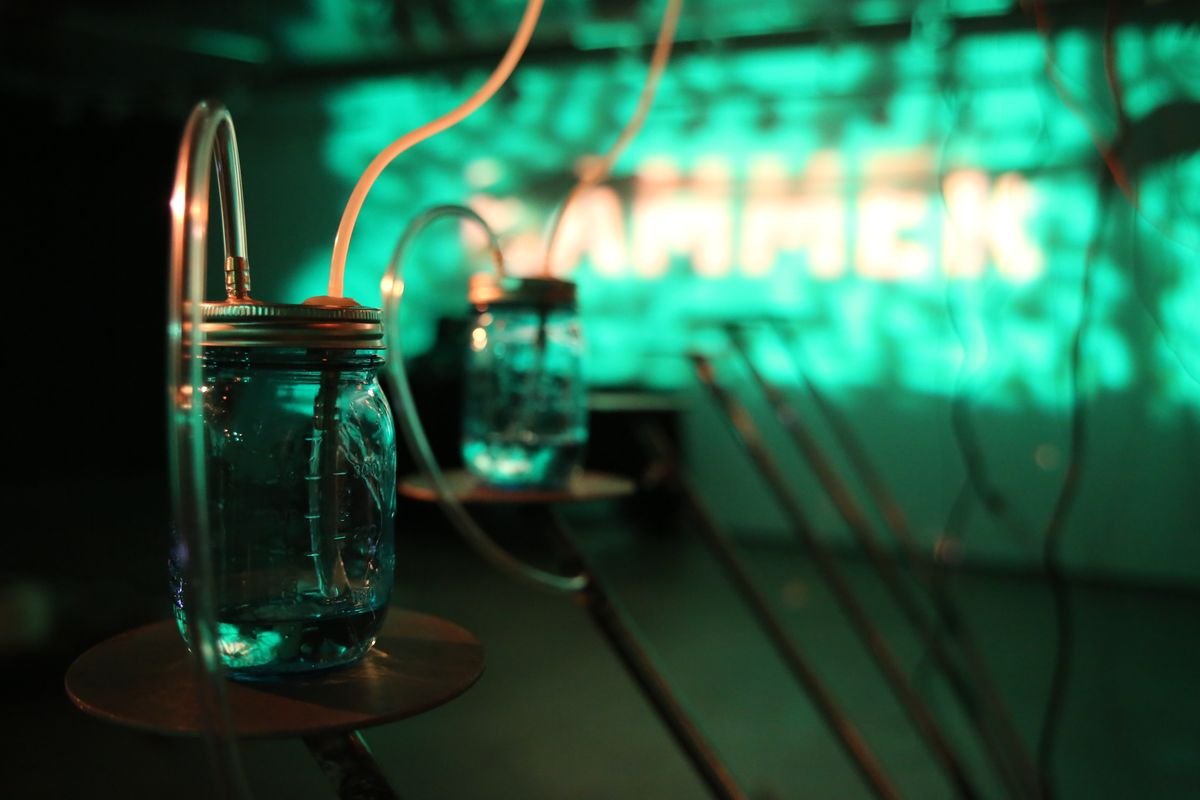
Rehearsal of the reconstruction, 2013; Bennett Barbakow / Smithsonian Magazine · Smithsonian Magazine
A concert without notes
In 1902, in New York, the poet and critic Sadakichi Hartmann stood on a stage with an idea nobody had tried in public. He called it a perfume concert. Its title was A Trip to Japan in Sixteen Minutes.
Hartmann was German Japanese American, moving through the literary and art circles of New York. His contemporaries called him a grand eccentric. He wrote poetry and photography criticism, and had long nursed the idea of using smell as an instrument.
His reasoning was clear. Music wakes memories and feelings in the listener without words. Smell can do the same, sometimes faster. So a sequence of smells, one after another in order, could become a piece of music, and that music could carry people somewhere else.
The night
Hartmann prepared for years. He aimed for the Carnegie Lyceum, a space used to experimental work. The plan fell through at the last minute. The show moved to a New York theatre known for vaudeville and burlesque, where audiences came for comedy and dancing girls.
On stage were Hartmann and performers dressed as geishas. He used fans to push each scent toward the audience. Each smell was imagined as a stop on the way from New York to Japan.
The method was slow and ineffective. The smells travelled sluggishly, spread unevenly, reached one row before another. The audience did not wait. Heckling broke out. A show planned for sixteen minutes ended after about four.
Perhaps the problem was not the smells. It was the room. An audience that came to laugh was not ready to sit still and smell. The same idea, in the wrong place, became a joke.
According to surviving accounts, Hartmann never tried a public scent concert again.
Why a failure is remembered
Judged by the night alone, A Trip to Japan in Sixteen Minutes failed. It is still cited for another reason: it was one of the earliest times someone put smell on a stage as the work itself, not as decoration for a play.
Before Hartmann, smell had been present in theatres, churches, banquets. But there it accompanied something else. Hartmann wanted smell to stand alone, arranged in sequence, listened to like music.
The failure is also information. It exposed the problems olfactory art would later have to solve: how to deliver a smell on time, how to clear the old smell before the new one arrives, how to hold the attention of an audience not used to sitting still and smelling.
More than a century later
More than a hundred years later, the Institute for Art and Olfaction in Los Angeles, founded by Saskia Wilson-Brown, restaged Hartmann's journey at the Hammer Museum. A team of thirteen artists took part.
This time the smells were not simple. The perfumer Sherri Sebastian made six compositions, each with up to twenty six ingredients. The audience sat blindfolded. A diffusion machine replaced the fan. The composers Bennett Barbakow and Julia Owen made the accompanying sound.
The problems of 1902 were solved with engineering. But the core idea was still Hartmann's: a sequence of smells can tell a journey.
That idea travelled far. Wolfgang Georgsdorf built an entire smell organ, Smeller 2.0, to play compositions of scent in a dark room. Hartmann did not live to see it. But his question found its answer.
Olfactory Art