
Essays · Olfactory Art
Ade Darmawan. Santalum Album Family.
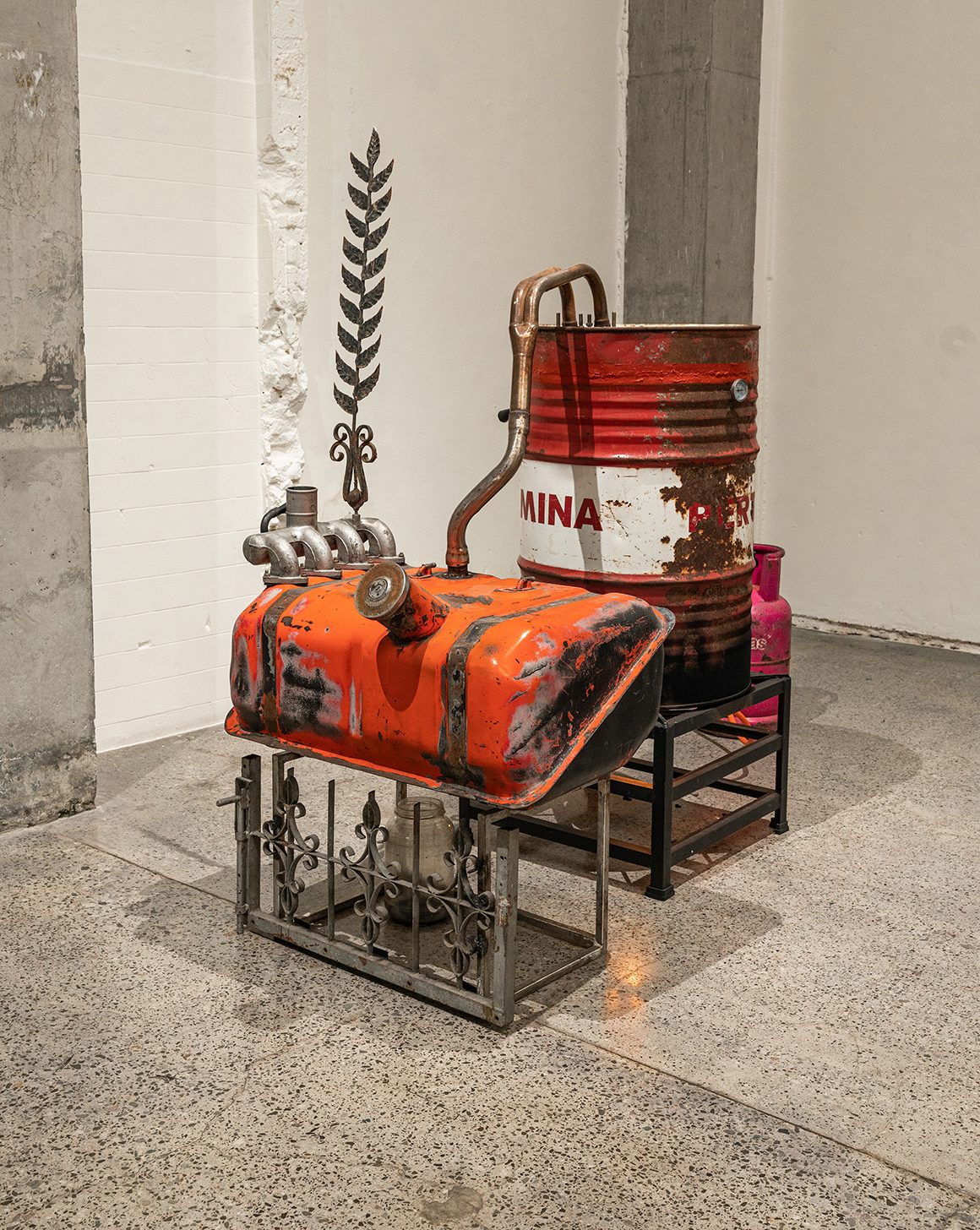
Một mùi gỗ quý, cháy trên một thùng dầu.
A precious wood, burning on an oil drum.
Installation view, ROH, Jakarta. Photo: Maruto Ardi · Artforum
Thùng dầu, bếp gas, và một mùi gỗ
Santalum Album Family là một tác phẩm Ade Darmawan làm năm 2024. Vật liệu chính là một thùng dầu mang dấu Pertamina, tập đoàn dầu khí quốc doanh của Indonesia. Thùng được gắn liền với một chiếc bếp gas màu cam, loại bếp quen thuộc trong những căn bếp bình dân.
Từ vòi bếp, thứ bay ra không phải mùi gas. Đó là mùi gỗ đàn hương cháy. Mùi lan ra quanh thùng dầu, trầm và khói, không giống chút nào với mùi xăng dầu người ta chờ đợi từ một vật như thế.
Sự lệch ấy là điểm đầu tiên người xem gặp. Mắt thấy một thùng dầu công nghiệp. Mũi thấy một thứ gỗ quý, loại dùng trong đền, trong nghi lễ, trong những đồ vật đắt tiền. Hai thứ không hợp nhau, và tác phẩm để chúng đứng cạnh nhau cho đến khi người xem tự hỏi vì sao.
Tác phẩm được trưng tại ROH, Jakarta, trong triển lãm Water Resistance năm 2024, triển lãm Darmawan chia làm hai nơi, nơi thứ hai là Cemeti ở Yogyakarta.
Cendana, một con phố và một gia đình
Câu trả lời nằm ở cái tên. Santalum album là tên khoa học của đàn hương trắng. Trong tiếng Indonesia, đàn hương là cendana. Và Cendana là tên con phố ở Jakarta nơi Suharto, tổng thống thứ hai của Indonesia, xây nhà riêng.
Ở Indonesia, cái tên Cendana từ lâu gắn với gia đình ông. Vì thế chữ Family trong tên tác phẩm không cần giải thích với người xem địa phương. Một mùi gỗ trở thành một lối gọi tên, vừa kín đáo vừa rõ ràng.
Thùng dầu Pertamina đưa phép chơi chữ ấy đến một lịch sử cụ thể. Tác phẩm nhắc tới cuộc khủng hoảng của Pertamina và vai trò của Suharto cùng gia đình trong việc làm cạn nguồn dầu mỏ của đất nước. Dầu là tài sản chung. Mùi đàn hương cháy nói rằng nó đã bị đốt cho một số ít người.
Darmawan không viết khẩu hiệu. Ông để mùi làm việc đó. Người không biết câu chuyện chỉ ngửi thấy gỗ thơm. Người biết thì không thể ngửi nó như trước nữa. Một vật quen trong bếp, một mùi quen trong đền, đặt cạnh nhau, đủ để nói điều mà nhiều năm liền người ta chỉ dám nói nhỏ.
Nước, dầu, và sự kháng cự
Water Resistance dùng việc chưng cất và biến đổi vật chất như một hình ảnh cho lịch sử khai thác ở Indonesia, từ gia vị thời thuộc địa đến dầu mỏ thời hiện đại. Darmawan, một trong những người sáng lập nhóm ruangrupa ở Jakarta, đã làm việc nhiều năm với câu hỏi ai được hưởng tài nguyên của một đất nước.
Tên triển lãm có thể đọc theo hai chiều. Kháng nước, như một lớp phủ không để nước thấm qua. Hoặc sự kháng cự của nước, của những thứ lỏng, trôi, khó nắm giữ. Dầu và tinh dầu đều thuộc về nhóm ấy: chúng chảy, chúng bay hơi, chúng thấm vào những nơi không ai mời.
Trong cùng triển lãm có Tuban, nơi những bình chưng cất gia vị nhỏ tinh dầu lên các cuốn tiểu sử Suharto. Hai tác phẩm cùng nhắm tới một người, nhưng bằng hai cách khác nhau. Tuban đi qua chữ viết và văn học. Santalum Album Family đi qua một cái tên và một thùng dầu.
Ở cả hai, mùi là chứng cứ không có chữ ký. Nó không kể lại lịch sử. Nó chỉ bay ra, và để người ngửi tự nối những điểm còn lại.
An oil drum, a gas stove, a smell of wood
Santalum Album Family is a work Ade Darmawan made in 2024. Its main material is an oil drum marked Pertamina, Indonesia's state oil and gas company. The drum is fused to an orange gas stove, the kind found in ordinary kitchens.
What comes out of the stove's hose is not the smell of gas. It is the smell of burning sandalwood. It spreads around the drum, deep and smoky, nothing like the petrol one expects from such an object.
That mismatch is the first thing a visitor meets. The eye sees an industrial oil drum. The nose finds a precious wood, the kind used in temples, in ceremonies, in costly things. The two do not belong together, and the work lets them stand side by side until the viewer asks why.
The work was shown at ROH, Jakarta, in Water Resistance in 2024, an exhibition Darmawan split between two venues, the second being Cemeti in Yogyakarta.
Cendana: a street and a family
The answer lies in the name. Santalum album is the botanical name of white sandalwood. In Indonesian, sandalwood is cendana. And Cendana is the name of the street in Jakarta where Suharto, Indonesia's second president, built his private home.
In Indonesia the name Cendana has long been tied to his family. So the word Family in the title needs no explanation for a local viewer. A smell of wood becomes a way of naming, discreet and clear at once.
The Pertamina drum takes the pun to a specific history. The work refers to the Pertamina oil crisis and to the part Suharto and his family played in draining the country's oil wealth. Oil is common property. The smell of burning sandalwood says it was burned for a few.
Darmawan writes no slogans. He lets the smell do it. Someone who does not know the story smells only fragrant wood. Someone who does can never smell it the same way again. A kitchen object and a temple smell, side by side, are enough to say what for years people only said quietly.
Water, oil, resistance
Water Resistance uses distillation and the transformation of matter as an image for the history of extraction in Indonesia, from colonial spice to modern oil. Darmawan, a co-founder of the Jakarta collective ruangrupa, has spent years on the question of who benefits from a country's resources.
The title reads two ways. Water resistant, like a coating that keeps water out. Or the resistance of water itself, of things that are liquid, drifting, hard to hold. Oil and essential oil both belong here: they flow, they evaporate, they seep into places no one invited them.
The same exhibition included Tuban, where stills of spices drip oil onto biographies of Suharto. Both works point at one man, by different roads. Tuban goes through writing and literature. Santalum Album Family goes through a name and an oil drum.
In both, smell is evidence without a signature. It does not retell history. It simply drifts out and lets the one who smells connect the rest.
Olfactory Art