
Essays · Olfactory Art
Ade Darmawan. Tuban.
Tinh dầu thấm vào trang sách, và trang sách đổi màu.
Oil soaks into the page, and the page changes colour.
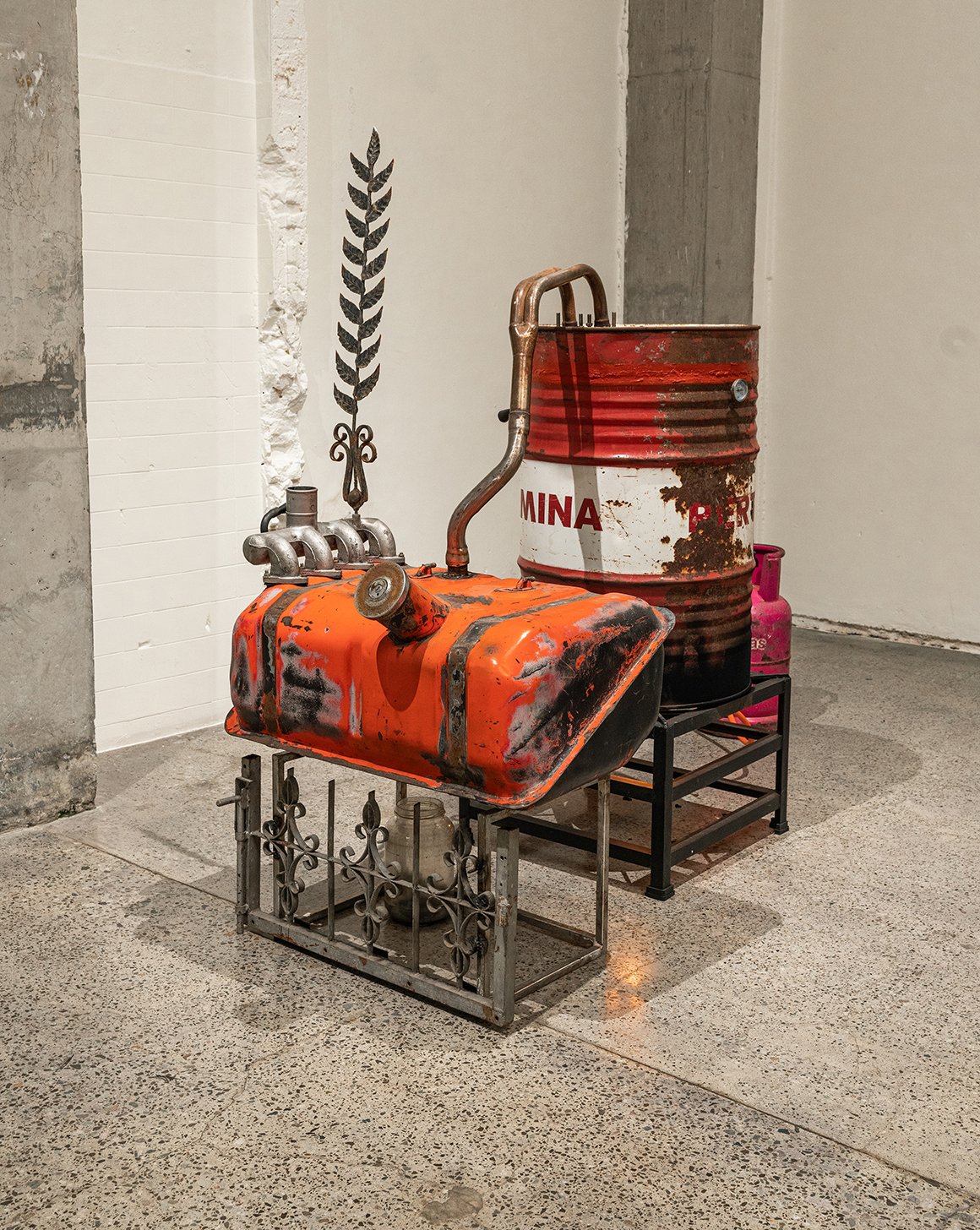
Exhibition view "Ade Darmawan: Water Resistance", 2024 (from Artforum article) · Artforum
Một căn phòng đang chưng cất
Tuban là một sắp đặt Ade Darmawan bắt đầu từ năm 2019. Nhìn qua, nó giống một căn phòng trong nhà: bàn ăn, ghế, tủ áo. Nhưng trên mặt bàn, trên ghế, trên tủ là những chiếc bếp điện, và trên bếp là các bình chưng cất bằng thuỷ tinh.
Trong bình là thảo mộc và gia vị: nhục đậu khấu, đinh hương, quế. Khi bếp nóng, hơi bốc lên, đi qua ống, gặp lạnh, rồi ngưng lại thành những giọt tinh dầu sẫm màu. Mùi ngọt và cay lan khắp phòng. Người xem ngửi thấy nó trước khi hiểu mình đang nhìn gì.
Tinh dầu không được hứng vào lọ. Nó nhỏ xuống những cuốn tiểu sử của Suharto, tổng thống thứ hai của Indonesia, người cầm quyền hơn ba mươi năm. Giọt dầu thấm vào giấy, loang ra mặt bàn, để lại những vết không lau được.
Thời gian là một phần của tác phẩm. Càng lâu, vết càng lan, sách càng thẫm lại. Căn phòng không đứng yên. Nó đang từ từ viết đè lên những gì nằm trên bàn.
Từ một cuốn tiểu thuyết
Darmawan chọn những gia vị này không phải vì mùi của chúng dễ chịu. Ông chọn chúng vì chúng xuất hiện trong Arus Balik, tiểu thuyết của Pramoedya Ananta Toer in năm 1995. Pramoedya phác thảo cuốn sách từ những năm 1970, khi ông đang bị giam vì dính dáng với Lekra, Viện Văn hoá Nhân dân, một tổ chức gần với phe cộng sản.
Arus Balik kể về một thời điểm quyền lực trên biển đổi chiều, khi thương nhân và tàu chiến từ phương Tây đến quần đảo để tìm gia vị, và các vương quốc ven biển Java mất dần vị thế. Tuban, một thành phố cảng ở Đông Java, đóng vai trò trung tâm trong câu chuyện.
Darmawan bắt đầu từ việc đọc cuốn tiểu thuyết ấy, rồi đi thực địa tới Tuban. Tên tác phẩm lấy từ đó. Một thành phố cảng, một cuốn sách viết trong tù, và những gia vị từng khiến người ta vượt nửa vòng trái đất.
Đặt tiểu sử Suharto dưới giọt tinh dầu là một lựa chọn có chủ đích. Chính dưới thời Suharto, Pramoedya bị giam, sách của ông bị cấm. Mùi của cuốn tiểu thuyết quay lại, thấm lên câu chuyện chính thức về người đã cấm nó.
Chưng cất như một phép so sánh
Năm 2024, Tuban được trưng trong Water Resistance, triển lãm của Darmawan chia làm hai nơi: ROH ở Jakarta và Cemeti Institute for Art and Society ở Yogyakarta. Cả triển lãm dùng việc chưng cất như một hình ảnh cho lịch sử khai thác thuộc địa ở Indonesia.
Theo bài viết trên Frieze, trong các sắp đặt của triển lãm, nhục đậu khấu, đinh hương và hoa nhài đi từ bồn chứa, qua những ống xả chắp vá và bình ngưng thuỷ tinh, rồi rỉ vào lọ thành thứ tinh dầu sẫm và thơm. Máy móc trông tạm bợ, như được lắp từ đồ cũ.
Chưng cất là lấy ra phần quý nhất của một vật và bỏ lại phần còn lại. Đó cũng là cách một nền kinh tế thuộc địa vận hành: lấy gia vị, lấy dầu, lấy gỗ, để lại đất đã cạn. Darmawan, một trong những người sáng lập nhóm ruangrupa ở Jakarta, biến phép so sánh ấy thành một thứ người xem hít vào được.
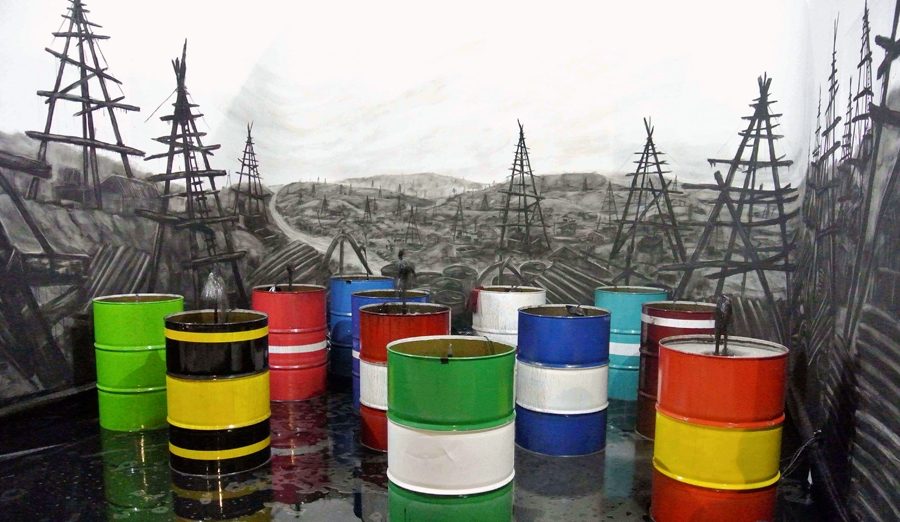
Cùng triển lãm, ông còn làm Santalum Album Family, nơi mùi gỗ đàn hương cháy bay ra từ một thùng dầu. Nếu Santalum nói về dầu mỏ và quyền lực, thì Tuban nói về chữ viết: ai được viết lịch sử, và mùi nào đủ mạnh để thấm qua trang sách.
A room that distils
Tuban is an installation Ade Darmawan began in 2019. At first glance it is a room in a house: a dining table, chairs, a wardrobe. But on the table, the chairs and the wardrobe sit electric hot plates, and on them glass distillation vessels.
Inside are spices: nutmeg, clove, cinnamon. As the plates heat, vapour rises, moves through tubes, meets cold and condenses into dark drops of oil. A sweet, peppery smell fills the room. Visitors smell it before they understand what they are looking at.
The oil is not collected in bottles. It drips onto biographies of Suharto, Indonesia's second president, who ruled for more than thirty years. The drops soak into the paper and spread across the table, leaving marks that will not wipe away.
Time is part of the work. The longer it runs, the further the stains spread and the darker the books become. The room is not still. It is slowly writing over whatever lies on the table.
From a novel
Darmawan did not choose these spices because they smell pleasant. He chose them because they appear in Arus Balik, the novel by Pramoedya Ananta Toer published in 1995. Pramoedya drafted it in the 1970s while imprisoned for his ties to Lekra, the Institute for People's Culture, an organisation close to the communists.
Arus Balik tells of a moment when maritime power turned, when Western traders and warships came to the archipelago for spice and the coastal kingdoms of Java lost their standing. Tuban, a port city in East Java, is central to the story.
Darmawan started by reading the novel, then made field trips to Tuban. The work takes its name from there. A port city, a book written in prison, and the spices that once sent people halfway around the world.
Placing Suharto's biographies under the dripping oil is deliberate. It was under Suharto that Pramoedya was imprisoned and his books banned. The smell of the novel comes back and soaks into the official story of the man who banned it.
Distillation as analogy
In 2024 Tuban was shown in Water Resistance, Darmawan's exhibition split between ROH in Jakarta and the Cemeti Institute for Art and Society in Yogyakarta. The whole show uses distillation as an image for the history of colonial extraction in Indonesia.
As Frieze describes the installations, nutmeg, cloves and jasmine travel from tanks through makeshift exhaust pipes and glass condensers and ooze into jars as dark, fragrant distillates. The machinery looks improvised, pieced together from used parts.
Distilling means taking the most valuable part of a material and leaving the rest. It is also how a colonial economy works: take the spice, take the oil, take the wood, leave the land spent. Darmawan, a co-founder of the Jakarta collective ruangrupa, turns that analogy into something one can breathe.
In the same exhibition he showed Santalum Album Family, where the smell of burnt sandalwood comes out of an oil drum. If Santalum speaks of oil and power, Tuban speaks of writing: who gets to write history, and which smell is strong enough to soak through the page.
Olfactory Art