
Essays · Olfactory Art
Anya Gallaccio. Stroke.
Một bức tường ngọt không giữ được sự im lặng.
A sweet wall cannot keep still.
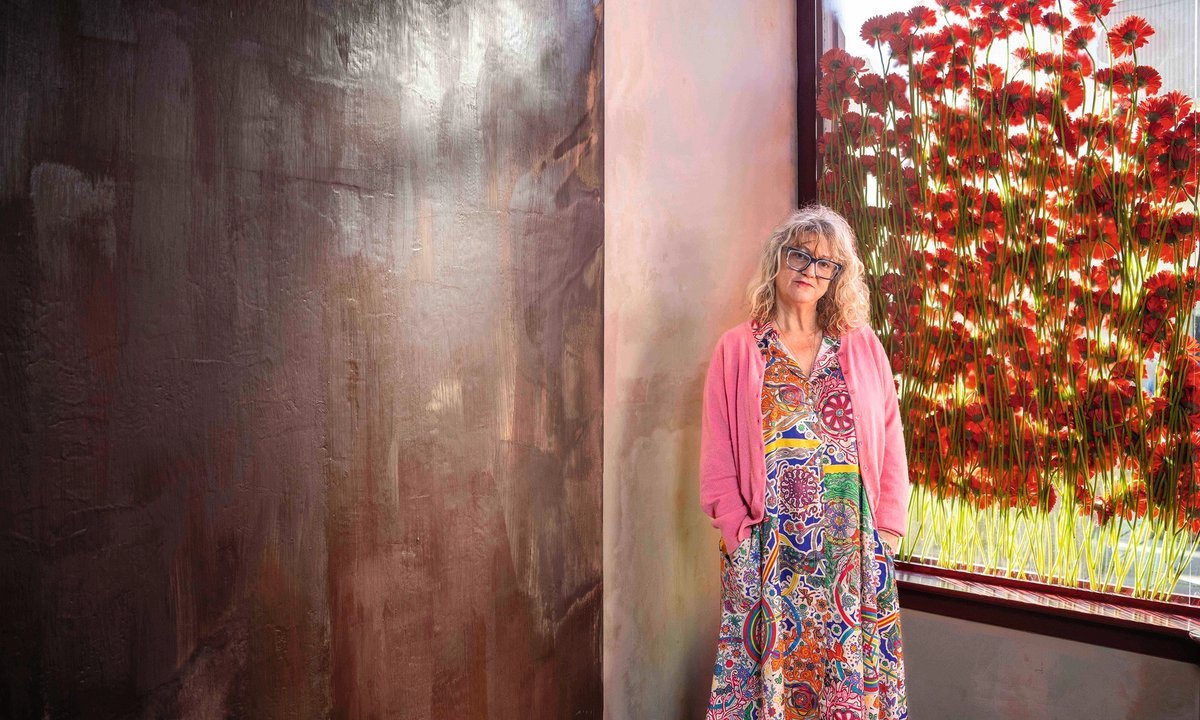
© Anya Gallaccio, courtesy of the artist and Thomas Dane Gallery · The Art Newspaper
Một lớp nâu từ sàn lên
Vật liệu của Stroke rất ít: sô-cô-la đen, một mặt tường, và gần như không có gì khác. Anya Gallaccio phủ sô-cô-la lên tường phòng trưng bày thành một lớp đều, màu nâu sẫm, như một mảng màu phẳng của hội hoạ trừu tượng. Theo The Art Newspaper, bà dùng loại sô-cô-la đen Bournville và muốn phủ nó với cử chỉ nhỏ nhất có thể.
Tên tác phẩm đến từ chính cách làm ấy. Stroke là một nét cọ, một lần quét tay. Không có hình vẽ, không có câu chuyện. Chỉ có dấu của việc phết lên.
Tác phẩm có một tiền thân. Năm 1993, gallery Krinzinger ở Vienna mời Gallaccio làm một triển lãm cá nhân, và bà làm Brown on White: tường phòng phủ sô-cô-la đen tới độ cao khoảng hai mét, ở giữa phòng đặt băng ghế màu nâu có hình gợi đến những thanh sô-cô-la. Krinzinger là gallery gắn với các nghệ sĩ Actionism Vienna, những người từng dùng đồ ăn trong các màn trình diễn dữ dội. Gallaccio chọn một chất liệu ăn được, nhưng đặt nó vào im lặng.
Năm 1994, tác phẩm mang tên Stroke xuất hiện ở gallery Karsten Schubert tại London, và cũng năm ấy trong triển lãm mở màn của Blum & Poe ở Los Angeles. Từ đó nó được dựng lại nhiều lần: ở Jupiter Artland gần Edinburgh năm 2014, ở Blum & Poe năm 2019 nhân dịp gallery tròn 25 năm, và ở Turner Contemporary tại Margate năm 2024.
Người xem không đứng yên
Một mảng màu nâu treo trong phòng trưng bày có thể trông nghiêm trang. Nhưng đây là sô-cô-la, và người xem biết điều đó. Họ ngửi thấy nó. Rồi họ làm những việc không ai làm với một bức tranh.
The Art Newspaper ghi lại rằng khách đến xem đã cào tên viết tắt của mình lên tường, cậy mép lớp sô-cô-la để nếm. Ở lần dựng lại tại Los Angeles năm 2019, người xem mạnh tay đến mức Gallaccio phải phết lại một số mảng sau buổi khai mạc.
Chi tiết này nói nhiều về tác phẩm. Stroke không được làm để giữ nguyên. Mỗi vết cào là một lớp ghi chép mới. Sau vài tuần, bức tường không còn là mặt phẳng bà để lại mà là một tấm bản đồ của những người đã đi qua: chỗ này có người đứng lâu, chỗ kia có người không cưỡng được.
Thời gian cũng viết lên bề mặt ấy. Trong Brown on White ở Vienna, chỗ sô-cô-la bị ô-xy hoá và lên mốc đã chuyển sang một lớp trắng mờ. Nâu trên trắng thành trắng trên nâu. Tên triển lãm tự đổi nghĩa theo vật liệu.
Chất liệu tự quyết
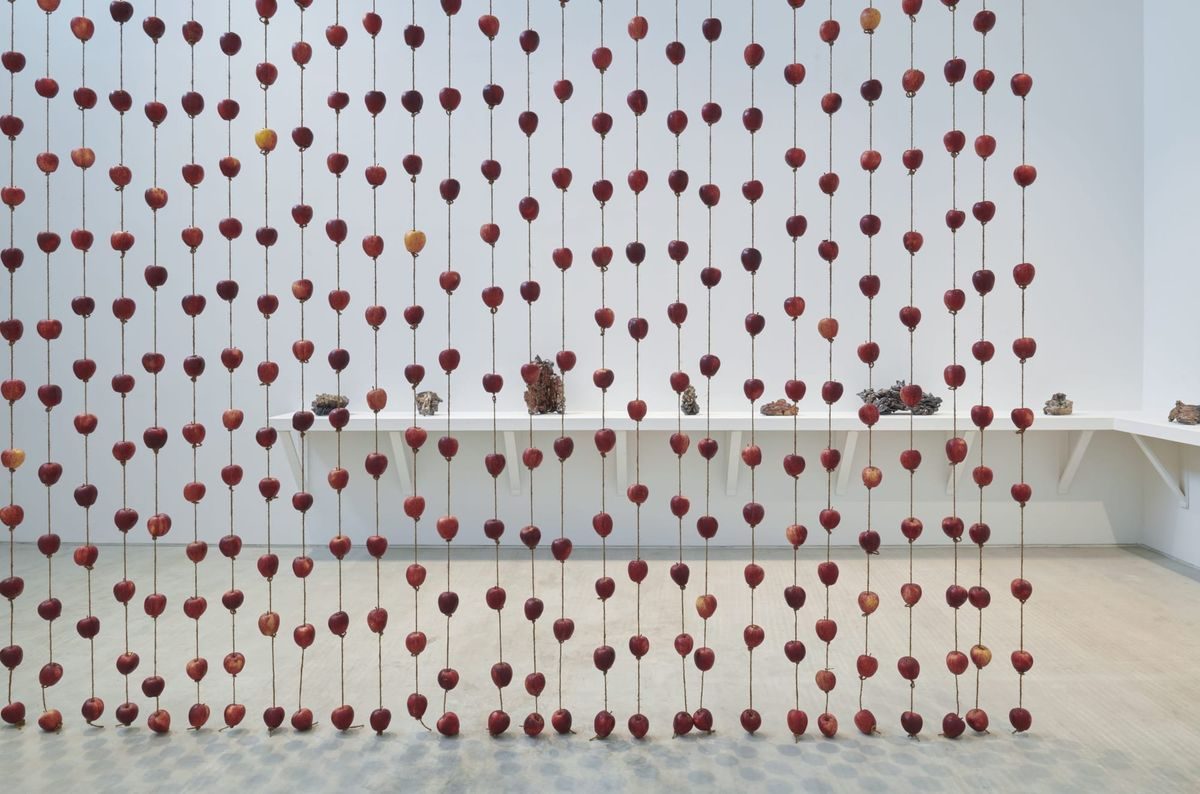
Gallaccio được biết đến với những chất liệu hữu cơ: táo, hoa, cây, nước đá, sáp, phấn, sô-cô-la. Bà chọn chúng chính vì chúng thay đổi trong thời gian tác phẩm tồn tại, và bà không giữ quyền kiểm soát sự thay đổi đó. Ở Falling from grace, táo lên men và rữa dần. Ở Stroke, sự thay đổi chậm hơn và lặng hơn, nhưng cũng không dừng.
Sô-cô-la là một chất liệu đặc biệt vì nó mang sẵn một đời sống xã hội. Nó là quà, là phần thưởng, là thứ ăn lén. Đặt nó lên tường ở quy mô một căn phòng, Gallaccio biến sự quen thuộc ấy thành điều hơi quá sức. Một thanh sô-cô-la thì dễ chịu. Cả một căn phòng thì gần như ngột ngạt.
Stroke đáng nhớ vì nó không chọn giữa hội hoạ và điêu khắc, giữa nhìn và ngửi. Nó là một mảng màu mà người xem phải chịu đựng bằng cả mũi. Và nó cho thấy một điều giản dị: khi một vật có mùi, người ta không còn đứng cách nó một khoảng an toàn.
A brown layer from the floor up
The materials of Stroke are few: dark chocolate, a wall, and almost nothing else. Anya Gallaccio covers the gallery walls with an even layer of deep brown, like a flat field of colour in abstract painting. According to The Art Newspaper, she used dark Bournville chocolate and wanted to apply it with as little a gesture as possible.
The title comes from that method. A stroke is a single pass of the brush or the hand. No image, no story. Only the trace of spreading.
The work has a precursor. In 1993 Galerie Krinzinger in Vienna invited Gallaccio to make a solo show, and she made Brown on White: walls coated in dark chocolate to a height of about two metres, with brown benches in the middle of the room shaped loosely like segmented bars. Krinzinger had a history with the Viennese Actionists, who sometimes used food in violent performances. Gallaccio chose an edible material but placed it in silence.
In 1994 the work titled Stroke appeared at Karsten Schubert in London, and the same year in the inaugural show of Blum & Poe in Los Angeles. It has been remade many times since: at Jupiter Artland near Edinburgh in 2014, at Blum & Poe in 2019 for the gallery's 25th anniversary, and at Turner Contemporary in Margate in 2024.
Visitors do not stand still
A brown field of colour in a gallery could look solemn. But this is chocolate, and visitors know it. They smell it. Then they do things no one does to a painting.
The Art Newspaper reports that visitors scratched their initials into the walls and picked at the edges to taste them. At the 2019 remake in Los Angeles, people were so rough that Gallaccio had to repaint sections after the opening.
That detail says a lot. Stroke is not made to stay the same. Every scratch is a new entry. After a few weeks the wall is no longer the plane she left but a map of who passed: here someone lingered, there someone could not resist.
Time writes on the surface too. In Brown on White in Vienna, where the chocolate oxidised and grew mould, a whitish film appeared. Brown on white became white on brown. The title changed its meaning along with the material.
The material decides
Gallaccio is known for organic materials: apples, flowers, trees, ice, wax, chalk, chocolate. She chooses them because they change during the life of the work, and she gives up control over that change. In Falling from grace, apples ferment and rot. In Stroke the change is slower and quieter, but it does not stop.
Chocolate is a special material because it arrives with a social life. It is a gift, a reward, something eaten in secret. Spread across an entire room, that familiarity becomes slightly too much. A bar of chocolate is pleasant. A whole room of it is close to suffocating.
Stroke stays with us because it refuses to choose between painting and sculpture, between looking and smelling. It is a colour field the visitor has to endure with the nose as well. And it shows something simple: when an object has a smell, people no longer keep a safe distance from it.
Olfactory Art