
Essays · Olfactory Art
Cristian Marianciuc. Olfactory Peregrinations.
Một con hạc giấy giữ lại một lần ngửi.
A paper crane holds a single act of smelling.
Institute for Art and Olfaction · Institute for Art and Olfaction
Người gấp hạc
Cristian Marianciuc là nghệ sĩ giấy người Romania. Từ năm 2014, công việc của anh xoay quanh một hình duy nhất: con hạc giấy, hình gấp quen thuộc nhất của nghệ thuật origami Nhật Bản. Trong nhiều năm, anh gấp mỗi ngày một con, và dần tạo ra một lối riêng: cánh được cắt thủng thành hoa văn, gắn thêm hoa giấy, những mô típ dân gian, những chi tiết trang trí nhỏ.
Con hạc gốc của origami là một hình rất tiết chế, gấp từ một tờ giấy vuông, không cắt, không dán. Marianciuc giữ bộ khung ấy nhưng thêm vào mọi thứ mà truyền thống chặt chẽ nhất thường bỏ ra: dao cắt, keo dán, lớp giấy chồng lớp giấy. Kết quả là những con hạc trông gần giống trang sức hơn là đồ gấp.
Anh lớn lên ở vùng đông bắc Romania, trong một gia đình có mười một người con. Tuổi nhỏ của anh gắn với việc đồng áng và những lần lang thang ngoài thiên nhiên, những điều anh coi là nền tảng cho cách mình cảm nhận bằng giác quan, trong đó có khứu giác.
Từ hạc sang mùi
Năm 2020, Marianciuc chuyển sự chú ý sang nước hoa và bắt đầu loạt Olfactory Peregrinations. Peregrination nghĩa là những chuyến đi dài, lang thang, có phần như hành hương. Tên loạt gợi rằng mỗi mùi là một nơi để đi tới.
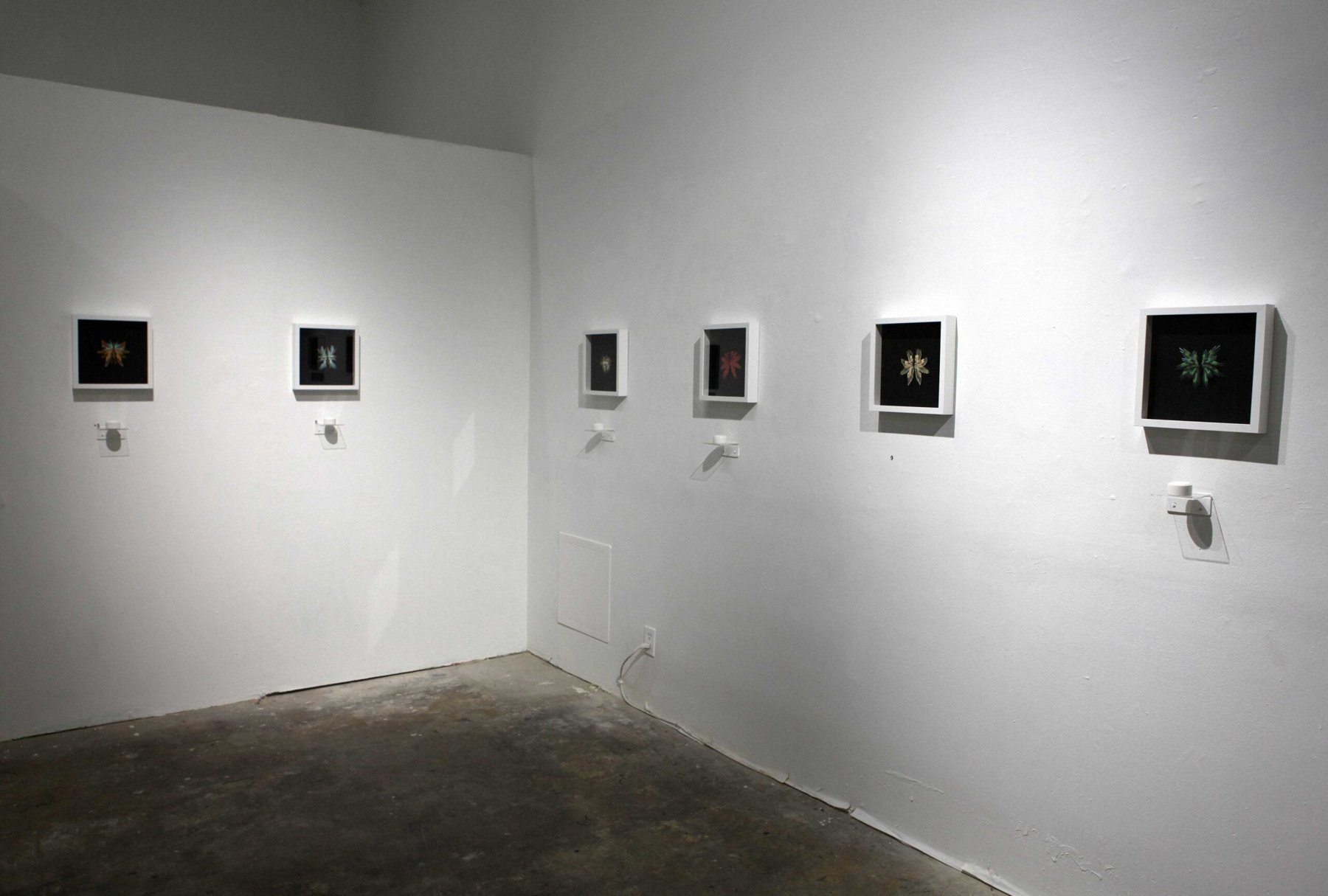
Mỗi tác phẩm là một con chim giấy được cắt, gấp và dán tỉ mỉ, làm hình hài vật chất cho cảm nhận của anh về một mùi nước hoa, có mùi đương đại, có mùi cổ điển. Anh nói rằng qua điêu khắc giấy, anh cố cho mùi một hình dạng vật lý. Và mỗi con hạc thể hiện cảm nhận của anh về một mùi vào một thời điểm cụ thể, không phải một định nghĩa cố định về mùi đó.
Chi tiết cuối này quan trọng. Con hạc không nói mùi nước hoa ấy là gì. Nó nói anh đã ngửi thấy gì, vào một ngày nào đó. Nếu ngửi lại vào ngày khác, có lẽ sẽ có một con hạc khác. Tác phẩm vì thế giống một cuốn nhật ký hơn là một bảng phân loại.
Trước một con hạc, mắt đi trước mũi. Người xem thấy màu, độ dày của giấy, những lỗ cắt trên cánh, rồi mới tự hình dung mùi đứng sau. Giống như đọc một bản dịch trước khi được nghe bản gốc.
Giấy, và một lịch sử dài
Olfactory Peregrinations được trưng bày tại IAO Gallery của Institute for Art and Olfaction, trên phố Chung King ở khu Chinatown, Los Angeles, từ ngày 3 tháng 5 đến ngày 5 tháng 6 năm 2023. Buổi xem riêng diễn ra ngày 9 tháng 5, và triển lãm khép lại bằng một buổi tối ngày 2 tháng 6.
IAO không chỉ treo những con hạc. Tài liệu triển lãm đặt chúng vào một lịch sử dài của vật liệu viết và gấp: từ những tấm bảng đất sét khoảng năm 3100 đến 3000 trước Công nguyên, qua sự ra đời của giấy, đến những bước phát triển ở Nhật Bản quanh thế kỷ thứ 7, nơi nghệ thuật gấp giấy dần thành hình. Đặt như vậy, một con hạc giấy nhỏ trở thành điểm cuối của hàng nghìn năm người ta tìm cách ghi lại điều mình nghĩ lên một bề mặt.
Và điều Marianciuc ghi lại là thứ khó ghi nhất: một mùi. Chữ viết từng giúp người ta giữ lời nói. Những con hạc của anh thử giữ một thứ không có lời.
Olfactory Peregrinations cũng cho thấy IAO nhìn nghệ thuật khứu giác rộng thế nào. Ở đây, trọng tâm không nằm ở việc phát ra mùi, mà ở việc dịch mùi sang một chất liệu khác. Như ở OAK@IAO, điều IAO quan tâm là mùi được nghĩ, được dịch, được trao đổi ra sao, bằng bất cứ chất liệu nào.
The crane maker
Cristian Marianciuc is a paper artist from Romania. Since 2014 his work has revolved around a single form: the paper crane, the most familiar figure in Japanese origami. For years he folded a crane a day, and gradually developed a personal style: wings cut through with patterns, paper flowers, folkloric motifs, small decorative details.
The traditional origami crane is a restrained form, folded from one square sheet, with no cutting and no glue. Marianciuc keeps that frame but adds everything the strictest tradition leaves out: the blade, the glue, paper layered on paper. The result looks closer to jewellery than to folding.
He grew up in northeast Romania, one of eleven children. His childhood involved farm work and wandering outdoors, which he credits as the foundation of how he perceives through the senses, smell among them.
From cranes to scent
In 2020 Marianciuc turned his attention to perfume and began the series Olfactory Peregrinations. A peregrination is a long wandering journey, something close to a pilgrimage. The title suggests that each scent is a place to travel to.
Each work is a paper bird, carefully cut, folded and glued, giving material form to his impression of a perfume, some contemporary, some vintage. He has said that through his paper sculptures he tries to give smells a physical shape. And each crane reflects how he felt about a scent at one particular moment, not a fixed definition of it.
That last point matters. The crane does not say what the perfume is. It says what he smelled, on a given day. Smell it again another day and there might be another crane. The work is closer to a diary than to a taxonomy.
Before a crane, the eye goes ahead of the nose. Visitors see colour, the weight of the paper, the cuts in the wings, and only then imagine the smell behind them. Like reading a translation before hearing the original.
Paper, and a long history
Olfactory Peregrinations was shown at the IAO Gallery of the Institute for Art and Olfaction, on Chung King Road in Los Angeles's Chinatown, from May 3 to June 5, 2023. A private view took place on May 9, and the show closed with an evening event on June 2.
IAO did not simply hang the cranes. The exhibition text set them within a long history of writing and folding materials: from clay tablets around 3100 to 3000 BC, through the arrival of paper, to developments in Japan around the seventh century, where the art of folding gradually took form. Framed this way, a small paper crane becomes the latest point in thousands of years of people trying to record their thoughts on a surface.
And what Marianciuc records is the hardest thing to write down: a smell. Writing once helped people keep speech. His cranes try to keep something that has no words.
Olfactory Peregrinations also shows how broadly IAO understands olfactory art. The focus here is not on releasing scent but on translating it into another material. As with OAK@IAO, what interests IAO is how smell is thought about, translated and exchanged, in whatever material.
Olfactory Art