
Essays · Olfactory Art
Persephenie. Praying to the Gods.
Muốn ngửi, phải cúi xuống.
To smell, you have to bow.
The Institute for Art and Olfaction · The Institute for Art and Olfaction
Triển lãm thứ hai ở Chung King Road
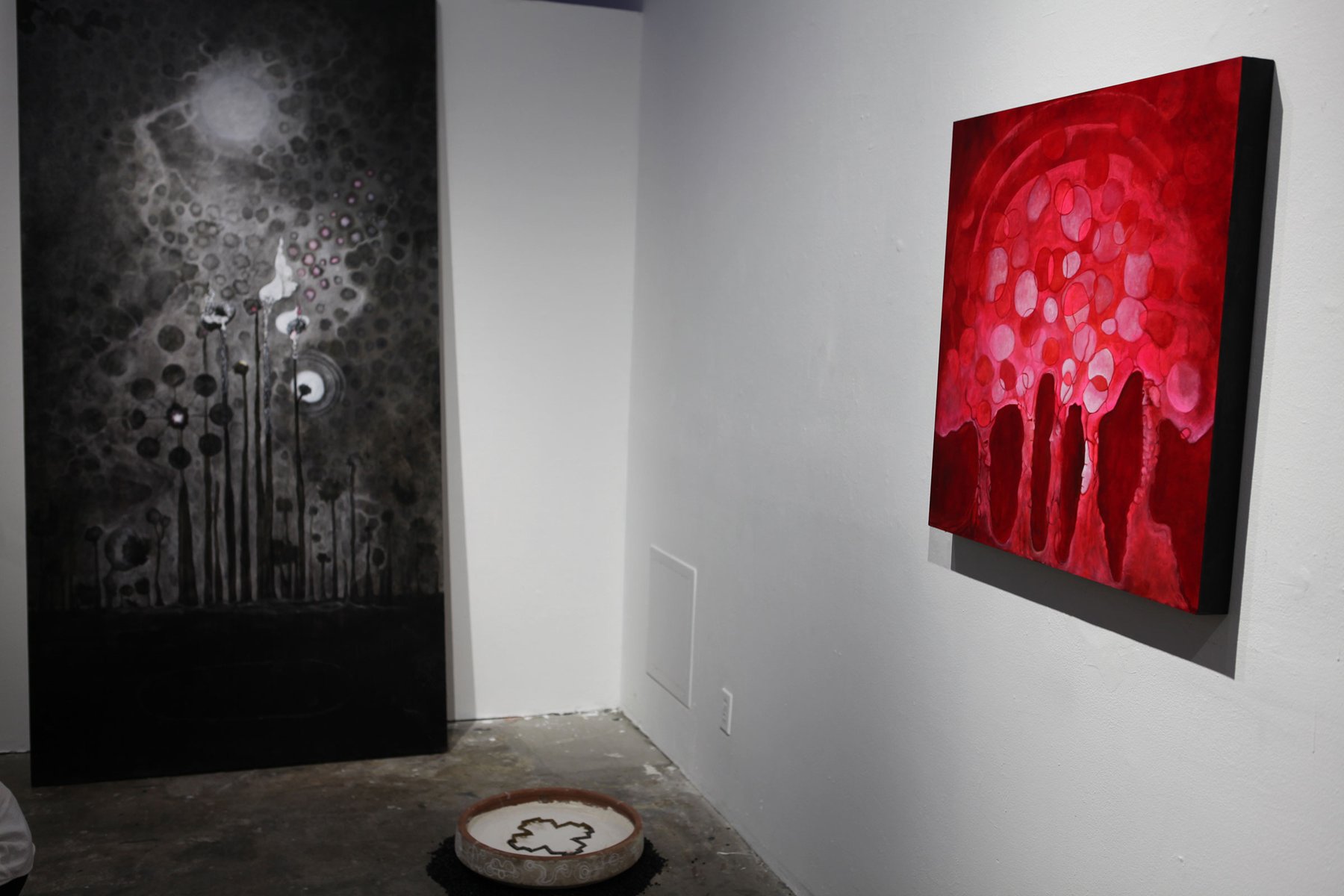
Praying to the Gods là triển lãm cá nhân thứ hai của Persephenie tại phòng trưng bày của Institute for Art and Olfaction, số 932 đường Chung King, Los Angeles. Triển lãm mở từ ngày 28 tháng 3 đến ngày 24 tháng 4 năm 2026, khai mạc tối thứ Bảy 28 tháng 3.
Lần đầu cô trưng bày ở đây là tháng 3 năm 2024, với Talisman: Meditations. Hai năm sau, cô quay lại cùng một chủ đề lớn hơn: sự tôn kính, và câu hỏi nó ở đâu trong cơ thể.
Chất liệu gồm bốn thứ: cây, mùi hương, trầm, và những bức chân dung tự hoạ. Ba thứ đầu thuộc về khứu giác. Thứ cuối thuộc về thị giác, và thuộc về chính người nghệ sĩ. Đặt cạnh nhau, chúng nói rằng người cầu nguyện cũng là một phần của lời cầu.
Một người làm nước hoa từ năm 2004
Persephenie sống và làm việc ở Los Angeles. Cô là nghệ sĩ và là người làm nước hoa. Cô mở không gian làm hương của riêng mình năm 2004 và dạy các lớp về mùi từ năm 2006.
Theo trang của IAO, thực hành của cô rút từ nhiều nguồn: nghề làm nước hoa Trung Đông thời Trung cổ, lịch sử của trầm hương, dòng nước hoa từ nguyên liệu tự nhiên ở bờ Tây nước Mỹ, và nghề làm attar ở Kannauj, Ấn Độ. Nước hoa của cô thiên về nguyên liệu tự nhiên, nhiều lớp, và có chất đất.
Các nguồn ấy có một điểm chung. Chúng đều coi mùi là thứ gắn với nghi lễ, với nơi chốn, với thời gian chậm. Attar là dầu thơm chưng cất của Ấn Độ. Trầm là gỗ và nhựa được đốt để khói bay lên. Ở đâu cũng vậy, mùi là thứ con người dâng lên, trước khi là thứ con người mặc vào.
Đặt mọi thứ xuống thấp
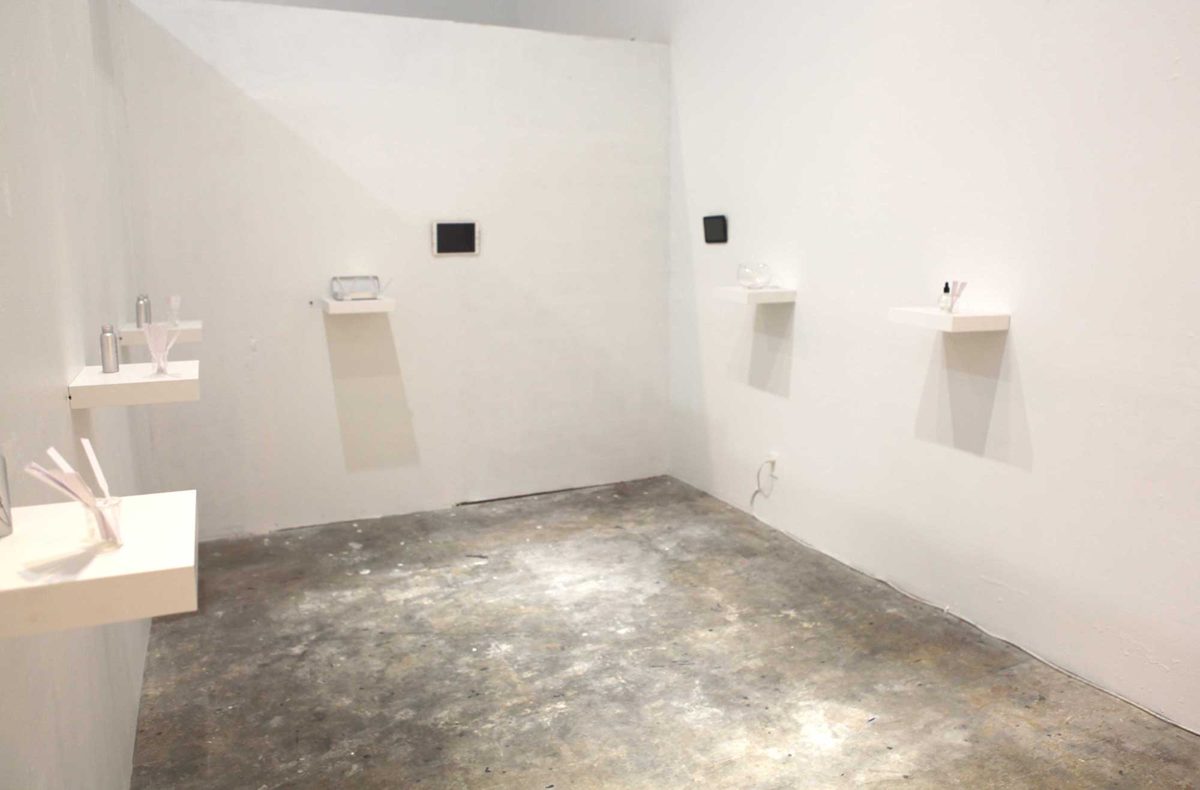
Quyết định quan trọng nhất của triển lãm là chiều cao. Các yếu tố được đặt thấp, sát mặt đất và dọc theo tường. Không có bệ cao ngang tầm mắt, không có tủ kính đứng giữa phòng.
Hệ quả là người xem phải hạ thấp mình. Muốn thấy rõ, phải cúi. Muốn ngửi, phải quỳ. Theo lời nghệ sĩ trên trang triển lãm, quỳ, nhìn và ngửi trở thành những hành động của sự chú ý và sự dễ tổn thương, để sự tôn kính là điều diễn ra trong cơ thể chứ không nằm trong ý niệm.
Đây là một cách dùng không gian hiếm thấy trong phòng trưng bày. Bảo tàng thường nâng vật lên, đặt nó trên bệ, chiếu đèn vào, để người xem đứng thẳng mà ngắm. Persephenie làm ngược lại. Cô hạ vật xuống, và buộc người xem đi theo.
Người xem không được hướng dẫn phải cảm thấy gì. Họ chỉ được đặt vào một tư thế. Phần còn lại, mũi và đầu gối tự làm.
Cây như một sinh thể được ngửi
Trong Praying to the Gods, cây không phải vật trang trí. Chúng là những sinh thể sống, được gặp qua mùi. Một cái cây trong chậu có thể bị lướt qua bằng mắt trong một giây. Nhưng khi phải quỳ xuống cạnh nó để ngửi, người xem ở lại lâu hơn, gần hơn, và thấy nó khác đi.
Trầm làm việc theo một hướng khác. Khói bay lên, trong khi người xem cúi xuống. Hai chuyển động ngược nhau trong cùng một phòng: vật thì nhẹ đi và lên cao, người thì nặng xuống và hạ thấp. Có thể đọc đó như hình ảnh cổ nhất của lời cầu nguyện.
Những bức chân dung tự hoạ nhắc rằng tất cả điều này đi qua một cơ thể cụ thể. Không phải một tín đồ trừu tượng, mà là một người phụ nữ ở Los Angeles, đã làm việc với mùi hơn hai mươi năm. Nếu muốn đọc thêm về trầm như một nghề ở phía bên kia Thái Bình Dương, triển lãm The Water and the Wind của Arianna Petrich, cũng tại IAO, là một điểm đối chiếu.
A second show on Chung King Road
Praying to the Gods is Persephenie's second solo exhibition at the gallery of the Institute for Art and Olfaction, 932 Chung King Road, Los Angeles. It ran from March 28 to April 24, 2026, opening on the evening of Saturday, March 28.
Her first show there was in March 2024, Talisman: Meditations. Two years later she returned with a larger subject: reverence, and where it lives in the body.
The materials are four: plants, scent, incense and self portraits. The first three belong to smell. The last belongs to sight, and to the artist herself. Placed together, they suggest that the one who prays is part of the prayer.
A perfumer since 2004
Persephenie lives and works in Los Angeles as an artist and perfumer. She opened her aromatic studio in 2004 and has taught classes on scent since 2006.
According to IAO, her practice draws on medieval Middle Eastern perfumery, the history of incense, West Coast natural perfumery and the attar tradition of Kannauj in India. Her perfumes lean toward natural materials, complexity and an earthy character.
These sources share something. Each treats scent as tied to ritual, to place, to slow time. Attar is a distilled scented oil of India. Incense is wood and resin burned so that smoke rises. Everywhere, scent was something people offered up before it was something they wore.
Placing everything low
The key decision of the exhibition is height. Elements are placed low, near the ground and along the walls. No plinths at eye level, no vitrine in the middle of the room.
So the visitor has to come down. To see clearly, bend. To smell, kneel. In the artist's words on the exhibition page, kneeling, looking and smelling become acts of attention and vulnerability, so that reverence is something the body does rather than an abstract idea.
It is a rare use of gallery space. Museums usually raise objects, set them on pedestals, light them, and let the visitor stand and look. Persephenie does the opposite. She lowers the object and makes the visitor follow.
Visitors are not told what to feel. They are only put into a posture. The nose and the knees do the rest.
Plants as beings to be smelled
In Praying to the Gods, plants are not decoration. They are living beings, met through smell. A potted plant can be passed with a one second glance. Kneeling beside it to smell, the visitor stays longer, closer, and sees it differently.
Incense works in another direction. Smoke rises while the visitor bows. Two opposite movements in one room: the material grows light and climbs, the person grows heavy and descends. It can be read as the oldest picture of prayer.
The self portraits remind us that all this passes through a particular body. Not an abstract believer, but a woman in Los Angeles who has worked with scent for over twenty years. For incense as a trade on the other side of the Pacific, Arianna Petrich's The Water and the Wind, also at IAO, offers a counterpoint.
Olfactory Art