
Essays · Olfactory Art
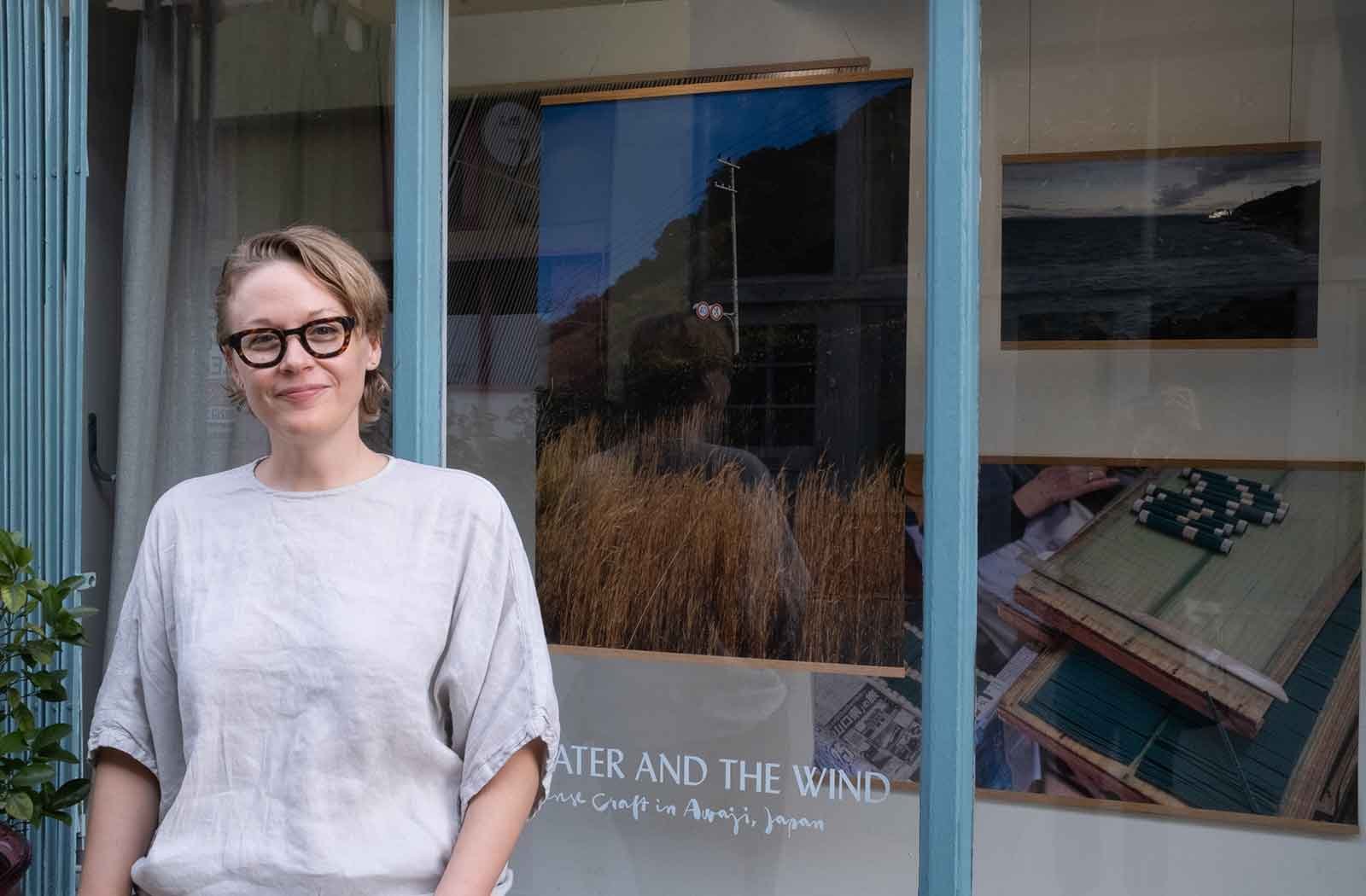
Arianna Petrich. The Water and the Wind: Incense Craft in Awaji, Japan.
Nguyên liệu quý nhất không nằm trong công thức.
The finest ingredients are not in the recipe.
The Institute for Art and Olfaction · The Institute for Art and Olfaction
Khúc gỗ trôi dạt vào bờ
Awaji là một hòn đảo nằm trong vùng biển nội địa Seto của Nhật Bản. Theo truyền thuyết được kể lại trong triển lãm, vào năm 595, một khúc trầm hương trôi dạt vào bờ đảo. Dân làng không biết đó là gì. Họ đốt nó như củi, và khói toả ra một mùi khiến họ sững lại.
Phần còn lại của khúc gỗ được dâng lên triều đình. Triều đình cho tạc nó thành một pho tượng và dựng đền thờ. Hơn 1.400 năm sau, một ngôi đền thờ khúc gỗ huyền thoại ấy vẫn đứng trên chính bãi biển đó.
Câu chuyện đáng để ý ở chỗ nó đặt vật lên trước người. Không phải một người thợ phát minh ra hương. Là một khúc gỗ tự đến, và con người chỉ học cách nhận ra giá trị của nó sau khi đã đốt đi một phần.
Hòn đảo làm hương cho cả nước
Ngày nay Awaji làm ra khoảng 70% lượng hương được đốt ở Nhật Bản. Việc sản xuất trên đảo do 14 koh-shi, tức những bậc thầy làm hương, giám sát.
Arianna Petrich đã ghi lại toàn bộ quy trình. Nguyên liệu thô được nhào thành bột dẻo. Bột được ép đùn thành sợi, bằng một chiếc máy vốn dùng để làm mì udon. Sợi hương được cắt tỉa, đem phơi khô, rồi cân và đóng gói. Mỗi bước là một thao tác đơn giản. Chuỗi thao tác ấy lặp lại mỗi ngày.
Chi tiết chiếc máy làm mì udon cho thấy một điều: nghề hương ở Awaji không tách khỏi đời sống thường ngày. Cùng một cách ép bột ra sợi, một bên thành món ăn, một bên thành thứ để đốt.
Nước và gió
Khi Petrich hỏi một koh-shi về nguyên liệu địa phương, người thợ trả lời bằng ba chữ tiếng Nhật: kaze to mizu. Gió và nước. Tên triển lãm lấy từ câu trả lời ấy.
Câu trả lời nghe như thơ, nhưng nó rất thực tế. Awaji có vị trí cảng biển, thuận cho việc đưa nguyên liệu tới. Đảo có những cơn gió đông mạnh, thuận cho việc phơi khô hương. Nước làm bột kết lại. Gió lấy nước đi. Thanh hương thành hình ở giữa hai chuyển động đó.
Nhiều nguyên liệu làm hương có thể đến từ nơi khác. Nhưng nước và gió thì không chở đi được. Đó là lý do nghề hương gắn chặt với hòn đảo này, và là lý do một thanh hương Awaji mang theo một phần của Awaji, dù nó được đốt ở đâu.
Người ghi chép
The Water and the Wind: Incense Craft in Awaji, Japan trưng bày tại phòng trưng bày của Institute for Art and Olfaction, số 932 đường Chung King, Los Angeles, từ ngày 4 đến ngày 25 tháng 10 năm 2024. Buổi khai mạc tối 4 tháng 10 có rượu sake RITSU của Yaegaki Sake. Triển lãm ghi nhận Kotaro Sugimoto là người đã giúp dự án thành hình.
Petrich sống ở Los Angeles, làm nghệ thuật và thiết kế không gian, thị giác. Cô có bằng thạc sĩ mỹ thuật của School of the Art Institute of Chicago và bằng cử nhân của Tulane University. Tác phẩm của cô đã được trưng bày ở Mỹ, Ý và Ấn Độ, và nằm trong bộ sưu tập thường trực của DePaul Art Museum.
Awaji không phải nơi đầu tiên cô tìm đến. Petrich đã ghi lại truyền thống làm hương ở New Mexico, Rajasthan, Việt Nam và Nhật Bản. Đặt cạnh nhau, những nơi ấy cho thấy hương là một nghề có mặt khắp nơi, mỗi nơi một cách. Một hình ảnh cũ hơn của cùng nghề ấy nằm trong bức Man Making Incense Sticks của Puqua, một bức tranh xuất khẩu Quảng Châu khoảng năm 1790.
Ảnh tư liệu của Petrich làm một việc mà ký ức thị giác làm tốt: giữ lại những thao tác sẽ biến mất khi thanh hương cháy hết. Người đốt hương chỉ thấy khói. Người xem triển lãm thấy bàn tay, cái máy, những giàn phơi, và cơn gió không nhìn thấy được.
A log washed ashore
Awaji is an island in Japan's Seto Inland Sea. According to the legend told in the exhibition, in the year 595 a piece of agarwood drifted onto its shore. The villagers did not know what it was. They burned it as firewood, and the smoke gave off a smell that stopped them.
What remained was presented to the Imperial Court, which had it carved into a statue and built a shrine to honour it. More than 1,400 years later, a shrine to the legendary wood still stands on the same beach.
The story is worth noticing because it puts the object before the person. No craftsman invented incense. A log arrived on its own, and people learned its value only after burning part of it.
An island that makes a nation's incense
Today Awaji produces around 70% of the incense burned in Japan. Production is overseen by 14 koh-shi, incense masters.
Arianna Petrich documented the whole process. Raw ingredients are kneaded into dough. The dough is extruded into strands with a machine built for udon noodles. The strands are trimmed, dried, weighed and packed. Each step is simple. The chain repeats every day.
The udon machine says something: incense on Awaji is not separate from daily life. The same way of pressing dough into strands makes food on one side and something to burn on the other.
Water and wind
When Petrich asked a koh-shi about local ingredients, the answer came in three Japanese words: kaze to mizu. The water and the wind. The exhibition takes its title from that reply.
It sounds like poetry but it is practical. Awaji is a port, which suits bringing materials in. It has strong easterly winds, which suit drying. Water binds the dough. Wind takes the water away. The stick takes shape between the two.
Many incense materials can come from elsewhere. Water and wind cannot be shipped. That is why the trade is bound to this island, and why an Awaji stick carries a little of Awaji wherever it burns.
The recorder
The Water and the Wind: Incense Craft in Awaji, Japan was shown at the gallery of the Institute for Art and Olfaction, 932 Chung King Road, Los Angeles, from October 4 to 25, 2024. The opening on October 4 was supported by Yaegaki Sake with its RITSU sake. The exhibition credits Kotaro Sugimoto with making the project possible.
Petrich is a Los Angeles based artist and visual and spatial designer, with an MFA from the School of the Art Institute of Chicago and a BA from Tulane University. Her work has been shown in the United States, Italy and India, and is in the permanent collection of the DePaul Art Museum.
Awaji was not her first stop. She has documented incense traditions in New Mexico, Rajasthan, Vietnam and Japan. Side by side, these places show incense as a trade found everywhere, done differently in each. An older image of the same trade is Puqua's Man Making Incense Sticks, a Canton export painting from around 1790.
Petrich's documentation does what visual memory does well: it keeps the gestures that vanish once a stick burns down. Whoever burns incense sees only smoke. The exhibition visitor sees the hands, the machine, the drying racks, and a wind that cannot be seen.
Olfactory Art