
Essays · Olfactory Art
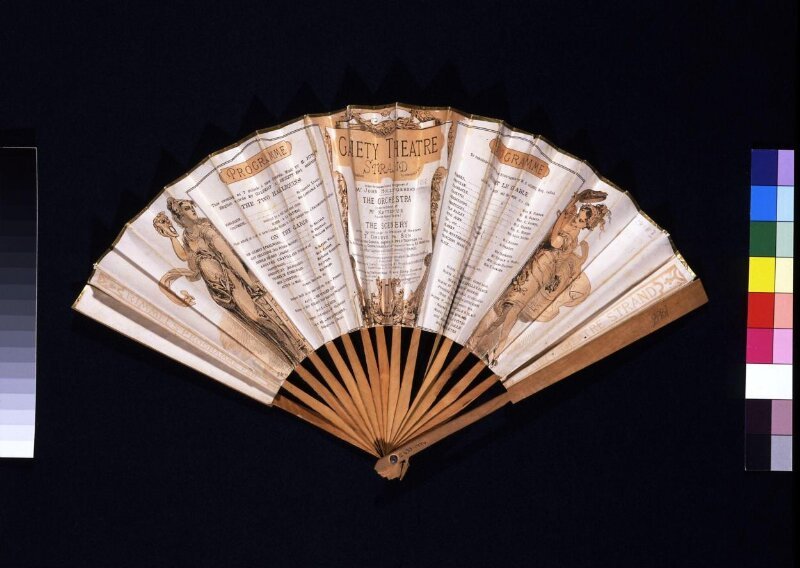
Eugène Rimmel. Rimmel's programme fan.
Một đêm diễn đã tan. Chiếc quạt còn giữ lại không khí của nó.
The performance ended long ago. The fan still holds its air.
© Victoria and Albert Museum, London; Gabrielle Enthoven Collection · Victoria and Albert Museum (V&A)
Chương trình in trên một chiếc quạt
Chiếc quạt được làm ở London năm 1868, bằng giấy in và gỗ. Khi gấp lại, nó cao 23,5 cm, dày chưa tới 2 cm. Khi mở ra, nó rộng 43 cm. Hiện nó nằm trong bộ sưu tập sân khấu và biểu diễn của Victoria and Albert Museum, thuộc bộ sưu tập Gabrielle Enthoven.
Mặt trước in chương trình của đêm mở cửa nhà hát Gaiety sau khi xây lại, ngày 21 tháng 12 năm 1868. Có ba vở: Robert Le Diable của W. S. Gilbert; vở nhạc kịch ngắn The Two Harlequins của E. Jonas, lời tiếng Anh của Gilbert A'Beckett; và vở hài kịch On the Cards. Danh sách diễn viên và người làm được in kín mặt giấy, hai bên là những hình phụ nữ vẽ nét mảnh, màu mơ.
Mặt sau là quảng cáo cho nhà nước hoa Rimmel, cũng có hình phụ nữ hai bên, lần này màu xanh lá nhạt. Hai bên mép của cả hai mặt đều in cùng một cặp chữ: bên trái Rimmel's Programme Fan, bên phải Gaiety Theatre Strand.
Như vậy chiếc quạt vừa là tờ chương trình, vừa là tờ quảng cáo, vừa là một vật dùng được. Khán giả cầm nó để đọc tên vai diễn, để quạt cho mát trong khán phòng đông người, và mang nó về nhà làm kỷ niệm.
Đêm mở cửa ở phố Strand
Nhà hát Gaiety nằm trên phố Strand, trung tâm khu nhà hát London. Chiếc quạt được làm để đánh dấu đêm nhà hát mở cửa lại sau khi được xây mới.
Vở chính của đêm ấy, Robert Le Diable của Gilbert, là một vở nhại. Nó chế lại vở opera cùng tên của Meyerbeer, với phụ đề vui The Nun, the Dun, and the Son of a Gun. Lời của Gilbert được ghép vào nhạc của Meyerbeer, Offenbach và những nhà soạn nhạc khác thời đó. Đó là loại giải trí nhẹ, nhanh, đầy chữ chơi, rất hợp với một đêm khai trương.
Theo V&A, để đánh dấu dịp này, nhà nước hoa Rimmel không chỉ cung cấp những chiếc quạt. Họ còn đặt các đài phun nước thơm ở các sảnh của nhà hát. Khán giả bước vào qua một vùng không khí có mùi, rồi ngồi xuống với chiếc quạt Rimmel trong tay.
Eugène Rimmel và mùi ở nơi đông người
Eugène Rimmel sinh năm 1820, mất năm 1887. Ông từ Pháp sang Anh và cùng cha mở một cơ sở nước hoa ở London năm 1834. Tên ông đến nay vẫn còn trên một nhãn hàng mỹ phẩm, nhưng ở thế kỷ 19, ông trước hết là một nhà nước hoa và một người rất giỏi đưa mùi ra trước công chúng.
Đài phun nước thơm không phải lần đầu xuất hiện ở Gaiety. Tại Triển lãm Lớn ở London năm 1851, đài phun của Rimmel phun những tia nước hoa, và khách tham quan đưa khăn tay vào để lấy mùi mang về. Đài phun ấy sau đó còn đi tới các triển lãm ở Dublin và New York.
Rimmel cũng làm những chiếc quạt thơm cho phụ nữ dùng khi đi xem opera, kịch và ballet. Giữa những năm 1860, ông viết Book of Perfumes, một cuốn sách về lịch sử nước hoa, và mở cửa hàng ở phố Regent. Ông hiểu rằng mùi không chỉ sống trong lọ. Nó sống trong phòng, trong đám đông, trong những dịp người ta nhớ lâu.
Chiếc quạt Gaiety là giao điểm của hai ý đó: một vật in để đọc, và một vật cầm trong tay giữa không khí đã được làm cho thơm.
Vì sao chiếc quạt đáng nhớ
Mùi của đêm 21 tháng 12 năm 1868 đã không còn. Không ai có thể ngửi lại đài phun ở sảnh Gaiety. Cái còn lại là giấy, gỗ, chữ in và những hình vẽ màu mơ, màu xanh nhạt. Chiếc quạt là bằng chứng rằng buổi tối ấy có mùi, và rằng mùi đã được sắp đặt như một phần của buổi diễn.
Nó cũng cho thấy mùi hương bước vào nhà hát như thế nào. Không phải trên sân khấu, mà ở sảnh và trong tay khán giả. Mùi không kể chuyện của vở diễn. Nó bao quanh vở diễn, như ánh đèn bao quanh sân khấu.
Sáu năm sau, Rimmel lại đặt tên mình lên một vật in khác, lần này là một cuốn lịch nhỏ do Jules Chéret vẽ, như Rimmel almanac 1874. Quạt và lịch, hai vật giấy, cùng một người đứng sau. Cả hai đều cho thấy nhà nước hoa này nghĩ về mùi qua những thứ người ta cầm lên, lật, giữ lại.
Ngày nay, chiếc quạt nằm gấp trong một bộ sưu tập sân khấu. Mở nó ra, người xem vẫn đọc được tên các vai diễn. Chỉ có không khí là đã đi mất.
A programme printed on a fan
The fan was made in London in 1868, of printed paper and wood. Closed, it is 23.5 cm tall and under 2 cm thick. Open, it spreads to 43 cm. It belongs to the Theatre and Performance collection of the Victoria and Albert Museum, part of the Gabrielle Enthoven Collection.
The front carries the programme for the opening night of the rebuilt Gaiety Theatre, 21 December 1868. Three pieces: W. S. Gilbert's Robert Le Diable; the operetta The Two Harlequins by E. Jonas, with English words by Gilbert A'Beckett; and the comedy On the Cards. Cast lists and credits fill the paper, flanked by fine line drawings of women in apricot.
The back is an advertisement for Rimmel's perfumery, again with female figures at each side, this time in pale green. Along the edges of both sides runs the same pair of phrases: Rimmel's Programme Fan on the left, Gaiety Theatre Strand on the right.
So the fan is a programme, an advertisement and a working object at once. The audience held it to read the cast, to cool themselves in a crowded auditorium, and to take home as a keepsake.
Opening night on the Strand
The Gaiety Theatre stood on the Strand, at the heart of London's theatre district. The fan was made to mark the night the theatre reopened after being rebuilt.
The main piece, Gilbert's Robert Le Diable, was a parody of Meyerbeer's opera of the same name, subtitled The Nun, the Dun, and the Son of a Gun. Gilbert's lyrics were set to music by Meyerbeer, Offenbach and other composers of the day. Light, fast, full of wordplay: right for an opening night.
According to the V&A, to mark the occasion Rimmel the perfumers supplied more than the fans. They also placed scented fountains in the theatre's lobbies. The audience entered through a zone of perfumed air, then sat down with a Rimmel fan in hand.
Eugène Rimmel and scent in crowds
Eugène Rimmel was born in 1820 and died in 1887. He came to England from France and, with his father, set up a perfumery business in London in 1834. His name survives today on a cosmetics brand, but in the nineteenth century he was first a perfumer, and a gifted one at putting scent before the public.
The scented fountain was not new at the Gaiety. At the Great Exhibition in London in 1851, Rimmel's fountain sent out jets of perfume, and visitors held out their handkerchiefs to carry the scent away. The fountain later travelled to exhibitions in Dublin and New York.
Rimmel also made scented fans for women to take to the opera, theatre and ballet. In the mid 1860s he wrote the Book of Perfumes, a history of perfume, and opened a shop on Regent Street. He understood that scent does not live only in a bottle. It lives in rooms, in crowds, in occasions people remember.
The Gaiety fan sits where those ideas meet: a printed thing to read, and a thing held in the hand inside air that has been made to smell.
Why the fan matters
The scent of 21 December 1868 is gone. No one can smell the fountains in the Gaiety lobby again. What remains is paper, wood, print and drawings in apricot and pale green. The fan is evidence that the evening had a smell, and that the smell was arranged as part of the show.
It also shows how scent entered the theatre. Not on stage, but in the lobby and in the audience's hands. Scent did not tell the story of the play. It surrounded it, the way light surrounds a stage.
Six years later Rimmel put his name on another printed object, a small almanac drawn by Jules Chéret: Rimmel almanac 1874. A fan and an almanac, two paper things, one man behind them. Both show a perfumer thinking about scent through objects people pick up, turn over and keep.
Today the fan rests folded in a theatre collection. Open it and you can still read the cast. Only the air has gone.
Olfactory Art