
Essays · Olfactory Art
Filippo Tommaso Marinetti và Fillìa. La cucina futurista.
Bàn ăn thành phòng thí nghiệm của giác quan.
The dinner table as a laboratory of the senses.
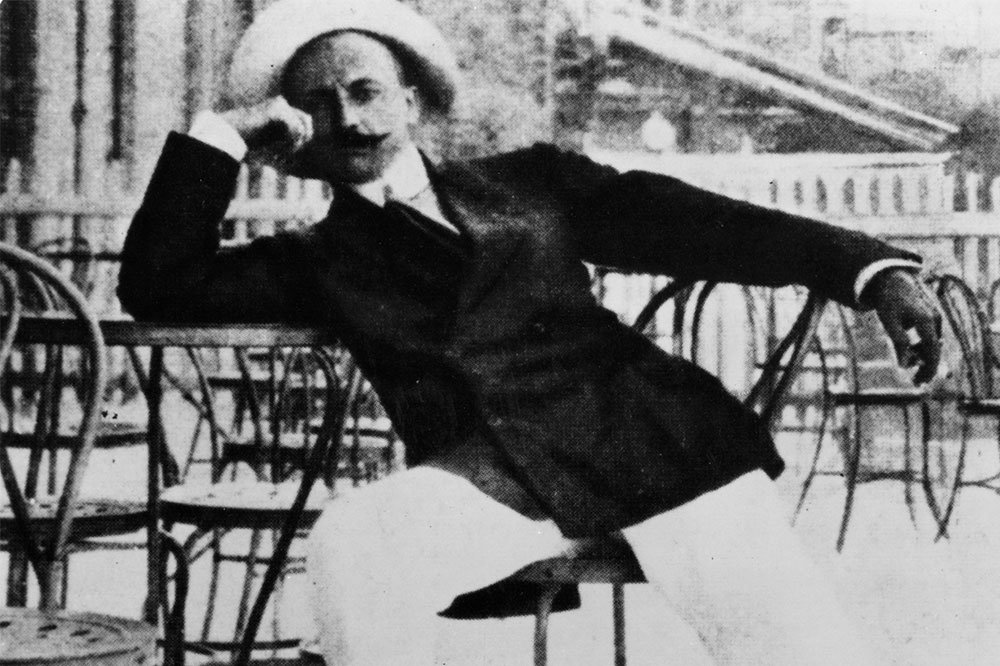
Getty Images, via Apollo Magazine · Apollo Magazine
Một tuyên ngôn chống mì Ý
Tháng 12 năm 1930, Filippo Tommaso Marinetti, người sáng lập phong trào Vị lai, và hoạ sĩ Fillìa công bố Manifesto della cucina futurista, Tuyên ngôn ẩm thực Vị lai. Hai mươi năm sau khi nhóm Vị lai ca ngợi tốc độ, máy móc và thành phố, họ quay sang bàn ăn.
Mục tiêu đầu tiên là mì Ý. Marinetti cho rằng mì làm người ta nặng nề, uể oải, thiếu nam tính. Ông nói người ăn mì bị trói vào truyền thống, và món ăn mềm đến mức người ta không nhai đủ. Với một người Ý, tuyên bố ấy gần như là xúc phạm. Chính vì thế nó được bàn tán khắp nơi.
Nhưng tuyên ngôn không chỉ phủ định. Nó đề xuất một cách ăn khác: bữa ăn như một tác phẩm, dùng đến mọi giác quan chứ không chỉ lưỡi.
Đằng sau những câu đùa cợt là một ý nghiêm túc hơn. Nhóm Vị lai cho rằng con người hiện đại sống nhanh hơn, nghĩ nhanh hơn, vậy thì cách ăn cũng phải đổi theo. Bữa ăn không còn là thói quen gia đình. Nó thành một việc để thiết kế.
Taverna del Santopalato
Ý tưởng ấy có một địa chỉ. Nửa đêm ngày 8 tháng 3 năm 1931, Fillìa mở Taverna del Santopalato, Quán Vòm Miệng Thánh, ở số 2 phố Vanchiglia, Turin, gần quảng trường Vittorio Veneto. Đây là nhà hàng Vị lai đầu tiên ở Ý.
Phòng ăn được ốp nhôm sáng. Bữa tiệc khai trương có mười bốn món mới. Nhà hàng không muốn chỉ là chỗ ăn; nó muốn thành một trung tâm nghệ thuật, có thi thơ, triển lãm và trình diễn thời trang.
Một món nổi tiếng của buổi tối ấy là aerofood, thức ăn trên không: ô liu đen, lõi thì là và quả quất, ăn bằng tay phải, trong khi tay trái vuốt lên một miếng giấy nhám, lụa và nhung. Món còn có gà kèm những viên bi thép.
Những đĩa ăn khó quên
Năm 1932, Marinetti và Fillìa in La cucina futurista, Sách nấu ăn Vị lai. Cuốn sách gom tuyên ngôn, thực đơn, bữa tiệc mẫu và những công thức có tên lạ.
Có sardine với dứa. Có bánh mì kẹp mù tạt, chuối và cá cơm. Có kem đồng thời, gồm kem sữa với những miếng hành sống vuông. Có thịt điêu khắc. Có một món tên là heo phấn khích: một khoanh xúc xích salami ngâm trong cà phê nóng pha nước hoa eau de Cologne.
Fillìa cũng viết những chương trình bữa tối riêng, như bữa tối địa lý, nơi thức ăn đưa người ngồi đi qua các vùng đất.
Nhiều món nghe như trò đùa. Một số chắc chắn là trò đùa. Nhưng chúng làm một việc rõ ràng: tách mùi, vị và cảm giác trên tay ra khỏi những cặp quen thuộc, rồi ghép lại theo cách gây sốc.
Mùi ở bàn ăn Vị lai
Món heo phấn khích là chỗ mùi hiện ra rõ nhất. Cà phê có mùi rang. Salami có mùi mỡ và muối. Nước hoa có mùi cam chanh và hoa. Ba mùi không bao giờ ngồi chung một đĩa, nay bị ép vào nhau. Người ăn ngửi trước khi nếm, và cái mũi phản đối trước cái lưỡi.
Đó là một ý tưởng về sau được nhiều nghệ sĩ đi tiếp: mùi không phục vụ món ăn, mùi là một phần của tác phẩm. Bữa ăn thành buổi diễn. Người ngồi ăn thành người xem.
Cũng cần nhớ bối cảnh. Dự án ẩm thực của Marinetti mang màu dân tộc chủ nghĩa của thời Phát xít: đề cao sản vật Ý, thay các từ ẩm thực tiếng Pháp bằng từ Ý mới đặt. Không thể đọc cuốn sách mà bỏ qua điều đó.
Gần bốn mươi năm sau, ở Düsseldorf, Daniel Spoerri mở nhà hàng của riêng mình và bán những món người ta không thường ăn. Ý muốn biến bàn ăn thành nghệ thuật đã đổi hình, nhưng vẫn đi tiếp.
A manifesto against pasta
In December 1930, Filippo Tommaso Marinetti, founder of Futurism, and the painter Fillìa published the Manifesto della cucina futurista, the Manifesto of Futurist Cooking. Twenty years after praising speed, machines and the city, the Futurists turned to the dinner table.
The first target was pasta. Marinetti argued it made people heavy, sluggish and unmanly. Pasta eaters, he said, were shackled to tradition, and the food was so soft that people did not chew enough. To an Italian this was close to an insult. That is exactly why everyone talked about it.
But the manifesto did more than reject. It proposed another way of eating: the meal as a work of art, using every sense and not only the tongue.
Behind the jokes lay a more serious idea. The Futurists held that modern people lived and thought faster, so eating had to change as well. A meal was no longer a family habit. It became something to design.
Taverna del Santopalato
The idea had an address. At midnight on 8 March 1931, Fillìa opened the Taverna del Santopalato, the Tavern of the Holy Palate, at Via Vanchiglia 2 in Turin, near Piazza Vittorio Veneto. It was the first Futurist restaurant in Italy.
The dining room was clad in shining aluminium. The opening banquet offered fourteen new dishes. The tavern did not want to be only a place to eat; it wanted to be an arts centre, with poetry evenings, exhibitions and fashion shows.
One famous dish that night was aerofood: black olives, fennel hearts and kumquats, eaten with the right hand while the left hand stroked sandpaper, silk and velvet. There was also chicken served with steel ball bearings.
Plates hard to forget
In 1932 Marinetti and Fillìa published La cucina futurista, the Futurist Cookbook. It gathered the manifesto, menus, model banquets and recipes with strange names.
Sardines with pineapple. A sandwich of mustard, banana and anchovy. Simultaneous ice cream, dairy cream with squares of raw onion. Sculpted meat. And a dish called the excited pig: a slice of salami soaked in hot coffee flavoured with eau de Cologne.
Fillìa also wrote dinner programmes of his own, such as a geographic dinner in which the food carried diners across different lands.
Many of these dishes sound like jokes. Some surely were. But they did something clear: they pulled smell, taste and touch out of their familiar pairings and put them back together to shock.
Smell at the Futurist table
The excited pig is where smell shows most plainly. Coffee smells roasted. Salami smells of fat and salt. Cologne smells of citrus and flowers. Three smells that never share a plate are forced together. The diner smells before tasting, and the nose objects before the tongue does.
Many artists later followed that idea: smell does not serve the dish, smell is part of the work. The meal becomes a performance. The diner becomes the audience.
The context must be remembered too. Marinetti's culinary project carried the nationalist edge of the Fascist era: praise for Italian produce, French kitchen terms replaced with newly coined Italian words. The book cannot be read without that.
Nearly forty years later, in Düsseldorf, Daniel Spoerri opened a restaurant of his own and served foods people do not usually eat. The wish to turn the table into art had changed shape, but it went on.
Olfactory Art