
Essays · Olfactory Art
Goldie Poblador. The Rise of Medusa.
Mong manh không có nghĩa là yếu.
Fragile does not mean weak.
Artpace San Antonio · Artpace San Antonio
Một căn phòng màu nước sâu
Mùa thu năm 2025, Goldie Poblador sang San Antonio, Texas, làm nghệ sĩ lưu trú quốc tế tại Artpace. Chị ở đó từ cuối tháng Bảy đến giữa tháng Chín. Kết quả là The Rise of Medusa, mở cửa ngày 11/9/2025 và kéo dài đến 18/1/2026, do giám tuyển Regine Basha đồng hành.
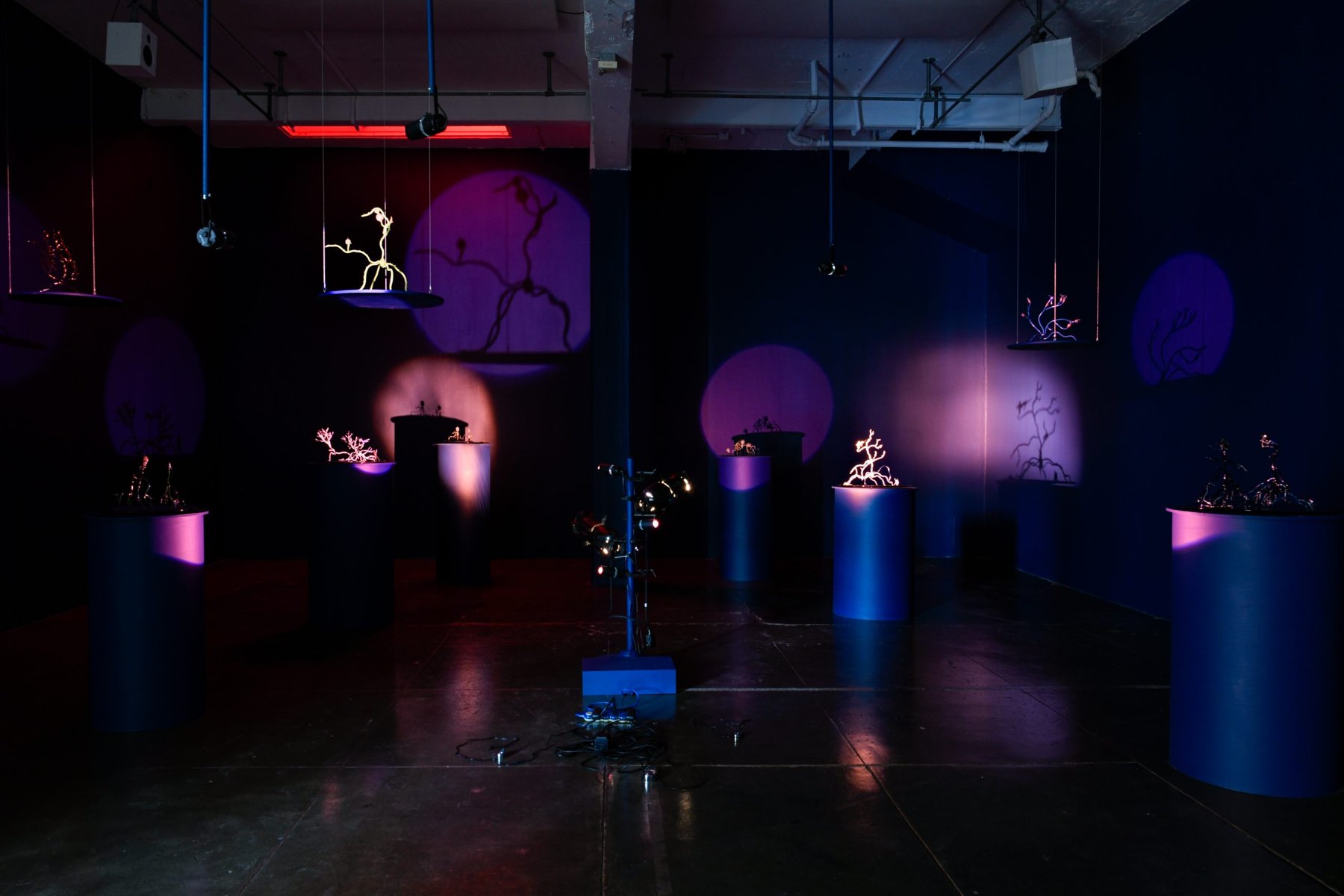
Người bước vào gặp một căn phòng sơn xanh sẫm, màu của nước ở độ sâu mà ánh sáng bắt đầu tắt. Trong phòng treo chín điêu khắc thủy tinh. Hình của chúng gợi sứa, gợi san hô, gợi những sinh vật không có xương. Chúng không đứng trên bệ. Chúng lơ lửng, như đang trôi.
Ánh đèn chiếu qua thủy tinh, đổ bóng lên tường. Những hình nhỏ trong tay nghệ sĩ thành những hình lớn trên mặt tường, mờ và rung. Người xem đứng giữa vật và bóng của vật, không chắc cái nào gần mình hơn.
Căn phòng không có nước. Nhưng mọi thứ trong đó được dựng để người ta tin mình đang ở dưới nước.
Thủy tinh, âm thanh và ba mùi
Poblador sinh ra và làm việc ở Manila. Chị học thạc sĩ mỹ thuật tại Rhode Island School of Design, tốt nghiệp năm 2015, và là nghệ sĩ Philippines đầu tiên có tác phẩm trong bộ sưu tập của Corning Museum of Glass, bảo tàng thủy tinh lớn ở New York. Thủy tinh là ngôn ngữ chính của chị, và mùi là ngôn ngữ thứ hai.
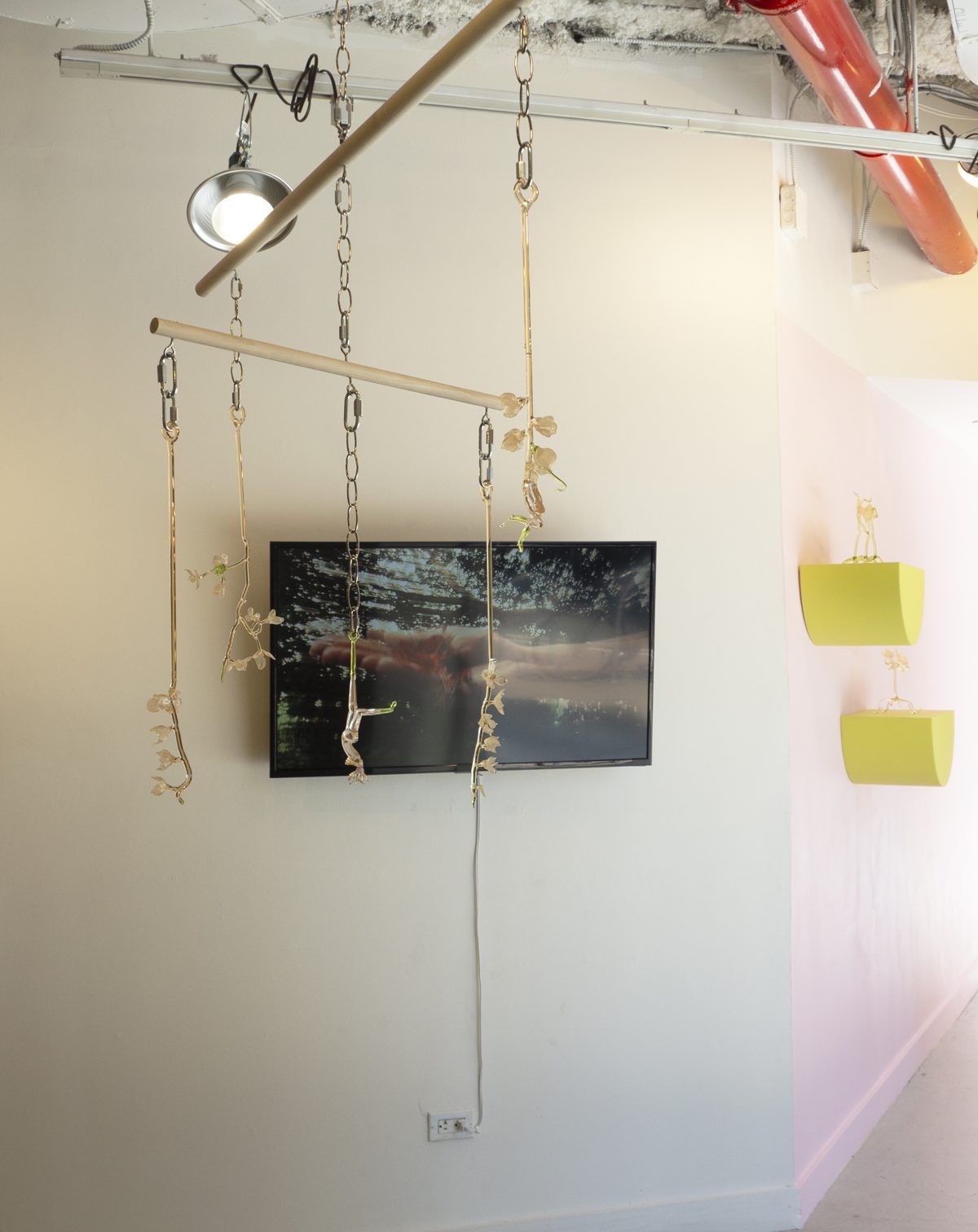
Chín điêu khắc được làm bằng kỹ thuật thổi đèn: thủy tinh được nung chảy trên ngọn lửa nhỏ rồi kéo, xoắn, uốn thành hình. Cách làm này cho ra những sợi rất mảnh, những vòm rất mỏng. Đúng là vật liệu của sứa.
Âm thanh do nhà soạn nhạc Ben Richter làm. Theo Artpace, ông dựng âm thanh từ những nhạc cụ được tạo hình để đi cùng các khối thủy tinh. Tiếng trong phòng vì thế không phải nhạc nền. Nó là tiếng của chính những vật đang treo.
Mùi do M. Dougherty, nhà điều hương và cũng là nghệ sĩ, làm. Có ba mùi, nối tiếp nhau trong không gian. Oil Slick: mùi kim loại, hăng, của dầu loang trên mặt biển. Dead Coral: mùi khoáng và mặn, của san hô đã trắng và ngừng sống. Verde: mùi hoa nhiệt đới, có ngọc lan tây và nhựa elemi, hai vật liệu gắn với đời sống và di sản của Philippines.
Medusa, hai lần
Chữ Medusa có hai nghĩa, và Poblador dùng cả hai.
Trong sinh học, medusa là một giai đoạn sống của sứa: giai đoạn hình chuông, trôi tự do, thứ ta hay gọi là con sứa. Trước đó, nhiều loài sống dạng polyp, bám vào đáy. Medusa là lúc sinh vật rời chỗ bám và đi ra biển.
Trong thần thoại Hy Lạp, Medusa là người phụ nữ bị biến thành quái vật, tóc là rắn, ai nhìn vào mắt thì hóa đá. Câu chuyện quen thuộc kể bà như một mối đe dọa cần bị chém đầu. Nhiều nghệ sĩ và nhà văn đương đại đọc lại bà như một nạn nhân, một hình ảnh của sự phẫn nộ chính đáng.
Đặt hai nghĩa cạnh nhau, tiêu đề đọc được theo cách mới. The Rise of Medusa là lúc sinh vật mềm nhất đứng lên. Không phải bằng cách cứng lại. Bằng cách sống sót.
Một vùng biển có tên
Mùi Verde lấy tên từ eo biển Verde Island Passage, vùng nước giữa các đảo Luzon và Mindoro của Philippines. Các nhà sinh học biển coi đây là một trong những nơi có đa dạng sinh vật biển phong phú nhất. Đó cũng là vùng nước chịu áp lực của tàu thuyền, dầu và nước ấm lên.
Thứ tự của ba mùi vì thế có ý nghĩa. Người xem đi từ dầu, qua san hô chết, rồi mới tới vùng còn xanh. Tác phẩm không giấu phần thương tổn. Nhưng nó cũng không dừng ở đó.
Đây không phải lần đầu Poblador dùng mùi để nói về cơ thể và đất đai. Ở Fertility Flowers, chị đi từ hoa và sinh sản. Ở The Rise of Medusa, chị đi xuống nước. Chất liệu vẫn vậy: thủy tinh để nhìn, mùi để nhớ.
Điều đọng lại sau khi rời phòng không phải hình ảnh. Hình thủy tinh thì đẹp, nhưng đẹp kiểu bảo tàng. Thứ đi theo người xem ra ngoài là mùi mặn khoáng của san hô chết, và ngay sau nó, mùi hoa của một vùng biển vẫn còn đó.
A room the colour of deep water
In autumn 2025, Goldie Poblador travelled to San Antonio, Texas, as the international artist in residence at Artpace. She stayed from late July to mid September. The result was The Rise of Medusa, which opened on 11 September 2025 and runs until 18 January 2026, curated by Regine Basha.
Visitors enter a room painted deep blue, the colour of water at the depth where light begins to fail. Nine glass sculptures hang inside. Their shapes recall jellyfish, coral, creatures without bones. They do not stand on plinths. They float.
Light passes through the glass and throws shadows onto the walls. Small forms made in the artist's hands become large, trembling shapes on the plaster. The viewer stands between the object and its shadow, unsure which is closer.
There is no water in the room. But everything in it is built so that one believes one is underwater.
Glass, sound and three scents
Poblador was born and works in Manila. She earned her MFA at the Rhode Island School of Design in 2015 and is the first Filipino artist collected by the Corning Museum of Glass. Glass is her first language; smell is her second.
The nine sculptures are lampworked: glass melted over a small flame, then pulled, twisted and bent into shape. The technique yields very fine threads and very thin domes. Exactly the material of a jellyfish.
The sound is by composer Ben Richter. According to Artpace, he built it from instruments shaped to accompany the glass forms. So the sound in the room is not background music. It belongs to the hanging objects themselves.
The scents are by M. Dougherty, a perfumer and artist. There are three, following one another through the space. Oil Slick: metallic and acrid, like oil spread on the sea. Dead Coral: mineral and saline, like reef that has bleached and stopped living. Verde: tropical flowers with ylang ylang and elemi resin, two materials tied to Filipino life and heritage.
Medusa, twice
The word Medusa has two meanings, and Poblador uses both.
In biology, the medusa is a stage in a jellyfish's life: the bell shaped, free swimming form we usually picture. Before it, many species live as polyps fixed to the seabed. The medusa is the moment the creature lets go and moves into open water.
In Greek myth, Medusa is a woman turned into a monster, with snakes for hair and a gaze that turns people to stone. The familiar story treats her as a threat to be beheaded. Many contemporary artists and writers read her again as a victim, an image of justified rage.
Put side by side, the two meanings change the title. The Rise of Medusa is the moment the softest creature rises. Not by hardening. By surviving.
A sea with a name
Verde takes its name from the Verde Island Passage, the water between Luzon and Mindoro in the Philippines. Marine biologists count it among the richest places for sea life anywhere. It is also water under pressure from shipping, oil and warming.
The order of the scents matters. Visitors move from oil, through dead coral, and only then to the living green. The work does not hide the damage. Nor does it stop there.
This is not the first time Poblador has used smell to speak of bodies and land. In Fertility Flowers she worked from flowers and fertility. In The Rise of Medusa she goes underwater. The materials hold: glass for looking, scent for remembering.
What stays after leaving the room is not the image. The glass is beautiful, but in a museum way. What follows the visitor out is the mineral salt of dead coral and, just after it, the flowers of a sea that is still there.
Olfactory Art