
Essays · Olfactory Art
Goldie Poblador. Fertility Flowers.
Một bông hoa từng là một người phụ nữ.
A flower was once a woman.
Courtesy the artist · Goldie Poblador (official site)
Thuỷ tinh, mùi hoa và một bộ phim
Fertility Flowers là một sắp đặt tương tác của nghệ sĩ Philippines Goldie Poblador, trưng bày lần đầu tại UrbanGlass ở New York năm 2022, với giám tuyển Apa Agbayani. Năm 2023, tác phẩm được trưng tiếp tại Finale Art File ở Manila.
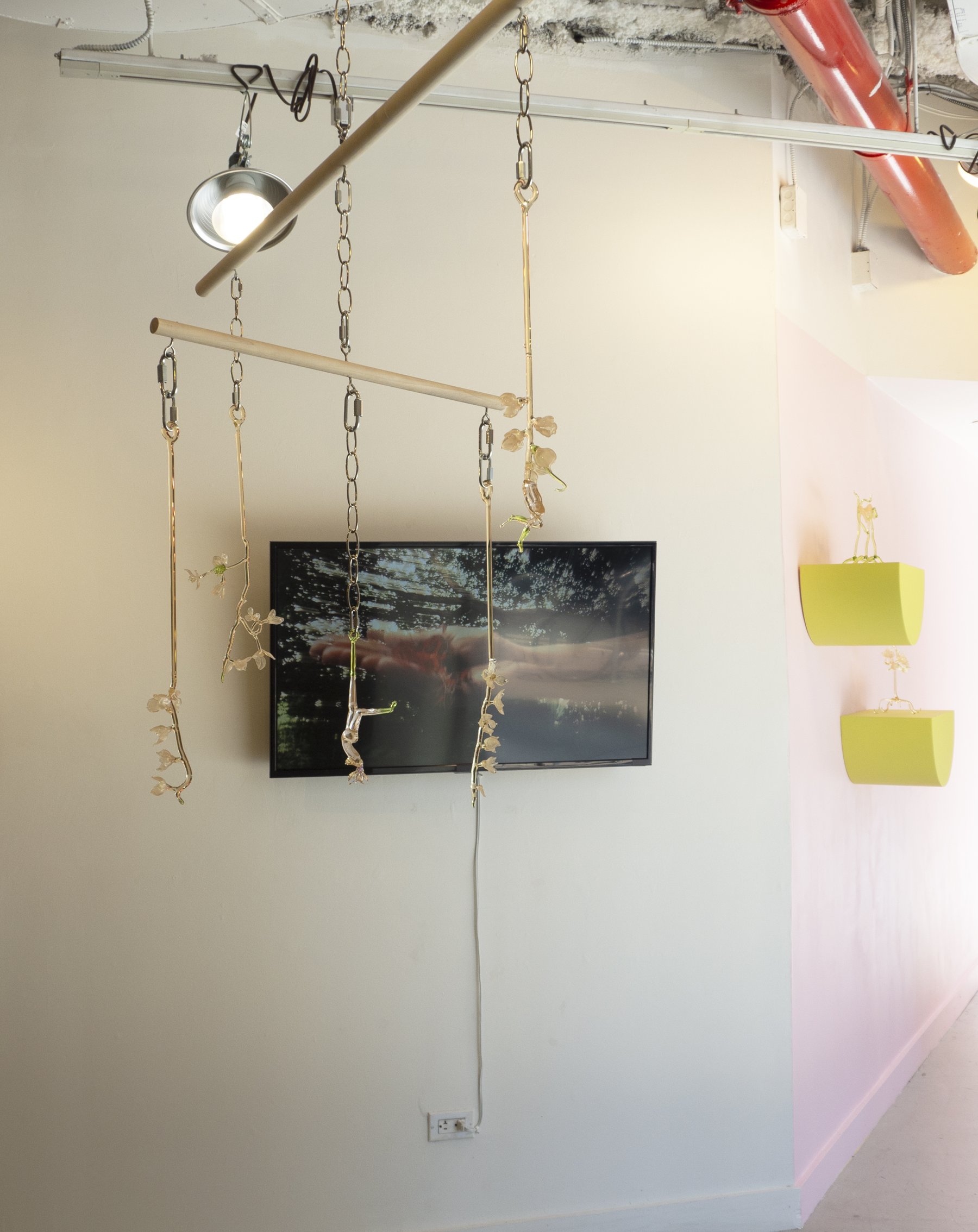
Tác phẩm có ba phần. Phần thứ nhất là những điêu khắc thuỷ tinh: những hình người nữ nhô lên từ các khối hoa nhiều cánh, kỳ lạ, không giống hẳn loài hoa nào. Phần thứ hai là mùi: mùi hoa lan khắp phòng, bao quanh các điêu khắc. Phần thứ ba là một bộ phim, trong đó chính Poblador bước vào các truyền thuyết và gặp những người phụ nữ ở trung tâm của chúng.
Thuỷ tinh là chất liệu Poblador làm việc lâu nay. Nó trong, dễ vỡ, và cần lửa để thành hình. Trong Fertility Flowers, thuỷ tinh giữ hình dáng của hoa và người, còn mùi thì giữ thứ không có hình: một không khí, một ký ức, một lời kể.
Người xem đi giữa các điêu khắc, ngửi mùi hoa, rồi đứng trước màn hình. Ba cách tiếp cận câu chuyện, cùng một lúc.
Những truyền thuyết về hoa
Tác phẩm bắt đầu từ các thần thoại và nguồn gốc của một số loài hoa mọc ở Philippines. Poblador để ý rằng trong nhiều câu chuyện, thân thể người phụ nữ bị biến thành cây, và lý do thường liên quan đến chuyện sinh con.
Chuyện thứ nhất là dạ lý hương, dama de noche, tên khoa học Cestrum nocturnum. Một hoàng hậu không sinh được người nối dõi. Trong nỗi tuyệt vọng, bà biến thành một loài hoa chỉ nở về đêm.
Chuyện thứ hai là hoa kim phượng, tiếng Anh gọi là peacock flower, tên khoa học Caesalpinia pulcherrima. Theo tác phẩm, những người phụ nữ bị bắt làm nô lệ ở vùng Tây Ấn từng dùng loài hoa này để không phải sinh con vào kiếp nô lệ. Đó là một câu chuyện về sự từ chối, một cách giữ quyền trên thân thể mình trong hoàn cảnh không có quyền nào.
Chuyện thứ ba là cadena de amor, dây hoa tigon, tên khoa học Antigonon leptopus. Trong tác phẩm, loài dây leo này là biểu tượng cho những ràng buộc đạo đức mà thời thuộc địa Tây Ban Nha đặt lên phụ nữ Philippines. Tên của nó có nghĩa là sợi xích tình yêu.
Viết lại một thần thoại
Poblador không chỉ kể lại. Theo mô tả của nghệ sĩ, bà nhìn việc sinh sản như điểm mấu chốt của nhiều thế kỷ áp bức mà phụ nữ phải chịu dưới quyền lực thực dân và gia trưởng. Rồi bà hình dung lại các thần thoại ấy: người phụ nữ Philippines không còn bị biến thành cây, mà giành lại quyền tự chủ từ tay những kẻ áp bức, và nở ra theo cách của mình.
Đó là lý do các hình người trong điêu khắc không bị cây nuốt mất. Họ mọc lên từ cánh hoa, như thể đang thoát ra. Mùi hoa vẫn ở đó, nhưng ý nghĩa của nó đã đổi. Không còn là mùi của một người bị giam trong hình dạng khác, mà là mùi của một người đang bước ra.
Mùi là một lựa chọn quan trọng trong tác phẩm. Truyền thuyết thường được kể bằng lời, truyền từ người này sang người khác. Mùi hoa thì có thật, có thể ngửi được hôm nay, trong một căn phòng ở New York hay Manila. Nó nối câu chuyện cổ với thân thể của người xem hiện tại.
Poblador đã làm việc với thuỷ tinh và mùi hương qua nhiều tác phẩm, trong đó có The Rise of Medusa, nơi bà cũng quay lại với một thần thoại về người phụ nữ. Fertility Flowers là lần bà quay về với hoa của chính quê hương mình, và với những câu chuyện mà người Philippines lớn lên cùng.
Mục tiêu bà nêu ra rất rõ: làm cho người xem chú ý hơn đến những vấn đề quanh việc sinh sản của phụ nữ, và đến lịch sử áp bức nằm sau những truyền thuyết hoa tưởng chừng vô hại.
Glass, flower scent and a film
Fertility Flowers is an interactive installation by the Filipino artist Goldie Poblador, first shown at UrbanGlass in New York in 2022, curated by Apa Agbayani. In 2023 it was shown again at Finale Art File in Manila.
The work has three parts. First, glass sculptures: female figures emerging from strange, many petaled forms that resemble no single flower. Second, scent: floral smells drift through the room around the sculptures. Third, a film in which Poblador herself steps into the legends and meets the women at their centre.
Glass has long been Poblador's material. It is clear, fragile, and needs fire to take shape. In Fertility Flowers the glass holds the form of flower and body, while the scent holds what has no form: an atmosphere, a memory, a telling.
Visitors walk among the sculptures, breathe the flowers, then stand before the screen. Three ways into the same story, all at once.
Legends of flowers
The work begins with the myths and origins of several flowers that grow in the Philippines. Poblador noticed that in many of these stories a woman's body is turned into a plant, and the reason is often tied to childbearing.
The first is dama de noche, Cestrum nocturnum. A queen cannot produce an heir. In her despair she becomes a flower that blooms only at night.
The second is the peacock flower, Caesalpinia pulcherrima. According to the work, enslaved women in the West Indies used it so as not to bear children into slavery. It is a story of refusal, of keeping some hold over one's own body where no other power was left.
The third is cadena de amor, Antigonon leptopus. In the work, this climbing vine stands for the moral restrictions Spanish colonial rule placed on Filipino women. Its name means chain of love.
Rewriting a myth
Poblador does not only retell. As the artist describes it, she sees reproduction as the crux of centuries of subjugation women have suffered under colonial and patriarchal power. Then she reimagines the myths: the Filipina is no longer turned into a plant but prises her agency back from her oppressors and blossoms in her own way.
That is why the figures in the sculptures are not swallowed by the plants. They rise out of the petals, as if breaking free. The flower scent is still there, but its meaning has shifted. No longer the smell of someone trapped in another form, but of someone stepping out.
Scent is a key choice here. Legends are told in words, passed from one person to the next. A flower's smell is real, and can be breathed today in a room in New York or Manila. It ties an old story to the body of a present viewer.
Poblador has worked with glass and scent across many pieces, including The Rise of Medusa, where she also returns to a myth about a woman. Fertility Flowers turns to the flowers of her own country, and to stories Filipinos grow up with.
Her stated aim is plain: to draw attention to the issues surrounding women's reproductive lives, and to the history of oppression behind flower legends that seem harmless.
Olfactory Art