
Essays · Olfactory Art
Hannah Marie Marcus. Commodity Exchange.
Giá trị của một vật nằm ở người tiếp tục giữ nó.
An object's value lies with whoever keeps it next.
Olfactory Art Keller · Olfactory Art Keller
Một mùi gối cho mẹ
Hannah Marie Marcus làm những tác phẩm dựa trên câu chuyện, và mỗi câu chuyện thường xoay quanh một mùi cụ thể. Commodity Exchange, trưng bày tại Olfactory Art Keller ở New York từ ngày 22 tháng 3 đến ngày 26 tháng 4 năm 2025, bắt đầu từ một món quà.
Marcus từng làm cho mẹ một mùi để xịt lên gối, lấy cảm hứng từ Eau de Fleurs de Cédrat, loại nước hoa cologne Guerlain ra mắt năm 1920. Mẹ cô là Audrey Flack, một trong những người tiên phong của hội hoạ siêu thực tả, qua đời vào tháng 6 năm 2024. Một tháng trước đó, tháng 5 năm 2024, cha dượng cô, một nhà môi giới hàng hoá, cũng qua đời.
Tên triển lãm mượn từ nghề của ông. Commodity exchange là sàn giao dịch hàng hoá, nơi mọi thứ đều có giá niêm yết. Nhưng những gì Marcus đem ra trao đổi lại là thứ khó định giá nhất: đồ đạc trong nhà cha mẹ.
Cedrat, thanh yên, etrog
Khi tìm hiểu về mùi Guerlain kia, Marcus phát hiện ra rằng cedrat là tên tiếng Pháp của Citrus medica, quả thanh yên. Cùng một quả mang nhiều tên theo từng nền văn hoá: citron, etrog, utruj. Đây là một trong ba loài cam quýt nguyên thuỷ, từ đó các loài cam chanh khác được lai ra.
Mỗi cái tên mở ra một tầng. Thanh yên có mặt trong nghi thức mai táng của Ai Cập cổ. Nó được khắc trên đồng xu của xứ Judea thời cổ đại. Trong lễ Sukkot của người Do Thái, nó là etrog, một trong bốn loài cây của nghi lễ. Trong các văn bản Hadith của Hồi giáo, nó là utruj. Và trong nghề nước hoa, nó là cedrat.
Marcus lần theo quả ấy qua từng câu chuyện. Một mùi gối cho mẹ dẫn tới một loài quả, loài quả dẫn tới tang lễ, tiền bạc, tôn giáo. Tang lễ và tiền bạc cũng chính là hai điều cô phải đối mặt trong năm ấy.
Một buổi bán đồ di sản
Triển lãm được dựng như một estate sale, buổi bán đồ thường tổ chức sau khi chủ nhà qua đời. Đồ vật từ nhà cha mẹ cô được xếp theo mức giá trị.
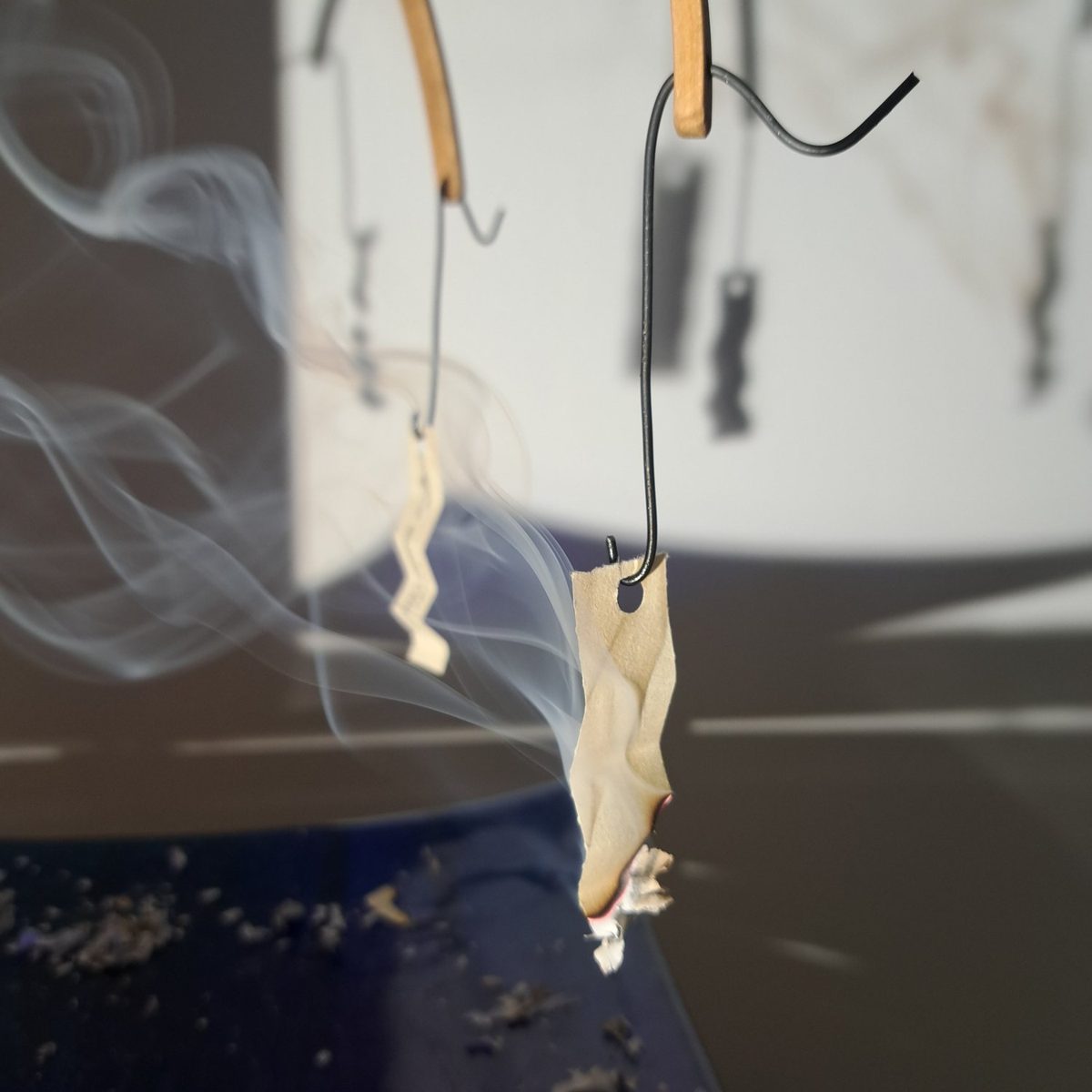
Những món nhỏ từ tủ thuốc của mẹ không có giá niêm yết. Người mua trả bao nhiêu tuỳ ý vào một hộp công đức, và số tiền ấy giúp nuôi phòng trưng bày. Sau khi mua, họ ghi lại món đồ lên một tờ giấy tiền vàng mã, xức mùi Citrus medica lên tờ giấy, rồi ghim nó lên tường. Bức tường dần phủ kín những tờ giấy thơm, mỗi tờ là một món đồ đã rời đi.
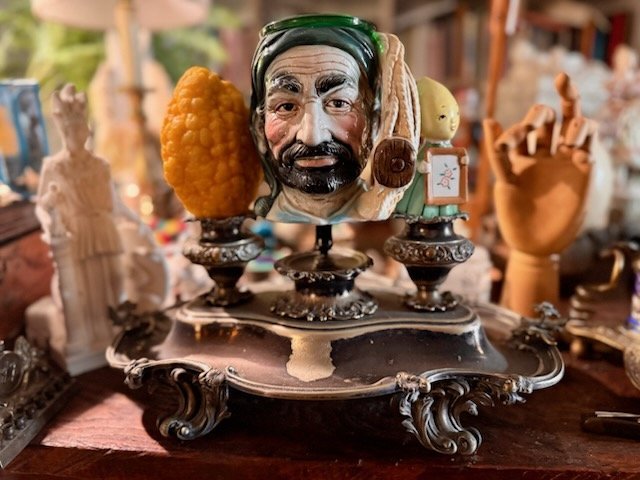
Những tổ hợp giá trị cao hơn thì khác. Chúng gồm tượng shabti Ai Cập, những lọ mực thời Victoria, một chiếc sọ bò. Người nhận không chỉ trả tiền. Họ ký một thoả thuận làm người trông giữ: giữ nguyên cách sắp đặt trong khoảng một năm, và thư từ qua email với nghệ sĩ định kỳ trong thời gian đó.
Chi tiết shabti đáng dừng lại. Ở Ai Cập cổ, shabti là những tượng nhỏ đặt trong mộ, được tin là sẽ làm việc thay người chết ở thế giới bên kia. Chúng là đồ tuỳ táng. Giờ chúng lại đi theo một người sống, ra khỏi một ngôi nhà vừa vắng chủ.
Commodity Exchange vì thế vừa là một buổi bán đồ, vừa là một nghi lễ tưởng niệm, vừa là một câu hỏi về giá trị. Hai năm trước đó, trong Citromancy, Marcus đã dùng trái cây họ cam quýt để bói quẻ. Ở đây, quả thanh yên không còn dùng để đoán tương lai. Nó dùng để tiễn.
A pillow scent for a mother
Hannah Marie Marcus makes narrative work, and each narrative tends to revolve around a particular smell. Commodity Exchange, shown at Olfactory Art Keller in New York from March 22 to April 26, 2025, began with a gift.
Marcus had made her mother a pillow scent inspired by Eau de Fleurs de Cédrat, a Guerlain cologne from 1920. Her mother was Audrey Flack, a pioneer of photorealist painting, who died in June 2024. A month earlier, in May 2024, her stepfather, a commodities broker, had also died.
The title borrows from his trade. A commodity exchange is a market where everything has a listed price. What Marcus put up for exchange, though, was the hardest thing of all to price: the contents of her parents' home.
Cedrat, citron, etrog
Researching the Guerlain scent, Marcus found that cedrat is French for Citrus medica, the citron. The same fruit carries other names in other cultures: etrog, utruj. It is one of the three original citrus species from which the others were bred.
Each name opens another layer. The citron appears in ancient Egyptian burial rites. It was struck on the coins of ancient Judea. At the Jewish festival of Sukkot it is the etrog, one of the four species of the ritual. In Islamic Hadith texts it is the utruj. And in perfumery it is cedrat.
Marcus followed the fruit through each story. A pillow scent for her mother led to a fruit, and the fruit led to burial, money, faith. Burial and money were exactly what she was facing that year.
An estate sale
The exhibition was staged as an estate sale, the kind usually held after a homeowner dies. Objects from her parents' house were sorted by tier of value.
Small items from her mother's medicine cabinet had no listed price. Buyers paid what they wished into an alms box, and the money went to support the gallery. After buying, they recorded the object on a sheet of joss paper, anointed it with Citrus medica scent, and pinned it to the wall. The wall slowly filled with scented papers, each one an object that had left.
The higher value assemblages worked differently. They included Egyptian shabtis, Victorian inkwells, a bull skull. Their new holders did not simply pay. They signed an agreement as custodians: to keep the arrangement intact for about a year, and to exchange periodic emails with the artist during that time.
The shabtis are worth a pause. In ancient Egypt they were small figures placed in tombs, believed to work on behalf of the dead in the afterlife. They were grave goods. Now they travel with a living person, out of a house newly emptied of its owners.
Commodity Exchange is therefore a sale, a memorial and a question about value all at once. Two years earlier, in Citromancy, Marcus used citrus fruit for divination. Here the citron no longer foretells. It sees someone off.

Olfactory Art