
Essays · Olfactory Art
Hicham Berrada. Mesk-ellil.
Một mùi đêm được mời đến vào ban ngày.
A night smell invited in by day.
Courtesy the artist and kamel mennour, Paris/London · Hicham Berrada (official artist site)
Bảy tủ kính, một loài hoa
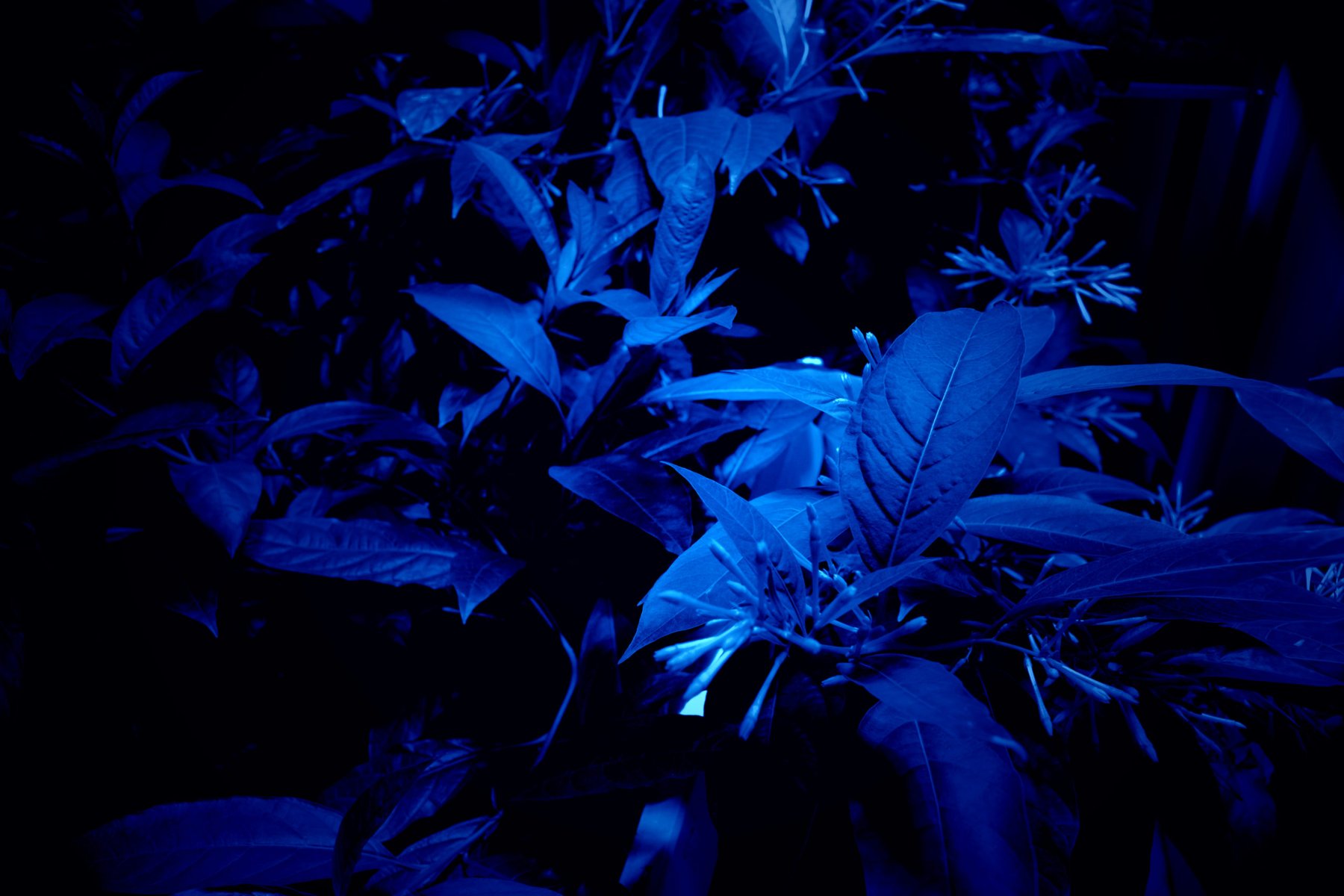
Mesk-ellil là một khu vườn đặt trong tủ kính. Theo trang của nghệ sĩ, tác phẩm gồm bảy tủ kính màu, mỗi tủ có kích thước 250 × 200 × 50 cm. Xếp cạnh nhau, chúng chiếm một khối không gian khoảng năm mét mỗi chiều. Bên trong chỉ có một loài cây: Cestrum nocturnum, người Việt thường gọi là dạ lý hương hay hoàng dạ lý.
Loài cây này có một đặc điểm: hoa của nó chỉ toả hương vào ban đêm. Ban ngày, những chùm hoa nhỏ màu trắng xanh đứng im, gần như không có mùi. Khi trời tối, hương bắt đầu lan ra, mạnh đến mức cả khu vườn có thể ngửi thấy. Trang của Berrada tả mùi ấy như nhài pha chút chanh.
Hicham Berrada làm Mesk-ellil trong khoảng từ 2015 đến 2019. Tác phẩm được trưng bày ở nhiều nơi. Năm 2019, nó có mặt trong triển lãm Luogo e Segni tại Punta della Dogana, Venice. Gallery đại diện của ông là Kamel Mennour.
Đảo ngược ngày và đêm
Một bảo tàng mở cửa ban ngày. Hoa dạ lý hương thơm ban đêm. Hai lịch ấy không bao giờ gặp nhau. Berrada giải bài toán bằng ánh sáng.
Mỗi tủ kính là một môi trường khép kín, có khí hậu riêng. Bên trong có hai loại đèn: đèn trồng cây cho những giờ mà cây coi là ngày, và đèn ánh trăng cho những giờ mà cây coi là đêm. Một bộ hẹn giờ điều khiển sự chuyển đổi. Kết quả là đêm của cây rơi đúng vào giờ mở cửa của phòng trưng bày.
Cây không bị ép toả hương. Nó chỉ được cho một bầu trời khác. Nó vẫn đợi bóng tối, vẫn phản ứng với ánh sáng như mọi cây cùng loài ngoài vườn. Chỉ có điều, bóng tối ấy là do người làm ra.
Có một chi tiết đáng dừng lại. Mùi không ở yên trong tủ kính như hình ảnh. Kính giữ được khí hậu cho cây, nhưng người xem vẫn được mời ngửi. Tác phẩm vì thế có hai tầng quan sát: mắt nhìn một khu vườn đêm bị đóng khung, còn mũi thì bắt gặp cái khu vườn ấy như thể nó đang ở ngay bên ngoài, ngoài trời, sau khi mặt trời đã lặn từ lâu. Mắt biết đây là phòng trưng bày. Mũi thì không chắc.
Người xem nhìn vào tủ kính và thấy một khung cảnh đêm, trong khi sau lưng họ là ánh sáng ban ngày của phòng trưng bày. Hai thời điểm đứng cạnh nhau, cách nhau một lớp kính. Bên này là giờ của người. Bên kia là giờ của cây.
Một khu vườn được chỉnh giờ
Berrada thường làm việc với những quá trình tự nhiên được đặt trong điều kiện có kiểm soát: phản ứng hoá học, sự lớn lên, sự biến đổi của vật chất. Ông dựng khung, rồi để vật liệu tự diễn. Ở Mesk-ellil, cái khung là ánh sáng và thời gian. Phần diễn là của cây.
Tác phẩm cho thấy một điều ít khi ta để ý: mùi của thực vật gắn với nhịp ngày đêm. Có loài thơm lúc sáng sớm, có loài thơm lúc chiều muộn, có loài chỉ thơm lúc nửa đêm. Người đi dạo buổi tối trong một con hẻm nhiều dạ lý hương biết điều đó bằng mũi. Berrada đưa hiểu biết ấy vào một căn phòng và làm nó thành thứ có thể quan sát.
Mesk-ellil cũng có họ hàng trong những tác phẩm dùng đèn trồng cây như một công cụ, như cánh đồng oải hương của Martin Roth, nơi đèn sáng theo nhịp retweet. Nhưng Berrada không nói về thời sự. Ông nói về đồng hồ bên trong một loài cây.
Tác phẩm đáng nhớ vì nó cho người xem ngửi thấy thời gian. Không phải thời gian trên tường, mà thời gian của một bông hoa, được dời đi vài giờ để gặp con người.
Seven vitrines, one flower
Mesk-ellil is a garden set in glass cases. According to the artist's site, the work consists of seven tinted glass terrariums, each measuring 250 × 200 × 50 cm. Together they fill a volume about five metres on each side. Inside grows a single species: Cestrum nocturnum, known in English as night blooming jasmine.
The plant has one defining trait: its flowers release scent only at night. By day the small greenish white clusters stand still, almost odourless. After dark the scent spreads, strong enough to fill a garden. Berrada's site describes it as jasmine with a touch of lime.
Hicham Berrada made Mesk-ellil between 2015 and 2019. It has been shown in several places. In 2019 it was part of the exhibition Luogo e Segni at Punta della Dogana in Venice. His gallery is Kamel Mennour.
Swapping day and night
A museum opens by day. Night blooming jasmine smells at night. The two schedules never meet. Berrada solves this with light.
Each vitrine is a closed environment with its own climate. Inside are two kinds of lamps: horticultural lights for the hours the plant treats as day, and moonlight lamps for the hours it treats as night. A timer controls the switch. The result is that the plant's night falls during the gallery's opening hours.
The plant is not forced to give off scent. It is only given another sky. It still waits for darkness and still responds to light like any of its kind outdoors. Only that darkness is made by people.
One detail deserves a pause. Smell does not stay inside the vitrine the way an image does. The glass keeps the climate for the plant, yet visitors are still invited to smell. The work therefore offers two ways of observing: the eye sees a night garden inside a frame, while the nose meets that garden as if it were right outside, in the open air, long after sunset. The eye knows this is a gallery. The nose is not so sure.
Visitors look into the vitrines and see a night scene, while the daylight of the gallery sits behind them. Two times of day stand side by side, a sheet of glass apart. On one side, the hour of people. On the other, the hour of the plant.
A garden set to another clock
Berrada often works with natural processes placed under controlled conditions: chemical reactions, growth, the transformation of matter. He builds the frame and lets the material perform. In Mesk-ellil the frame is light and time. The performance belongs to the plant.
The work points to something we rarely notice: plant scent follows the rhythm of day and night. Some species smell in the early morning, some in late afternoon, some only at midnight. Anyone who has walked at night past a hedge of this plant knows it by nose. Berrada brings that knowledge into a room and makes it something to observe.
Mesk-ellil has relatives among works that use grow lights as a tool, such as Martin Roth's lavender field, where lamps follow the pace of retweets. But Berrada is not speaking about the news. He is speaking about the clock inside a plant.
The work stays with us because it lets visitors smell time. Not the time on the wall, but the time of a flower, moved a few hours so that it can meet people.

Olfactory Art