
Essays · Olfactory Art
Jean Kerléo. Người giữ những mùi đã mất.
Giữ một mùi là giữ một thời.
To keep a smell is to keep a time.
Một kho lưu trữ cho thứ bay hơi
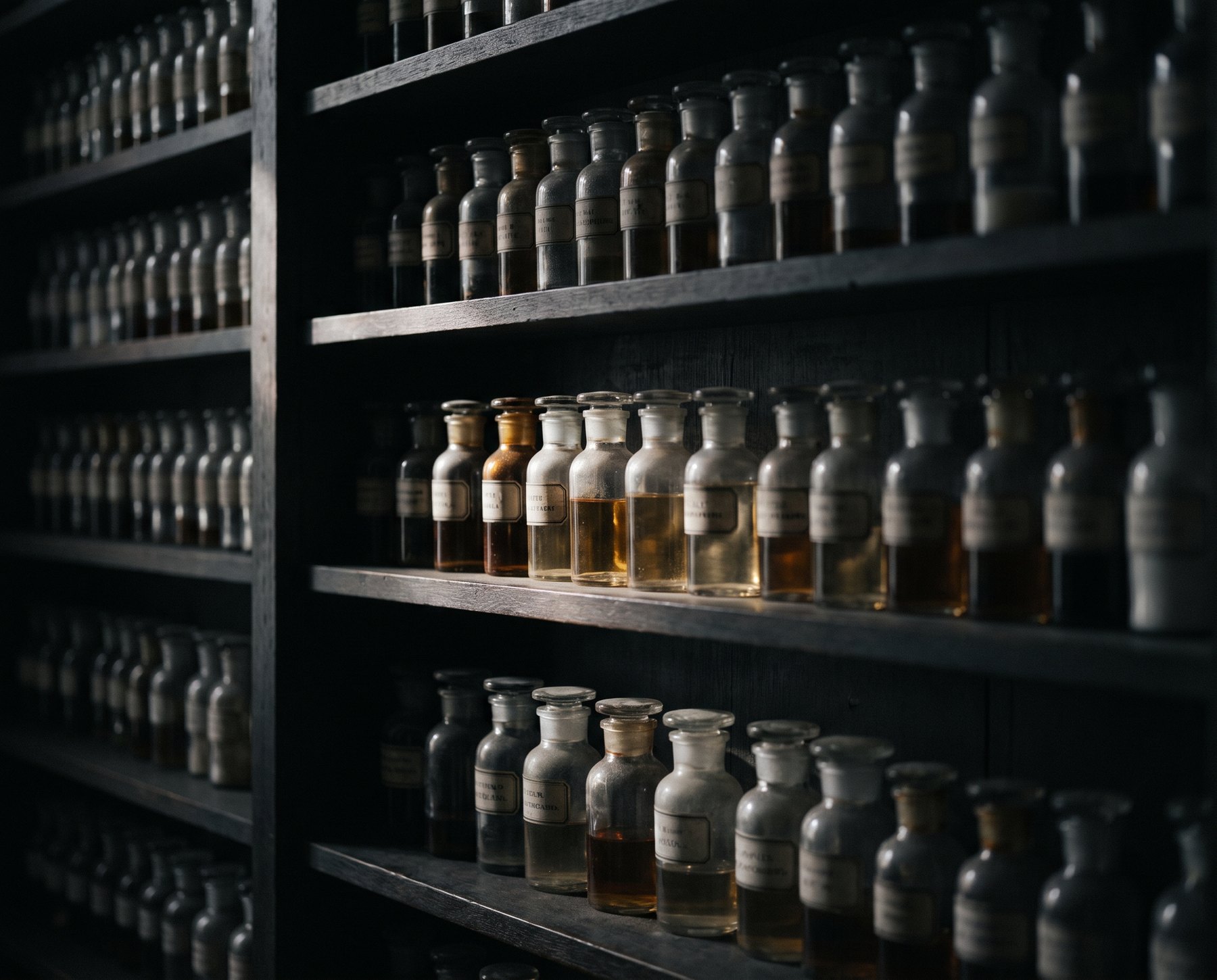
Ngày 26 tháng 4 năm 1990, ở Versailles, một nơi được khánh thành với cái tên Osmothèque. Nó tự gọi mình là nơi bảo tồn nước hoa đầu tiên trong lịch sử: một kho lưu trữ, không phải một cửa hàng, không phải một bảo tàng trưng chai đẹp.
Ý tưởng được Osmothèque tự mô tả khá gọn: làm một nơi dành cho trí nhớ của mùi, ghi lại và gom về những nước hoa đang có hoặc sẽ có, và lần theo dấu những mùi lớn đã biến mất để làm chúng sống lại.
Ba tổ chức đứng sau buổi đầu ấy là Société Française des Parfumeurs, hội của những người điều hương Pháp; Comité Français du Parfum; và Phòng Thương mại và Công nghiệp Paris Ile de France. Osmothèque hoạt động như một hiệp hội theo luật năm 1901 của Pháp.
Tên Jean Kerléo gắn liền với nơi này. Chính Osmothèque đã dựng một cuộc triển lãm mùi để tôn vinh ông. Với một người làm nghề, đó là một kiểu ghi công hiếm: không phải một tấm bảng đồng, mà một căn phòng để ngửi.
Hầm tối, mười hai độ, khí argon
Nước hoa là vật dễ hỏng. Ánh sáng làm nó đổi màu và đổi mùi. Oxy làm nó già đi. Nhiệt làm nó bay mất. Muốn giữ, phải chống lại cả ba.
Osmothèque giữ các mẫu trong một cái hầm. Nhiệt độ cố định ở mười hai độ. Không có ánh sáng ban ngày. Mỗi mẫu được đóng trong khí argon, một loại khí trơ, để oxy không chạm vào. Những người điều hương làm việc ở đây, gọi là osmothécaire, định kỳ mở ra và ngửi lại để kiểm tra.
Kho hiện có hơn bốn nghìn nước hoa, trong đó khoảng tám trăm mùi đã ngừng sản xuất. Năm 2015, con số là hơn ba nghìn hai trăm, với bốn trăm mùi đã mất. Kho mùi lớn dần, và phần đã mất cũng lớn dần theo.
Trong danh mục có những cái tên thuộc về lịch sử nghề: Fougère Royale của Houbigant năm 1884, Le Chypre của Coty năm 1917, Crêpe de Chine của Millot năm 1925, Iris Gris của Jacques Fath năm 1947. Phần lớn người sống hôm nay chưa từng ngửi chúng ở đâu khác.
Dựng lại, nhưng không đoán
Với những mùi đã ngừng sản xuất, Osmothèque dựng lại theo công thức gốc. Các nhà điều hương làm đúng theo văn bản ấy, từng nguyên liệu, từng tỉ lệ.
Luật ở đây nghiêm hơn người ta tưởng. Nếu một nguyên liệu trong công thức gốc không còn tìm được, mùi đó không được dựng lại. Osmothèque không diễn giải, không làm bản gần giống. Nó là một kho lưu trữ, không phải một người kể lại.
Điều này khiến kho mùi giống một thư viện bản thảo hơn là một bảo tàng. Công thức là văn bản. Lọ mùi dựng lại là một lần đọc to văn bản ấy lên. Nếu thiếu một chữ, người giữ kho chọn im lặng thay vì điền vào.
Mở ra để ngửi
Một kho lưu trữ mùi chỉ có nghĩa khi mùi được ngửi. Osmothèque tổ chức khoảng một trăm năm mươi buổi nói chuyện có ngửi mỗi năm, do các osmothécaire dẫn. Người đến nghe không nhìn tranh. Họ nhận từng mảnh giấy thử và đi qua lịch sử bằng mũi.
Từ năm 2008, chủ tịch của Osmothèque là Patricia de Nicolaï, bản thân cũng là người điều hương. Nơi này vẫn là một hiệp hội nhỏ: ngoài các osmothécaire, bộ máy chỉ có ba người lo việc chung. Kho mùi đã chuyển sang một địa chỉ mới ở Versailles.
Có một điều khó nói bằng chữ về chỗ này. Một bức tranh cũ đứng trước ta như một vật. Một mùi cũ thì đi vào trong ta, như nó đã đi vào người ngửi đầu tiên. Không có khoảng cách của khung kính. Người đứng ở Versailles hôm nay và người đứng ở Paris năm 1884 hít vào cùng một thứ.
Những tuyển tập như The Art of Scent đưa mùi vào phòng triển lãm. Osmothèque làm việc âm thầm hơn: nó chỉ giữ cho những mùi ấy còn đó, để một ngày có người mở ra.
An archive for something that evaporates
On 26 April 1990, in Versailles, a place called the Osmothèque was inaugurated. It describes itself as the first conservatory of perfumes in history: an archive, not a shop, not a museum of pretty bottles.
The Osmothèque states its idea plainly: a place devoted to the memory of smells, to record and gather perfumes existing or yet to come, and to trace certain great lost perfumes and bring them back to life.
Three bodies stood behind its beginning: the Société Française des Parfumeurs, the association of French perfumers; the Comité Français du Parfum; and the Paris Ile de France Chamber of Commerce and Industry. The Osmothèque runs as an association under France's 1901 law.
The name Jean Kerléo is bound up with the place. The Osmothèque itself mounted an olfactory exhibition in his honour. For someone in the trade, that is a rare kind of credit: not a bronze plaque, but a room to smell.
A dark cellar, twelve degrees, argon
Perfume is a fragile object. Light changes its colour and its smell. Oxygen ages it. Heat drives it off. To keep it, one has to resist all three.
The Osmothèque keeps its samples in a cellar. The temperature is fixed at twelve degrees. No daylight. Each sample is sealed under argon, an inert gas, so oxygen cannot touch it. The perfumers who work there, called osmothécaires, open and smell them again at intervals to check.
The collection now holds more than four thousand perfumes, about eight hundred of them discontinued. In 2015 the figure was over three thousand two hundred, with four hundred lost. The archive grows, and the share of what is lost grows with it.
The catalogue holds names from the history of the trade: Houbigant's Fougère Royale of 1884, Coty's Le Chypre of 1917, Millot's Crêpe de Chine of 1925, Jacques Fath's Iris Gris of 1947. Most people alive today have never smelled them anywhere else.
Rebuilt, but never guessed
For perfumes that have gone out of production, the Osmothèque rebuilds from the original formula. Perfumers follow that text exactly, material by material, proportion by proportion.
The rule is stricter than one might expect. If one material in the original formula can no longer be found, the perfume is not rebuilt. The Osmothèque does not interpret or make a near copy. It is an archive, not a storyteller.
This makes it closer to a library of manuscripts than a museum. The formula is the text. The rebuilt vial is a reading of that text aloud. If a word is missing, the keeper chooses silence over filling the gap.
Opened to be smelled
An archive of smell means something only when the smells are smelled. The Osmothèque holds around one hundred and fifty talks with smelling each year, led by the osmothécaires. Visitors do not look at pictures. They receive strip after strip and move through history by nose.
Since 2008 its president has been Patricia de Nicolaï, herself a perfumer. It remains a small association: beyond the osmothécaires, a team of three runs the shared work. The archive has moved to a new address in Versailles.
Something about this place is hard to put into words. An old painting stands before us as an object. An old smell goes inside us, as it went inside its first wearer. There is no distance of glass. A person in Versailles today and a person in Paris in 1884 breathe in the same thing.
Surveys such as The Art of Scent bring smell into the gallery. The Osmothèque works more quietly: it simply keeps those smells in existence, so that one day someone can open them.
Olfactory Art