
Essays · Contemporary Art
Joseph Beuys. The End of the Twentieth Century.
Đá cũng cần được giữ ấm.
Even stone needs keeping warm.
Tate · Tate
Ba mươi mốt khối đá
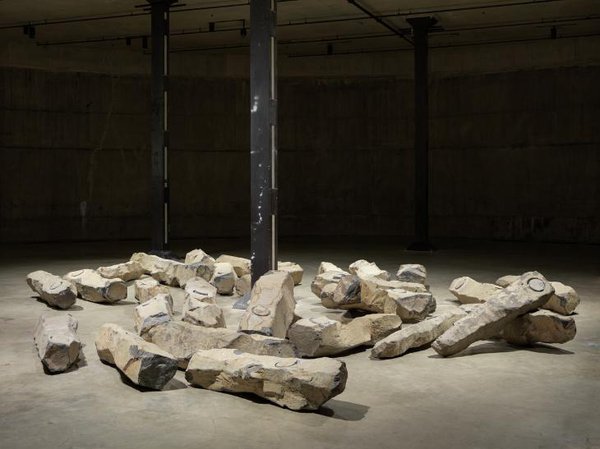
Trên sàn phòng trưng bày là ba mươi mốt khối đá bazan thô, nặng nề. Màu be nhạt, loang những mảng xám. Mỗi khối dài từ một đến hai mét rưỡi. Chúng nằm thành những cụm lỏng lẻo, trông như đống đổ nát sau một sự cố, nhưng thật ra được chia thành hai nhóm lớn, chừa một lối đi dài ở giữa để người xem bước qua.
Nhìn kỹ, mỗi khối đá có một chi tiết giống nhau. Ở mặt trên, gần một đầu, có một lỗ khoét hình nón. Lòng lỗ được mài nhẵn và lót bằng đất sét và nỉ. Phần đá lấy ra từ lỗ được đánh bóng, rồi đặt trở lại vào chỗ cũ, như một cái nút.
Đó là The End of the Twentieth Century, Sự kết thúc của thế kỷ hai mươi, của nghệ sĩ Đức Joseph Beuys. Bản này thuộc bộ sưu tập Tate ở London, mua năm 1991. Cả sắp đặt chiếm một khoảng sàn rộng chừng bảy mét, dài mười hai mét.
Ba phiên bản, một người không kịp thấy
Bản của Tate là bản thứ ba trong một loạt cùng tên, làm theo cùng một cách. Bản đầu tiên, gồm hai mươi mốt khối đá, ra đời năm 1983 cho triển lãm Tending Towards the Total Work of Art tại Kunsthalle Düsseldorf, khi giám tuyển Harald Szeemann mời Beuys làm một tác phẩm mới. Cùng lúc, Beuys chuẩn bị một bản khác gồm bốn mươi bốn khối.
Năm 1985, Beuys tự chọn và chuẩn bị những khối đá cho bản thứ ba. Ông mất vào tháng 1 năm 1986, trước khi tác phẩm được sắp đặt. Tate cho biết đây là bản lớn cuối cùng mà ông trực tiếp theo dõi.
Beuys để lại vài bản phác về cách xếp đá, nhưng không có quy tắc cố định. Sau khi Tate mua tác phẩm, giám tuyển Sean Rainbird và Bernd Klüser, người từng làm gallery cho Beuys ở Munich, dựa trên các lần trưng bày trước và các bản vẽ của nghệ sĩ để định ra một bố cục. Tác phẩm được trưng bày theo bố cục ấy lần đầu năm 1992, và từ đó gần như không thay đổi.
Dấu của thế giới mới
Tựa đề nói thẳng về thời điểm: cuối thế kỷ hai mươi, một thế kỷ nhiều bạo lực và tàn phá. Nhà sử học nghệ thuật Mark Rosenthal đọc tác phẩm như hình ảnh bừa bộn sau một thảm hoạ.
Nhưng Beuys nói về nó theo hướng khác. Năm 1984, ông giải thích, đại ý, rằng đây là thế giới cũ, và ông đang đóng lên đó con dấu của thế giới mới. Ông bảo những cái nút trông như cây mọc lên từ thời đồ đá. Ông kể đã khoan chúng ra theo hình phễu rồi đặt lại bằng nỉ và đất sét, để chúng không làm hại nhau và giữ được ấm. Trong khối đông cứng ấy, theo ông, có một thứ gì đó sống động, như chính bazan từng bị đẩy ra từ lòng đất.
Bazan là đá núi lửa. Beuys quan tâm đến nguồn gốc ấy, và theo nhà nghiên cứu Victoria Walters, ông gắn nó với một quan niệm thời gian rất dài, thời gian địa chất. Nỉ, đất sét và bazan đều là những chất liệu ông dùng nhiều lần. Nhãn trưng bày của Tate gọi lớp đất sét và nỉ lót trong lỗ đá là một lớp cách nhiệt.
Từ bảy nghìn cây sồi
Tác phẩm gắn trực tiếp với một dự án lớn khác của Beuys: 7000 Oaks, làm cho Documenta 7 ở Kassel năm 1982. Ông cho đổ bảy nghìn khối đá trước bảo tàng Fridericianum. Trong năm năm sau đó, từng khối được chuyển đi và đặt cạnh một cây sồi mới trồng ở nơi khác trong thành phố. Năm 1983, bốn mươi bốn khối trong đống đá ấy từng được mang tới Düsseldorf cho một lần sắp đặt The End of the Twentieth Century, rồi được trả lại.
Beuys lúc ấy gắn bó với phong trào sinh thái và đã tham gia lập Đảng Xanh Đức năm 1980. Đá, cây, đất, nỉ, với ông đều thuộc một ý nghĩ chung: nghệ thuật có thể tham gia vào việc làm sống lại cả tự nhiên lẫn xã hội.
Cũng vì thế, đứng giữa những khối đá này, người xem có thể thấy hai điều cùng lúc. Một bãi đổ nát cuối thế kỷ. Và những vết khoét được lót ấm cẩn thận, như thể ai đó tin rằng sau đổ nát vẫn có cái để giữ gìn. Carl Andre xếp gạch để nói về vật liệu và không gian. Beuys đặt đá để nói về thời gian.
Thirty one stones
On the gallery floor lie thirty one rough, heavy blocks of basalt. Pale beige, mottled with grey. Each is between one and two and a half metres long. They sit in loose clusters that look like debris after an accident, but they are in fact arranged in two broad groups, leaving a long path down the middle for visitors to walk through.
Look closely and every block shares one detail. On its upper side, near one end, a cone shaped hole has been drilled. The hollow is smoothed and lined with clay and felt. The piece of stone taken out has been polished and set back in its place, like a plug.
This is The End of the Twentieth Century by the German artist Joseph Beuys. This version belongs to Tate in London, bought in 1991. The installation covers an area of floor about seven metres by twelve.
Three versions, one the artist never saw
Tate's version is the third in a series with the same title, made the same way. The first, of twenty one stones, was made in 1983 for the exhibition Tending Towards the Total Work of Art at the Kunsthalle Düsseldorf, after the curator Harald Szeemann asked Beuys for a new work. At the same time Beuys prepared another version of forty four stones.
In 1985 Beuys selected and prepared the stones for the third version himself. He died in January 1986, before it was installed. Tate describes it as the last large version he oversaw.
Beuys left a few sketches of possible arrangements, but no fixed rules. After Tate bought the work, the curator Sean Rainbird and Bernd Klüser, Beuys's former gallerist in Munich, drew on earlier displays and the artist's drawings to settle a layout. The work was first shown that way in 1992 and has barely changed since.
The stamp of a new world
The title names a moment: the end of the twentieth century, a century of violence and destruction. The art historian Mark Rosenthal read the work as the haphazard aftermath of a calamity.
Beuys spoke of it differently. In 1984 he explained, in substance, that this was the old world, on which he was pressing the stamp of the new. He said the plugs looked like plants from the stone age. He described drilling them out in a funnel shape and setting them back with felt and clay so they could not harm each other and could keep warm. In that solid mass, he said, there was something lively, as the basalt itself was once pushed out from the earth's interior.
Basalt is volcanic rock. Beuys cared about that origin, and the scholar Victoria Walters links it to his sense of very long, geological time. Felt, clay and basalt were all materials he used many times. Tate's gallery label calls the clay and felt lining of each hollow insulating.
From seven thousand oaks
The work is tied directly to another large project: 7000 Oaks, made for Documenta 7 in Kassel in 1982. Beuys had seven thousand stones piled in front of the Museum Fridericianum. Over the next five years each was removed and set beside a newly planted oak elsewhere in the city. In 1983 forty four of those stones were taken to Düsseldorf for an installation of The End of the Twentieth Century, then returned.
Beuys was then committed to the ecological movement and had helped found the German Green Party in 1980. Stone, tree, earth and felt belonged for him to one thought: that art could take part in bringing both nature and society back to life.
So standing among these stones, the viewer can see two things at once. A field of end of century ruin. And hollows carefully lined for warmth, as if someone believed that after the ruin there was still something to keep. Carl Andre laid bricks to speak of material and space. Beuys laid stones to speak of time.
Contemporary Art